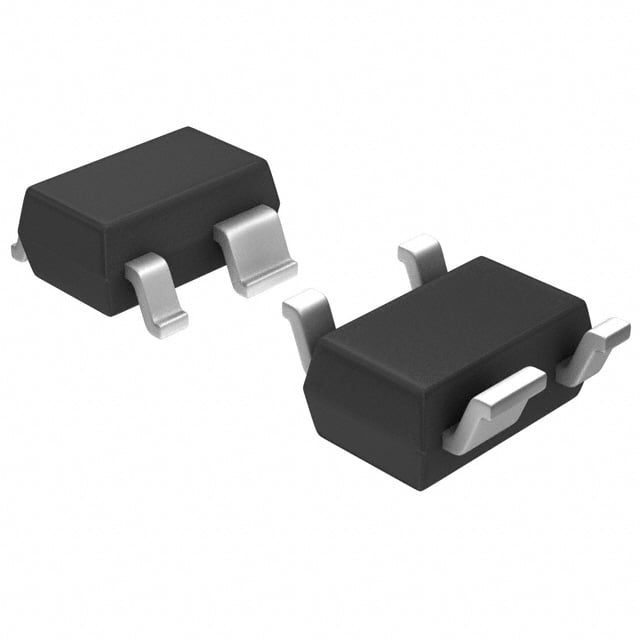
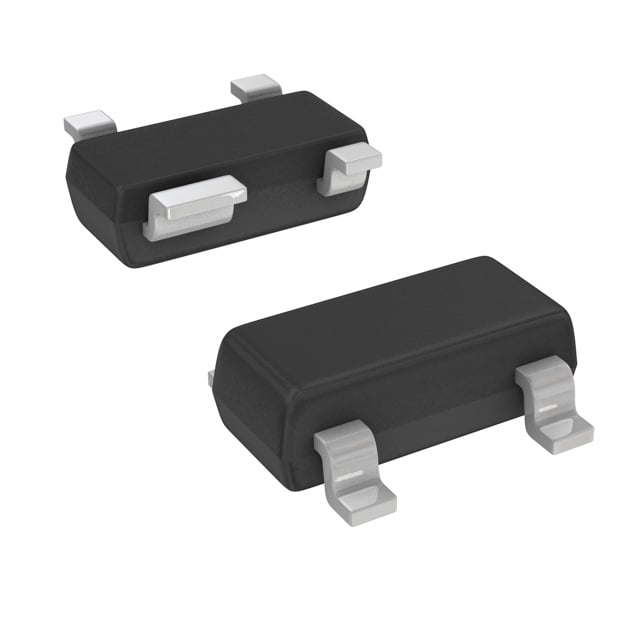
The Infineon Technologies BF2040WE6814HTSA1 is a high-performance automotive-grade microcontroller designed for body electronics and control applications. It is based on a 32-bit architecture optimized for real-time embedded control, providing deterministic performance and robust reliability suitable for operation in harsh automotive environments. The device integrates a range of on-chip peripherals, memory resources, and interfaces, enabling it to execute complex control algorithms while minimizing external component requirements. Its architecture combines high-speed processing capabilities with low power consumption and strong electromagnetic compatibility (EMC) characteristics, making it suitable for body control modules, sensor interfacing, lighting control, and vehicle network communication systems. The BF2040WE6814HTSA1 is engineered to meet stringent automotive standards, ensuring functional safety, long-term reliability, and consistent operation under extreme temperature and voltage conditions.
## Device Function and Positioning
The BF2040WE6814HTSA1 functions as an automotive microcontroller targeting body electronics applications, offering control for tasks such as centralized lighting, door modules, and sensor processing. It is positioned within Infineon’s Aurix or Automotive-grade microcontroller family, providing enhanced integration to reduce the need for multiple discrete ICs. The device supports deterministic execution of time-critical routines and integrates safety mechanisms to comply with ISO 26262 functional safety requirements. It is suitable for replacing multiple legacy microcontrollers in centralized modules, thereby simplifying system architecture while maintaining high reliability and robustness in automotive contexts.
## Processor Core and Performance
This microcontroller employs a 32-bit CPU core, designed for deterministic and high-performance computation. The core operates at frequencies sufficient to meet the stringent timing requirements of automotive control systems. It supports instruction pipelining and hardware acceleration for arithmetic operations, which enhances the efficiency of control loops and signal processing tasks. The processor includes support for low-latency interrupt handling, ensuring rapid response to sensor inputs, network events, and safety-critical signals. Its architecture is optimized to execute complex embedded control algorithms with minimal cycle count, enabling real-time control over multiple vehicle subsystems.
## Memory Architecture
The BF2040WE6814HTSA1 integrates embedded Flash memory for program storage and SRAM for temporary data storage, providing a high-speed, deterministic memory environment essential for real-time applications. Flash memory capacity is sufficient to accommodate large control firmware and multiple application layers, while SRAM blocks facilitate buffering, temporary computation storage, and stack management for interrupt-driven routines. Memory access is optimized for low-latency read and write cycles, ensuring that high-priority tasks and safety-critical functions are executed without delay. The combination of non-volatile and volatile memory resources enables the implementation of complex software stacks, including diagnostic routines, communication stacks, and real-time control algorithms.
## Peripheral Integration
The device incorporates a rich set of on-chip peripherals including general-purpose I/O, timers, PWM units, analog-to-digital converters (ADCs), and communication interfaces such as CAN, LIN, and FlexRay. Timers and PWM units allow precise control of actuators, motors, and lighting elements, while ADCs provide high-resolution sensing capability for temperature, pressure, and other analog inputs. Communication interfaces facilitate networked operation in automotive environments, supporting vehicle bus communication protocols with deterministic timing and low jitter. Peripheral integration reduces the need for external ICs, enabling a compact system design and lowering overall module cost.
## Safety, Reliability, and Environmental Robustness
The BF2040WE6814HTSA1 is designed to meet automotive-grade reliability standards, including AEC-Q100 qualification, ensuring operation under temperature extremes, vibration, and transient voltage conditions typical in vehicles. The device includes internal diagnostic features, such as watchdog timers, error correction mechanisms for memory, and redundant clock monitoring, supporting safe operation in compliance with ISO 26262 functional safety levels. These features allow system designers to implement fail-safe operation and detect anomalies early, ensuring continued vehicle safety and reliability. Robust EMC design ensures immunity to electromagnetic interference, which is critical for maintaining signal integrity and functional stability in automotive environments.
## Clocking and Timing Resources
The microcontroller provides multiple internal and external clock sources with programmable frequency ranges, enabling flexible configuration for precise timing requirements. Internal PLLs and clock dividers allow synchronization of CPU, peripherals, and communication modules while minimizing phase jitter and skew. These features are essential for tasks requiring coordinated control across multiple vehicle subsystems, such as synchronized lighting sequences, motor control, and networked sensor acquisition. Timing resources also support real-time scheduling and deterministic execution of critical routines, which is crucial in safety-critical automotive applications.
## Typical Application Scenarios
The BF2040WE6814HTSA1 is suitable for a variety of automotive applications, including body control modules, door and seat controllers, lighting systems, sensor fusion modules, and networked peripheral controllers. Its combination of high-speed computation, integrated memory, robust peripherals, and safety features makes it ideal for embedded control of multiple subsystems within a vehicle, including interfacing with analog sensors, actuators, and vehicle networks. The microcontroller’s integration reduces module complexity and component count, supporting compact PCB designs and minimizing latency across control and communication tasks.
## Conclusion
Infineon’s BF2040WE6814HTSA1 is a high-performance, automotive-grade microcontroller designed for body electronics and embedded control applications. Its 32-bit processor core, embedded memory, integrated peripherals, and safety mechanisms provide a deterministic, reliable, and robust platform for executing complex automotive control algorithms. The device’s comprehensive feature set, combined with automotive-grade reliability and EMC robustness, makes it a suitable choice for designers seeking to consolidate multiple control functions within a single microcontroller, enabling compact, efficient, and safe vehicle system designs. Its deployment enhances system integration, reduces external component count, and ensures high reliability under the demanding conditions of automotive environments.