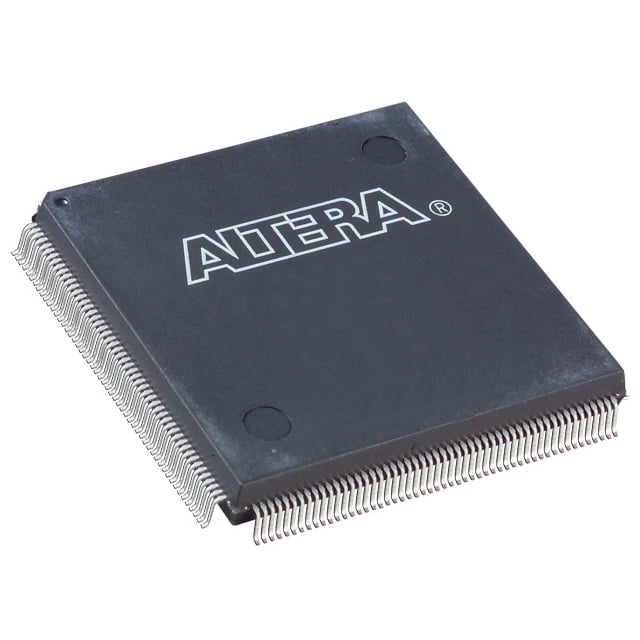
Q1: What is the Intel EP2C8Q208C8N?
A1: The Intel EP2C8Q208C8N is a Field Programmable Gate Array (FPGA) device from the Cyclone II family, designed for high-performance digital signal processing, logic applications, and embedded systems.
Q2: What is the primary use of the Intel EP2C8Q208C8N?
A2: The primary use of the EP2C8Q208C8N is in digital logic design, embedded systems, and high-speed signal processing applications, such as communications, automotive, and industrial control.
Q3: What is the number of logic elements in the Intel EP2C8Q208C8N?
A3: The Intel EP2C8Q208C8N contains 8,000 logic elements, making it suitable for moderately complex designs with moderate logic density.
Q4: What are the I/O features of the EP2C8Q208C8N?
A4: The EP2C8Q208C8N offers 208 I/O pins, enabling a high level of connectivity and versatility in a wide range of applications, from communication systems to industrial controls.
Q5: What is the package type of the Intel EP2C8Q208C8N?
A5: The Intel EP2C8Q208C8N comes in a 208-pin PQFP (Plastic Quad Flat Package), which provides a compact form factor for applications with space constraints.
Q6: What is the clock frequency capability of the EP2C8Q208C8N?
A6: The EP2C8Q208C8N can operate at clock frequencies up to 200 MHz, offering high-speed performance for time-sensitive applications.
Q7: Does the Intel EP2C8Q208C8N support embedded memory?
A7: Yes, the EP2C8Q208C8N includes embedded memory blocks such as SRAM and ROM, which can be used for data storage and buffering in FPGA designs.
Q8: What voltage levels are supported by the EP2C8Q208C8N?
A8: The EP2C8Q208C8N operates within a voltage range of 1.2V to 3.3V for core logic and I/O functions, providing flexibility for various voltage requirements in embedded systems.
Q9: Is the Intel EP2C8Q208C8N suitable for high-speed communication applications?
A9: Yes, the Intel EP2C8Q208C8N is designed for high-speed communications, offering features like fast I/O signaling, high-speed clocking, and the ability to implement complex communication protocols.
Q10: What types of designs can the EP2C8Q208C8N be used for?
A10: The EP2C8Q208C8N is used in a wide range of designs, including signal processing, embedded control systems, communications infrastructure, and data acquisition systems.
Q11: Can the Intel EP2C8Q208C8N be programmed using standard tools?
A11: Yes, the EP2C8Q208C8N can be programmed using Intel's Quartus II software suite, which provides a complete environment for designing, simulating, and deploying FPGA configurations.
Q12: Does the Intel EP2C8Q208C8N have built-in protection features?
A12: Yes, the EP2C8Q208C8N includes built-in features such as power-on reset, over-temperature protection, and I/O protection to safeguard the device in various operational environments.
Q13: What is the maximum power consumption of the EP2C8Q208C8N?
A13: The maximum power consumption of the EP2C8Q208C8N is typically low, with a power rating of around 1.2W, depending on the operating conditions and the complexity of the FPGA design.
Q14: Can the Intel EP2C8Q208C8N be used for automotive applications?
A14: Yes, the EP2C8Q208C8N is suitable for automotive applications, including control systems, infotainment, and sensor data processing, as it meets the requirements of rugged environments and reliable operation.
Q15: What are the main features of the Intel EP2C8Q208C8N?
A15: Key features of the EP2C8Q208C8N include 8,000 logic elements, 208 I/O pins, embedded memory blocks, high-speed clocking, and support for flexible I/O voltages and communication protocols.
Q16: Can the EP2C8Q208C8N be used in consumer electronics?
A16: Yes, the EP2C8Q208C8N is versatile enough for consumer electronics applications such as home automation, gaming systems, and multimedia processing, where high performance and adaptability are required.
Q17: What is the lifespan of the Intel EP2C8Q208C8N in a typical application?
A17: The EP2C8Q208C8N is designed to offer long-term reliability, with a typical lifespan of 10+ years under normal operating conditions, making it suitable for both consumer and industrial applications.
Q18: Does the EP2C8Q208C8N have any low-power features?
A18: Yes, the EP2C8Q208C8N supports various low-power modes and dynamic power management to optimize energy consumption, making it efficient for battery-powered and low-power applications.
Q19: Is the Intel EP2C8Q208C8N compatible with other Intel FPGA families?
A19: While the EP2C8Q208C8N belongs to the Cyclone II family, it is compatible with other Intel FPGA families in terms of design tools and software. However, there may be differences in performance, I/O, and logic capacity.
Q20: Where can I buy the Intel EP2C8Q208C8N?
A20: The Intel EP2C8Q208C8N can be purchased from authorized distributors such as Digi-Key, Mouser, and RS Components, as well as through Intel's official website and other online electronics suppliers.