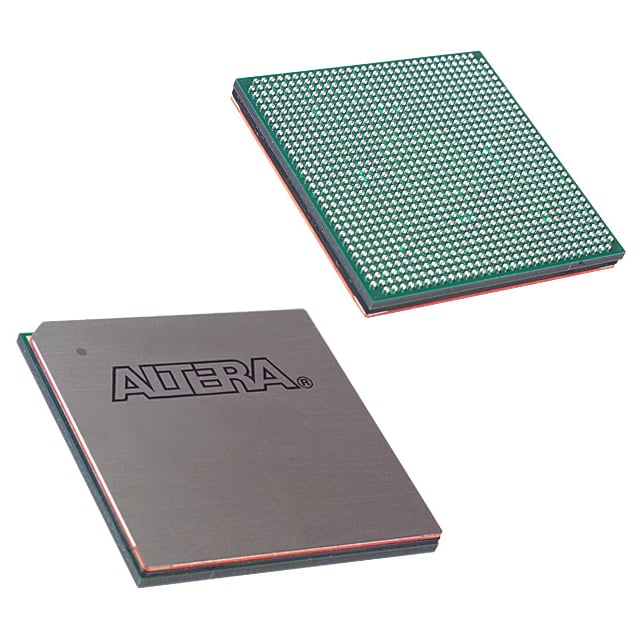
Introduction to Intel EPXA4F1020C1ES
The Intel EPXA4F1020C1ES is a member of the Intel Excalibur FPGA family, designed to provide a blend of programmable logic and embedded processing capabilities. This device is particularly suited for applications that require high performance, flexibility, and efficient power consumption. With its rich feature set, the EPXA4F1020C1ES caters to various industries, including telecommunications, automotive, industrial automation, and consumer electronics.
Key Specifications
1. Architecture:
- The EPXA4F1020C1ES utilizes a unique architecture that combines an FPGA fabric with an embedded microprocessor core (ARM926EJ-S). This allows for both hardware and software programmability, enabling complex applications to be developed efficiently.
2. Logic Resources:
- The device features approximately 4,000 logic cells, providing ample resources for implementing combinational and sequential logic designs.
- It includes multiple dedicated hardware multipliers (up to 18x18 bits) that enhance the performance of arithmetic operations.
3. I/O Capabilities:
- The EPXA4F1020C1ES supports up to 144 user-configurable I/O pins.
- These I/O pins can be configured for various signaling standards such as LVTTL, LVCMOS, and differential signaling formats like LVDS (Low Voltage Differential Signaling).
4. Memory Features:
- The device comes equipped with embedded SRAM blocks totaling up to 512 Kbits.
- It supports external memory interfaces such as SDRAM and SRAM, allowing for flexible memory expansion options.
5. Performance Characteristics:
- The maximum operating frequency of the EPXA4F1020C1ES can reach up to 100 MHz.
- It is designed for low power consumption while maintaining high performance levels suitable for demanding applications.
6. Embedded Processing:
- The ARM926EJ-S core operates at speeds up to 200 MHz and provides a comprehensive instruction set architecture (ISA) that supports both C/C++ programming and assembly language development.
- This integrated processor allows for real-time data processing alongside hardware-implemented functions.
7. Development Tools:
- Intel offers a robust suite of development tools including the Quartus Prime software suite for design entry, simulation, and synthesis.
- Additionally, support for software development is provided through tools like the ARM Development Studio (ADS), facilitating seamless integration between hardware and software design.
8. Package Type:
- The EPXA4F1020C1ES is available in a BGA (Ball Grid Array) package format which enhances thermal performance and allows for higher pin density in compact designs.
9. Temperature Range:
- This FPGA is rated for commercial temperature ranges (0°C to +70°C), making it suitable for standard operating environments.
10. Power Supply Requirements:
- The device typically operates at a core voltage of 1.2V with I/O voltages ranging from 2.5V to 3.3V depending on configuration needs.
11. Security Features:
- The EPXA4F1020C1ES incorporates security features such as secure booting capabilities to protect against unauthorized access and tampering of the embedded application.
Applications
The versatility of the Intel EPXA4F1020C1ES makes it ideal for various applications:
- Telecommunications: Used in routers, switches, and base stations where high-speed data processing is crucial.
- Industrial Automation: Suitable for control systems requiring real-time processing capabilities coupled with flexible logic implementation.
- Automotive Systems: Employed in advanced driver-assistance systems (ADAS) where complex algorithms need efficient execution.
- Consumer Electronics: Ideal for devices needing customizable logic solutions without compromising on performance or power efficiency.
Conclusion
The Intel EPXA4F1020C1ES stands out as a powerful solution in the realm of FPGAs by integrating programmable logic with an embedded processor core. Its comprehensive specifications allow engineers to develop sophisticated applications across various sectors while benefiting from low power consumption and high performance. With strong support from Intel’s development ecosystem, designers can leverage this FPGA effectively to bring their innovative ideas to fruition while reducing time-to-market significantly.