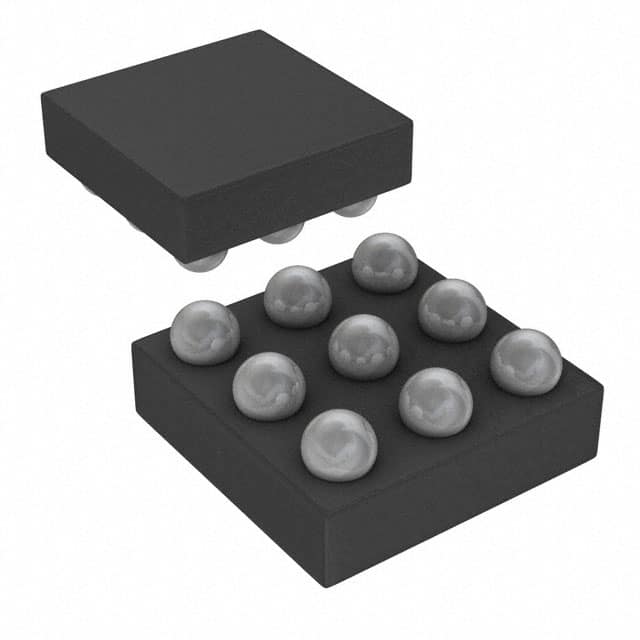
The Maxim Integrated MAX4712EUE is a precision current-sense amplifier designed for high-side current monitoring applications. It integrates a low-offset, high-gain amplifier with a precision shunt resistor interface to deliver accurate current measurement in DC and low-frequency AC systems. The device supports bidirectional current sensing with a single supply and provides a linear voltage output proportional to the measured current. Its compact SOT23-5 package, low quiescent current, and high accuracy make it suitable for battery-powered systems, automotive electronics, industrial motor control, and power management applications.
## Functional Description
* High-side current sensing: Measures voltage drop across an external shunt resistor placed between the supply rail and the load, avoiding interference with ground paths.
* Bidirectional capability: Allows measurement of both forward and reverse currents using a single amplifier with appropriate reference voltage.
* Differential input: Optimized for low-resistance shunts, maintaining accuracy and minimizing power loss.
* Single-supply operation: Can operate from 2.7 V to 5.5 V, compatible with standard logic and microcontroller systems.
* Voltage output: Provides a linear, single-ended output proportional to the current through the shunt resistor.
## Electrical Characteristics
* Supply voltage (VCC): 2.7 V to 5.5 V, ensuring compatibility with 3.3 V and 5 V systems.
* Input voltage range (V_IN+ and V_IN-): 0 V to VCC, allowing direct connection to high-side shunt resistors.
* Output voltage swing: 0 V to VCC - 0.1 V typical at low load, ensuring rail-to-rail signal detection for digital conversion.
* Quiescent current: 160 µA typical, supporting battery-powered and low-power applications.
* Gain (V_OUT / V_SHUNT): 25 V/V nominal, allowing small shunt voltage drops to be amplified for measurable output.
* Offset voltage: ±100 µV typical, minimizing measurement errors in low-current applications.
* Common-mode rejection ratio (CMRR): 80 dB minimum at V_CM = 0 to 26 V, maintaining accuracy across supply variations.
* Input bias current: 0.1 µA typical, reducing error contribution in high-impedance shunt networks.
* Temperature coefficient of offset: 1 µV/°C typical, supporting precise measurements over industrial temperature ranges.
## Accuracy and Performance
* Linearity error: ±0.2% of full scale, ensuring reliable analog measurement for system control.
* Bandwidth: 50 kHz typical, sufficient for DC and low-frequency AC current monitoring.
* Load regulation: Minimal voltage deviation under output load changes up to 10 kΩ, ensuring reliable ADC interfacing.
* Noise: 50 µV RMS typical, supporting accurate low-current detection with minimal interference.
* Response time: 2 µs typical for 10% to 90% step response, enabling dynamic current monitoring in switching applications.
## Thermal Characteristics
* Operating temperature range (T_A): -40°C to +125°C, suitable for automotive, industrial, and harsh-environment applications.
* Storage temperature (T_STG): -65°C to +150°C, providing reliability during shipment and storage.
* Junction-to-ambient thermal resistance (RθJA): Approximately 200°C/W in free air for SOT23-5 package, reduced with proper PCB copper and thermal vias.
## Mechanical and Package Features
* Package type: SOT23-5, surface-mount, compact footprint suitable for dense PCB layouts.
* Package dimensions: 2.9 mm × 1.6 mm body, with 0.95 mm lead span, optimized for automated assembly.
* Lead finish: RoHS-compliant tin, compatible with lead-free reflow soldering processes.
* Pin configuration: 5-pin layout with VIN+, VIN-, VOUT, VREF, and GND for straightforward integration.
## Applications
* Battery management systems for portable devices, laptops, and electric vehicles, enabling accurate charge/discharge monitoring.
* High-side current monitoring in power converters and DC-DC regulators.
* Industrial motor control circuits, providing feedback for load regulation and overcurrent protection.
* Overcurrent protection and energy metering applications, measuring current consumption in real time.
* Automotive electronics, monitoring battery current and alternator loads while isolating ground paths.
* Energy management systems, ensuring precise metering for distributed power networks and load balancing.
## Design and Integration Considerations
* Shunt resistor selection: Choose low-resistance shunts to minimize power loss while maintaining measurable voltage drops; use metal-film or precision resistors to reduce temperature coefficient effects.
* PCB layout: Place the device close to the shunt resistor and minimize trace length to reduce parasitic voltage drops and noise.
* Reference voltage: For bidirectional operation, connect VREF to mid-supply to measure positive and negative currents accurately.
* Thermal derating: Ensure PCB copper area and vias dissipate heat from shunt resistors to prevent thermal drift affecting measurement accuracy.
* Filtering: A small capacitor on the output can reduce high-frequency noise without affecting response for DC and low-frequency measurements.
* Interface: Directly interface the output to ADCs in microcontrollers for digitized current measurements with minimal signal conditioning.
* Supply stability: Maintain stable VCC to avoid gain and offset fluctuations impacting measurement accuracy.
The Maxim MAX4712EUE delivers a precise, low-power solution for high-side current monitoring. Its combination of high CMRR, fast response, bidirectional capability, and compact SOT23-5 footprint makes it highly suitable for automotive, industrial, and portable applications requiring reliable current sensing with minimal system overhead.