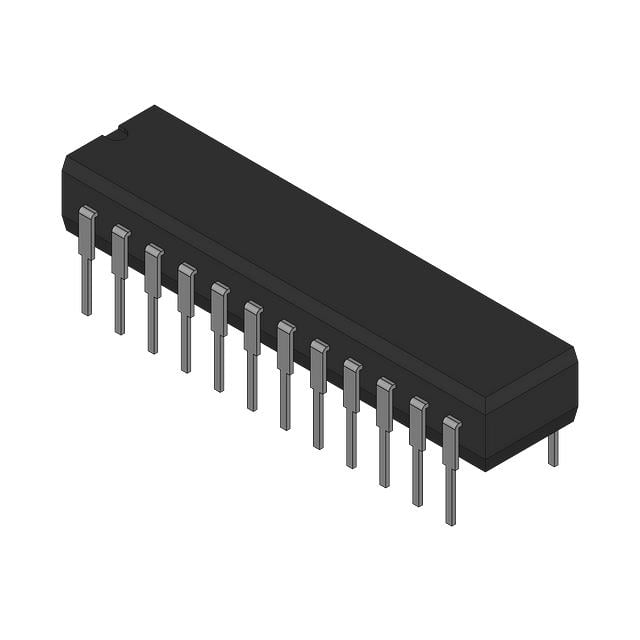
Introduction to Fairchild Semiconductor 100331QCX
The Fairchild Semiconductor 100331QCX is a high-performance, low-power operational amplifier (op-amp) designed for a variety of applications, including signal conditioning, audio processing, and sensor interfacing. Known for its versatility and reliability, the 100331QCX is suitable for both consumer and industrial applications where precision and efficiency are critical.
Key Specifications
- Supply Voltage (V_S): ±2.5V to ±15V
- Input Offset Voltage (V_os): 0.5 mV (typical)
- Input Bias Current (I_B): 20 nA (typical)
- Common Mode Rejection Ratio (CMRR): 100 dB (typical)
- Power Supply Rejection Ratio (PSRR): 100 dB (typical)
- Gain Bandwidth Product: 1 MHz
- Slew Rate: 0.3 V/µs
- Output Current: ±30 mA
- Total Harmonic Distortion (THD): 0.01% at V_out = 1 V RMS
- Package Type: SOIC-8 or PDIP-8
Performance Characteristics
The performance of the Fairchild 100331QCX is characterized by several key metrics that make it an excellent choice for various applications:
1. Low Input Offset Voltage: With a typical input offset voltage of just 0.5 mV, the op-amp provides high accuracy in signal amplification, making it suitable for precision applications.
2. High CMRR and PSRR: The high common mode rejection ratio and power supply rejection ratio ensure that the op-amp maintains stable performance despite variations in supply voltage and input signals, which is crucial in noisy environments.
3. Gain Bandwidth Product: The gain bandwidth product of 1 MHz allows for effective operation in a wide range of frequencies, making it suitable for both low-frequency and moderate-frequency applications.
4. Slew Rate: The slew rate of 0.3 V/µs enables the op-amp to handle fast-changing signals without significant distortion, which is essential in audio processing and other dynamic signal applications.
Thermal Performance
The thermal characteristics of the Fairchild 100331QCX contribute to its reliability and longevity in various operating conditions:
1. Operating Temperature Range: The device operates effectively within a temperature range of -40°C to +85°C, allowing it to be used in diverse environmental conditions.
2. Thermal Shutdown Protection: While specific thermal shutdown features may not be explicitly mentioned, the robust design ensures that the op-amp can handle thermal stress effectively during operation.
3. Power Dissipation: The maximum power dissipation rating allows designers to calculate thermal management strategies when integrating this op-amp into their systems.
Applications
The Fairchild Semiconductor 100331QCX is versatile and can be applied across numerous fields:
1. Signal Conditioning: Ideal for amplifying weak signals from sensors or transducers before further processing.
2. Audio Applications: Used in audio amplifiers and mixers where low noise and distortion are critical for sound quality.
3. Data Acquisition Systems: Suitable for interfacing with ADCs in measurement systems due to its precision characteristics.
4. Active Filters: Can be utilized in designing active filter circuits where precise gain control is needed.
5. Medical Devices: Its low noise characteristics make it appropriate for medical instrumentation where accuracy is paramount.
Development Ecosystem
Fairchild Semiconductor provides resources that facilitate the design process using the 100331QCX:
1. Evaluation Boards: Available evaluation boards allow engineers to test performance metrics under real-world conditions quickly.
2. Design Tools: Simulation tools help engineers model circuit behavior using the op-amp before implementation.
3. Comprehensive Documentation: Detailed datasheets, application notes, and reference designs assist developers in optimizing their designs according to specific requirements.
4. Technical Support: Access to technical support teams can help resolve design challenges efficiently.
In summary, the Fairchild Semiconductor 100331QCX operational amplifier stands out as a reliable component suited for a wide range of applications requiring precision amplification with low power consumption. Its impressive specifications—such as low input offset voltage, high CMRR, and sufficient gain bandwidth—make it an ideal choice for engineers looking to integrate high-performance analog solutions into their designs while maintaining system efficiency and accuracy.