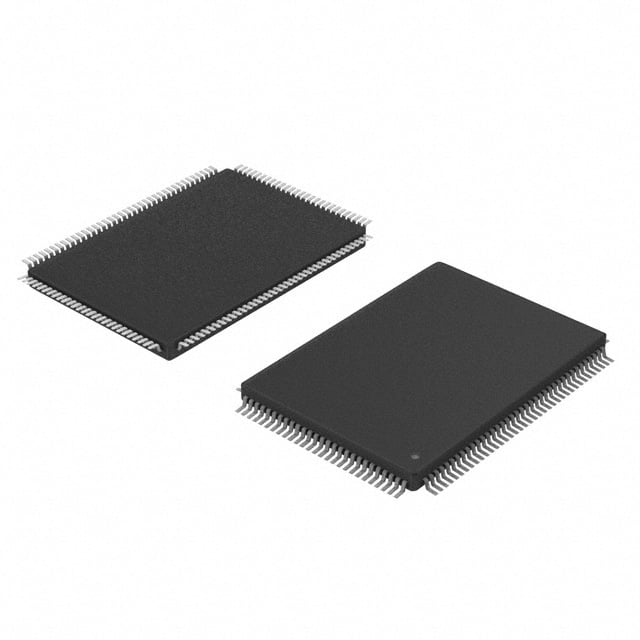
The MCIMX7D5EVM10SD is a comprehensive evaluation and development module based on the NXP i.MX7 Dual (MCIMX7D) processor, designed to facilitate the development and testing of embedded applications. This evaluation module provides a robust platform for engineers and developers to explore the capabilities of the i.MX7D processor and create innovative solutions for a variety of applications.
## Overview
The MCIMX7D5EVM10SD is part of NXP%27s i.MX series of processors, which are well-regarded for their high performance and power efficiency. The i.MX7 Dual processor at the core of this evaluation module is particularly suited for applications requiring a balance between performance and energy efficiency, such as industrial control, automotive infotainment, and consumer electronics.
## Key Features
1. Processor and Performance:
- CPU: The module is powered by the i.MX7 Dual processor, which features a dual-core architecture. It includes an ARM Cortex-A7 core for high-performance processing and an ARM Cortex-M4 core for real-time tasks and low-power operation.
- Clock Speed: The ARM Cortex-A7 cores can operate up to 1 GHz, providing substantial computational power for complex applications.
2. Memory:
- RAM: The evaluation module includes 1 GB of DDR3L RAM. This provides ample memory for multitasking and running applications smoothly.
- Storage: It features 8 GB of eMMC (embedded MultiMediaCard) storage. This onboard flash memory is used for storing the operating system, application software, and data.
3. Display and Graphics:
- Graphics Processing Unit (GPU): The i.MX7D processor includes a Vivante GC320 GPU, which supports 2D and 3D graphics rendering. This capability is beneficial for applications requiring graphical user interfaces (GUIs) and visual content.
4. Connectivity:
- USB Ports: The module is equipped with USB host and USB OTG (On-The-Go) ports, allowing for connection to various peripherals and devices.
- Ethernet: It includes an Ethernet port for wired network connectivity, suitable for networked applications and internet access.
- Wireless Connectivity: While the module itself may not include wireless features, it often supports expansion through external wireless modules or interfaces.
5. I/O and Expansion:
- General-Purpose I/O (GPIO): The module provides numerous GPIO pins for interfacing with external devices, sensors, and other peripherals.
- Serial Interfaces: It includes various serial communication interfaces such as UART (Universal Asynchronous Receiver/Transmitter), I2C (Inter-Integrated Circuit), and SPI (Serial Peripheral Interface).
- Analog-to-Digital Converter (ADC): The i.MX7D processor supports ADC channels for analog signal measurement.
6. User Interface and Peripherals:
- Touchscreen: The module often includes a touchscreen display, allowing for interactive user interfaces and testing of touch-based applications.
- Buttons and LEDs: Built-in buttons and LEDs are available for user input and status indication, simplifying the development and debugging process.
7. Power Supply:
- Power Requirements: The evaluation module typically operates from a standard power supply, with specific voltage and current requirements detailed in the module’s technical documentation.
8. Software Support:
- Operating System: The module supports various operating systems, including Linux-based distributions. NXP often provides software development kits (SDKs) and board support packages (BSPs) to facilitate development.
- Development Tools: The module is compatible with a range of development tools, including IDEs (Integrated Development Environments) and debugging tools.
## Specifications
- Processor: NXP i.MX7 Dual (ARM Cortex-A7 and Cortex-M4)
- CPU Clock Speed: Up to 1 GHz
- RAM: 1 GB DDR3L
- Storage: 8 GB eMMC
- Graphics: Vivante GC320 GPU
- USB Ports: Host and OTG
- Ethernet: 10/100/1000 Mbps
- GPIO, UART, I2C, SPI: Available
- ADC: Supported
- Display: Touchscreen
- Power Supply: Specific requirements detailed in documentation
## Applications
1. Industrial Automation:
- Control Systems: The module can be used for developing control systems and interfaces for industrial machinery and processes.
- Data Acquisition: Suitable for applications requiring data collection and analysis from various sensors.
2. Automotive:
- Infotainment Systems: The module’s graphics capabilities and connectivity options make it suitable for automotive infotainment applications.
- Vehicle Diagnostics: It can be used for developing diagnostic tools and interfaces for automotive systems.
3. Consumer Electronics:
- Smart Home Devices: Ideal for developing smart home products with touch interfaces and connectivity features.
- Portable Devices: Its balance of performance and power efficiency is beneficial for battery-operated consumer devices.
4. Medical Devices:
- Health Monitoring: The module can be used in medical devices for monitoring and data collection, providing real-time feedback and analysis.
## Advantages
1. Versatile Platform: The MCIMX7D5EVM10SD offers a comprehensive set of features and interfaces, making it a versatile platform for various embedded applications.
2. High Performance and Efficiency: With its dual-core architecture and efficient power management, the module provides a good balance of performance and energy efficiency.
3. Extensive Connectivity: The module’s extensive connectivity options and expansion capabilities make it suitable for a wide range of applications.
4. Software and Development Support: NXP’s support for multiple operating systems and development tools enhances the development experience and accelerates time-to-market.
## Conclusion
The MCIMX7D5EVM10SD evaluation module is a powerful and versatile platform based on the NXP i.MX7 Dual processor. It offers a robust set of features, including dual-core processing, ample memory, and extensive connectivity options, making it suitable for a diverse range of embedded applications. Whether used for industrial control, automotive infotainment, consumer electronics, or medical devices, this module provides the necessary tools and support for successful development and deployment.