Texas Instruments LM224DR Overview
The Texas Instruments LM224DR is a dual operational amplifier (op-amp) designed for general-purpose applications. It is an ideal choice for use in signal amplification, filtering, and various analog processing tasks. The LM224DR is built using a bipolar junction transistor (BJT) design, which ensures reliable performance in diverse conditions. It is commonly used in applications where low power consumption, high input impedance, and accurate signal conditioning are critical.
Key Features
* Dual Operational Amplifier: The LM224DR contains two independent op-amps in a single package, making it ideal for space-constrained applications where multiple amplifiers are required but only limited board space is available.
* Low Power Consumption: Designed to operate with minimal power draw, the LM224DR features a low quiescent current, making it a suitable choice for battery-powered devices and energy-sensitive systems. Its power consumption is typically around 1.3 mA per amplifier.
* Wide Supply Voltage Range: The device supports a broad input voltage range from 3V to 32V for single-supply operation, and ±1.5V to ±16V for dual-supply operation. This makes it versatile for a variety of power supply configurations.
* Rail-to-Rail Input and Output: The LM224DR op-amps are capable of rail-to-rail input and output, which allows the op-amps to handle voltages very close to the supply rails. This feature is particularly beneficial when working with low-voltage applications or systems where signal swings are constrained to the supply limits.
* High Input Impedance: The device offers a very high input impedance, making it ideal for interfacing with high-impedance signal sources such as sensors, photodiodes, and other delicate signal sources that need to be amplified without loading the signal.
* Wide Bandwidth: The LM224DR provides a slew rate of 0.3 V/µs, and a gain-bandwidth product (GBWP) of 1 MHz, ensuring adequate performance for most audio and low-frequency control applications. While it may not be suitable for high-speed applications, it delivers sufficient bandwidth for most general-purpose tasks.
Electrical Specifications
* Operating Voltage Range: The LM224DR operates over a broad voltage range, from a single supply of 3V to 32V, or a dual supply of ±1.5V to ±16V, making it versatile across various power supply configurations.
* Input Voltage Range: The input voltage range is designed to handle signals within the supply voltage limits, making it highly suitable for applications that need to handle varying input signals without significant distortion or clipping.
* Input Offset Voltage: The LM224DR has a low input offset voltage, typically 5 mV. This low offset voltage ensures accurate signal amplification, particularly in precision measurement systems and signal conditioning circuits.
* Input Bias Current: The input bias current is typically 50 nA, which is low enough to minimize error in high-impedance signal processing circuits.
* Output Drive: The LM224DR is capable of driving outputs with a voltage swing close to the rails, ensuring maximum utilization of the supply voltage. The output voltage swing is typically from 0V to (V+ - 1.5V) for a single supply voltage, or ±(V+ - 1V) for dual supply configurations.
* Common-Mode Rejection Ratio (CMRR): The LM224DR features a high CMRR of 80 dB at a supply voltage of 15V, ensuring that the op-amp rejects common-mode signals effectively, which is crucial for differential signal applications.
* Power Consumption: As previously mentioned, the LM224DR has a low quiescent current of approximately 1.3 mA per amplifier. This makes it a low-power choice for energy-efficient designs, including battery-powered devices.
Package and Size
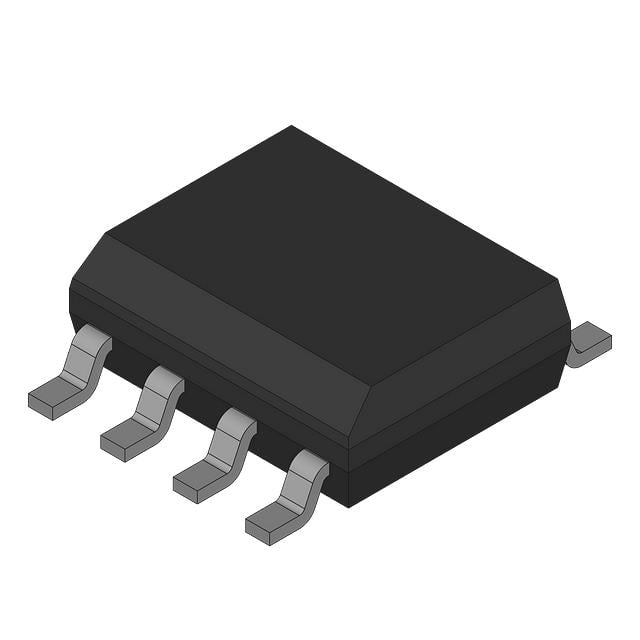
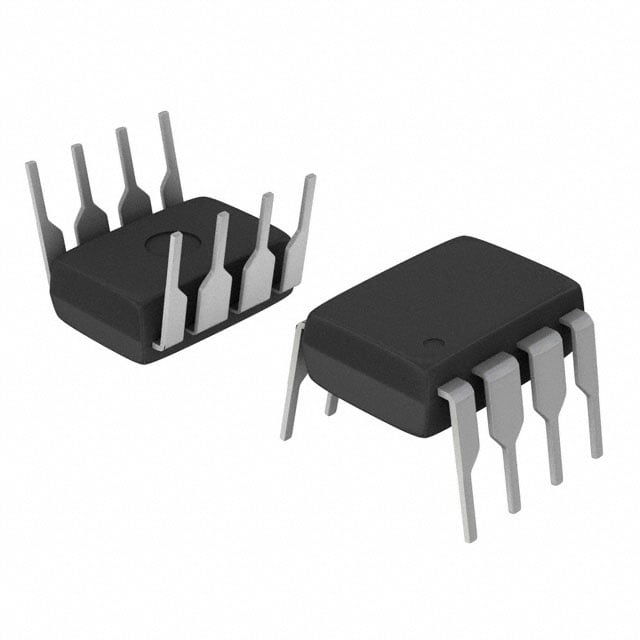
* The LM224DR is available in an 8-pin SOIC (Small Outline Integrated Circuit) package, making it suitable for use in compact electronic designs. Its small footprint enables efficient use of PCB space while maintaining ease of handling and mounting.
* Thermal Performance: The device has a maximum junction temperature of 150°C, which allows it to operate in a wide range of environmental conditions, including those with higher ambient temperatures. This makes it suitable for industrial and automotive applications.
Applications
The Texas Instruments LM224DR is used in a variety of general-purpose and specialized applications, including:
* Signal Amplification: It is commonly used in audio and analog signal amplification, providing gain for low-level signals without introducing significant distortion or noise.
* Active Filters: The LM224DR is used in designing active filters, including low-pass, high-pass, and band-pass filters, due to its precision and ability to handle signals close to the rails.
* Voltage Followers/Buffers: The op-amp can be used as a voltage follower (buffer), providing impedance matching and driving high-current loads while maintaining signal integrity.
* Analog Signal Processing: It is used in analog signal processing systems, including instrumentation amplifiers, sensor interfaces, and measurement systems, where accurate and low-noise amplification is required.
* Comparator Circuits: The LM224DR can also be used in comparator applications, where the op-amp is configured to compare two voltages and trigger outputs based on the comparison.
* Oscillators: It is frequently used in the design of low-frequency oscillators for generating clock signals, timing circuits, and signal generators.
Conclusion
The Texas Instruments LM224DR is a versatile, low-power, and reliable dual operational amplifier with a broad supply voltage range, rail-to-rail input/output, and high input impedance. It is suitable for a variety of applications, including signal amplification, active filtering, and analog signal processing. With its low quiescent current and wide range of operating voltages, the LM224DR is an ideal choice for both battery-powered and industrial applications, where space, power efficiency, and precision are key design considerations.