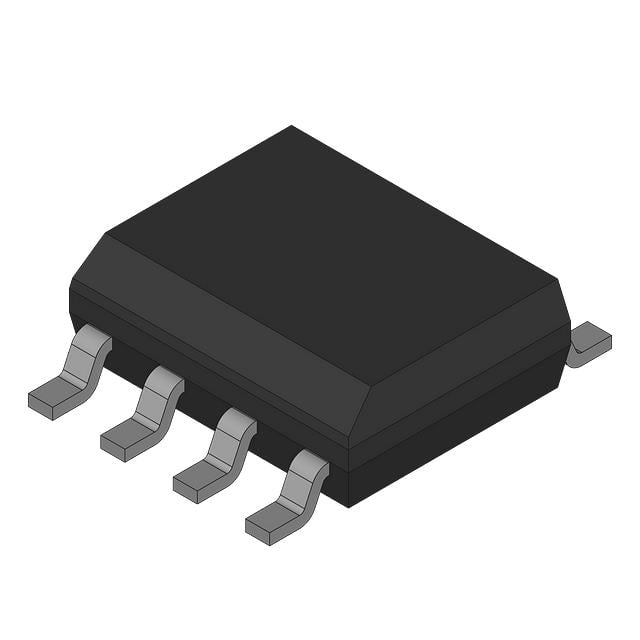
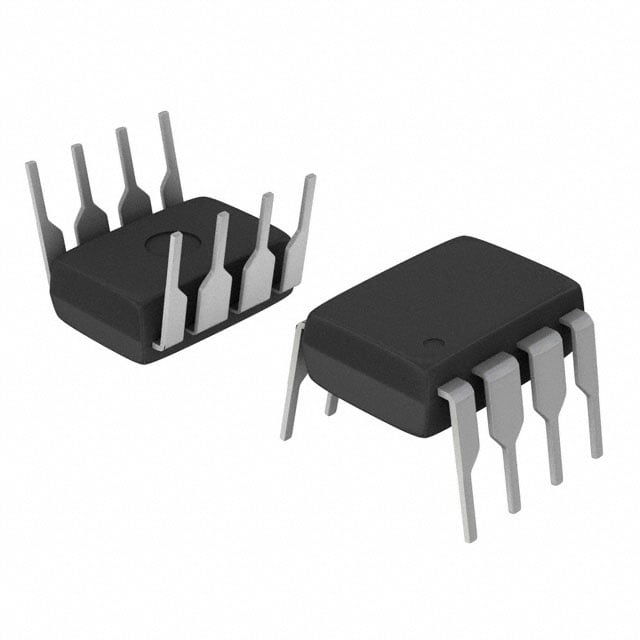
The Texas Instruments LM2900D is a versatile operational amplifier designed for high-performance analog signal processing. This quad operational amplifier is renowned for its wide bandwidth, high slew rate, and low noise characteristics, making it suitable for various demanding applications, including signal conditioning, filtering, and amplification in both industrial and consumer electronics.
## 1. General Description
The LM2900D is a quad operational amplifier, meaning it contains four independent op-amps in a single package. Each op-amp features a high-speed design with a wide gain-bandwidth product, ensuring efficient handling of high-frequency signals. This device is engineered to deliver precise performance with low noise and low distortion, making it ideal for use in high-fidelity audio systems, measurement equipment, and analog signal processing applications.
## 2. Key Features
- High-Speed Performance: Offers a high gain-bandwidth product and fast slew rate, allowing for rapid signal processing and high-speed operation.
- Low Noise: Designed to minimize noise interference, ensuring clean and accurate signal amplification.
- Wide Gain-Bandwidth Product: Provides versatility in handling various frequencies and signal types.
- Low Total Harmonic Distortion (THD): Ensures minimal distortion of the amplified signal, maintaining signal integrity.
- High Input Impedance: Offers high resistance to input signal sources, reducing loading effects and preserving signal quality.
- Short-Circuit Protection: Includes built-in protection to safeguard the op-amps against output short circuits.
## 3. Technical Specifications
3.1. Electrical Characteristics:
- Supply Voltage (VCC):
- Range: ±3V to ±15V (dual supply) or 6V to 30V (single supply).
- Input Offset Voltage (VOS):
- Typical: 2 mV.
- Maximum: 10 mV.
- Input Bias Current (IB):
- Typical: 10 nA.
- Maximum: 50 nA.
- Input Offset Current (IOS):
- Typical: 1 nA.
- Maximum: 5 nA.
- Open-Loop Gain (AOL):
- Typical: 100 dB.
- Gain-Bandwidth Product (GBWP):
- Typical: 5 MHz.
- Slew Rate (SR):
- Typical: 1 V/µs.
- Total Harmonic Distortion (THD):
- Typically: 0.02% at 1 kHz.
3.2. Switching Characteristics:
- Rise Time (tr):
- Typical: 200 ns.
- Settling Time (ts):
- Typical: 1 µs to 0.01% of final value.
3.3. Package Information:
- Package Type: SOIC (Small Outline Integrated Circuit).
- Package Size: 14-pin.
- Lead Pitch: 1.27 mm.
- Thermal Resistance:
- Junction-to-Ambient (RθJA): Typically 95°C/W.
3.4. Operating Temperature:
- Temperature Range: -40°C to 85°C.
3.5. Regulatory Compliance:
- RoHS Compliant: Meets restrictions on hazardous substances.
## 4. Applications
The LM2900D is suitable for a broad range of applications, including:
- Signal Conditioning: Amplifies and conditions analog signals for further processing or measurement.
- Filtering: Used in active filters for various signal processing applications.
- Audio Systems: Provides high-fidelity amplification for audio signal processing.
- Instrumentation: Enhances measurement systems with precise and reliable analog signal processing.
- Data Acquisition Systems: Ensures accurate signal amplification and conditioning in data acquisition systems.
## 5. Development and Support
Texas Instruments provides comprehensive resources to assist with the development and integration of the LM2900D:
- Datasheets: Detailed datasheets are available, offering extensive information on electrical characteristics, functional descriptions, and application notes.
- Application Notes: Technical documents provide guidance on designing circuits with the LM2900D and optimizing performance.
- Design Tools: TI’s simulation tools and design resources help with circuit design and integration.
- Technical Support: Access to Texas Instruments’ technical support team for troubleshooting and design assistance.
## Summary
The Texas Instruments LM2900D is a high-performance quad operational amplifier that excels in speed, accuracy, and low noise characteristics. With its wide gain-bandwidth product, high input impedance, and low total harmonic distortion, the LM2900D is well-suited for demanding applications such as signal conditioning, audio processing, and instrumentation. Its robust design and support resources from Texas Instruments make it a reliable choice for enhancing analog signal processing in various electronic systems.