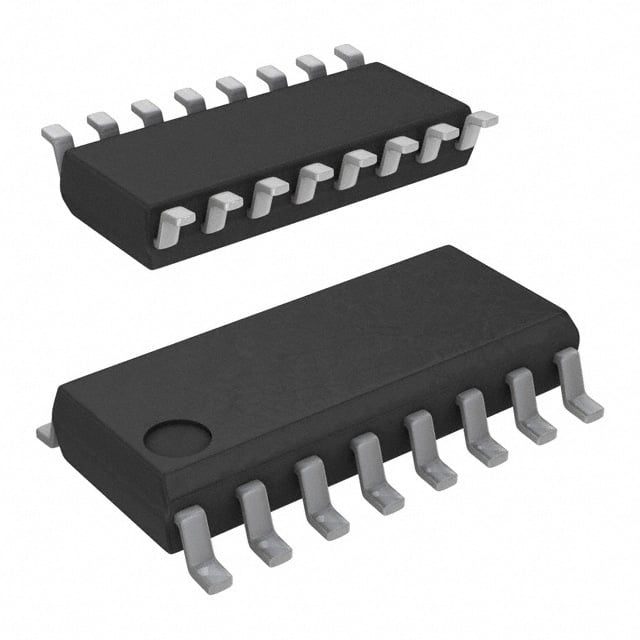
Q1: What is the Skyworks Solutions SI2457-D-FTR?
A: The Skyworks Solutions SI2457-D-FTR is a highly integrated, low-power RF transceiver designed for a wide range of wireless communication applications. It is particularly suited for short-range communication systems, such as wireless sensor networks, remote controls, and low-power IoT devices.
Q2: What is the frequency range of the SI2457-D-FTR?
A: The Skyworks SI2457-D-FTR operates within a frequency range of 2400 MHz to 2483.5 MHz, which covers the popular ISM (Industrial, Scientific, and Medical) band used for many wireless communication standards, including Bluetooth, Zigbee, and Wi-Fi.
Q3: What modulation schemes are supported by the SI2457-D-FTR?
A: The SI2457-D-FTR supports various modulation schemes, including OQPSK (Offset Quadrature Phase Shift Keying), GFSK (Gaussian Frequency Shift Keying), and FSK (Frequency Shift Keying). These modulation methods are widely used in wireless communication systems for efficient data transmission.
Q4: What is the supply voltage range for the SI2457-D-FTR?
A: The Skyworks SI2457-D-FTR operates with a supply voltage range of 1.8V to 3.6V. This low-voltage operation ensures energy-efficient performance, making the device ideal for battery-powered and portable wireless applications.
Q5: What is the typical current consumption of the SI2457-D-FTR?
A: The SI2457-D-FTR is designed for low power consumption, with typical current consumption values as low as 19 mA during transmit mode and 13 mA in receive mode. This low current consumption makes it suitable for applications that need to maximize battery life, such as remote sensors and wearables.
Q6: Does the SI2457-D-FTR support data encryption?
A: Yes, the Skyworks SI2457-D-FTR includes support for data encryption, ensuring secure wireless communication. This is particularly important for applications where security and privacy are critical, such as in IoT devices and wireless sensor networks.
Q7: What is the output power of the SI2457-D-FTR?
A: The SI2457-D-FTR provides an output power of up to +20 dBm (100 mW), which is sufficient for most short-range wireless communication applications. This power level is ideal for achieving reliable communication over distances of up to 100 meters, depending on the environment and antenna configuration.
Q8: What is the receiver sensitivity of the SI2457-D-FTR?
A: The receiver sensitivity of the Skyworks SI2457-D-FTR is typically -103 dBm at a data rate of 250 kbps. This high sensitivity allows the device to receive weak signals over longer distances, making it suitable for applications where signal strength may fluctuate, such as in outdoor or industrial environments.
Q9: Does the SI2457-D-FTR include an integrated antenna?
A: No, the Skyworks SI2457-D-FTR does not include an integrated antenna. It is designed to work with an external antenna, allowing for flexibility in antenna selection based on the specific requirements of the application, such as range, gain, and directionality.
Q10: What is the maximum data rate supported by the SI2457-D-FTR?
A: The SI2457-D-FTR supports a maximum data rate of up to 250 kbps. This data rate is sufficient for many low-power wireless communication protocols, including Zigbee and similar wireless IoT technologies, which require moderate data throughput and long-range communication.
Q11: What are the key applications of the SI2457-D-FTR?
A: The Skyworks SI2457-D-FTR is ideal for applications such as wireless sensor networks, smart meters, remote controls, home automation systems, and asset tracking. Its low power consumption, moderate data rate, and extended range make it well-suited for IoT (Internet of Things) and other short-range wireless communication solutions.
Q12: How does the SI2457-D-FTR ensure reliable communication in noisy environments?
A: The SI2457-D-FTR features advanced signal processing capabilities that help mitigate the effects of interference and noise. It includes a high-quality receiver with good sensitivity, error detection mechanisms, and modulation techniques that enhance the robustness of communication, even in challenging environments with high levels of RF interference.
Q13: Does the SI2457-D-FTR have built-in power management features?
A: Yes, the SI2457-D-FTR incorporates advanced power management features that allow it to dynamically adjust its power consumption based on the operating mode. This helps conserve battery life in portable devices, allowing for longer operation between recharges or battery changes.
Q14: Is the SI2457-D-FTR compatible with other wireless communication protocols?
A: While the Skyworks SI2457-D-FTR is primarily designed for applications in the 2.4 GHz ISM band, it can be used in conjunction with other wireless communication protocols that operate in the same frequency range, such as Bluetooth, Zigbee, and Thread. However, it is optimized for low-power, short-range communication rather than high-speed or long-range protocols.
Q15: How is the SI2457-D-FTR configured and programmed?
A: The SI2457-D-FTR is typically configured and programmed using a serial interface, such as SPI (Serial Peripheral Interface). This allows the device to be easily integrated into embedded systems and customized for specific applications. Skyworks provides reference designs and software tools to help with the configuration and development process.
Q16: What is the operating temperature range of the SI2457-D-FTR?
A: The Skyworks SI2457-D-FTR operates within a temperature range of -40°C to +85°C. This wide operating temperature range makes the device suitable for use in a variety of environments, including outdoor applications, industrial settings, and automotive systems.
Q17: Does the SI2457-D-FTR support automatic frequency hopping?
A: Yes, the SI2457-D-FTR supports automatic frequency hopping, which helps reduce interference and improve the reliability of communication in environments with many wireless devices operating on the same frequency band. This feature is especially important in crowded ISM bands where multiple devices are transmitting simultaneously.
Q18: How does the SI2457-D-FTR handle data error correction?
A: The SI2457-D-FTR includes built-in error detection and correction features, such as CRC (Cyclic Redundancy Check) and forward error correction (FEC). These mechanisms help ensure reliable data transmission by detecting and correcting errors that may occur due to noise, interference, or signal degradation during communication.
Q19: Can the SI2457-D-FTR be used in mesh networking applications?
A: Yes, the SI2457-D-FTR is well-suited for mesh networking applications, particularly in low-power wireless networks. Its support for protocols like Zigbee and Thread, which rely on mesh networking for extended coverage and reliable communication, makes it an excellent choice for building scalable and robust wireless networks.
Q20: What are the key advantages of using the SI2457-D-FTR in wireless applications?
A: The key advantages of using the Skyworks SI2457-D-FTR include its low power consumption, high receiver sensitivity, moderate data rate, and support for secure, reliable communication in the 2.4 GHz ISM band. These features make it ideal for a wide range of wireless applications, particularly in IoT, home automation, and sensor networks where power efficiency and range are critical.