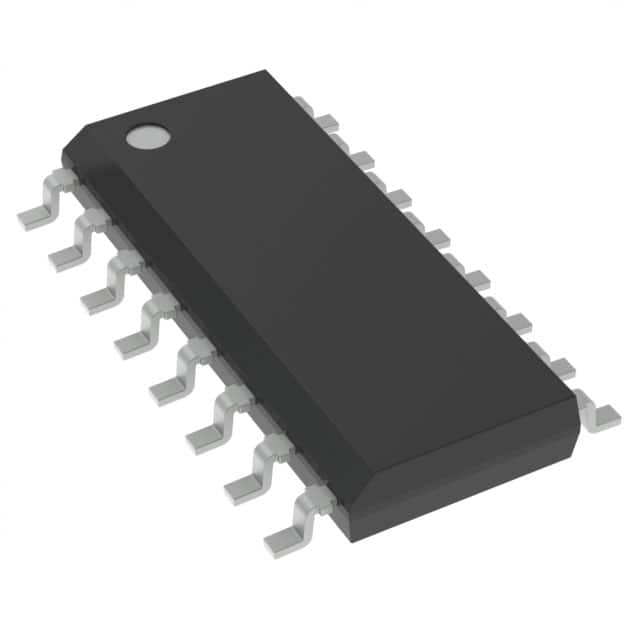
The M41T56M6E is a serial real-time clock (RTC) and calendar integrated circuit manufactured by STMicroelectronics. It is designed to provide accurate timekeeping and calendar functions in embedded systems while maintaining operation from a backup power source when the primary system supply is unavailable. The device combines a low-power oscillator, clock/calendar counters, power-fail detection circuitry, battery backup capability, and an I²C-compatible serial interface within a compact integrated circuit. The M41T56M6E is intended for applications requiring continuous time and date tracking, including industrial equipment, consumer electronics, communication systems, instrumentation, utility metering, security products, and embedded controllers.
## Device Function and Architectural Positioning
The M41T56M6E belongs to the category of serial real-time clock and calendar devices. Unlike microcontrollers that generate timing information through firmware and periodic interrupts, the RTC maintains autonomous timekeeping through dedicated hardware counters and oscillator circuitry.
The device continuously tracks seconds, minutes, hours, day-of-week, date, month, and year information. Calendar functionality automatically compensates for varying month lengths and incorporates leap-year correction.
The RTC architecture is optimized for extremely low power consumption, allowing continuous operation from a backup battery during primary power interruptions. This capability ensures preservation of time and calendar information without requiring software reconstruction after power restoration.
The device communicates with a host processor through a two-wire serial interface compatible with the I²C protocol, enabling straightforward integration into a broad range of embedded systems.
## Clock and Calendar Functionality
The M41T56M6E incorporates a complete clock and calendar subsystem based on binary-coded decimal (BCD) registers. Time and date information is maintained internally and can be accessed through the serial communication interface.
The clock function provides tracking of seconds, minutes, and hours. Calendar functions extend this capability to include day, date, month, and year management.
Automatic calendar compensation eliminates the need for software-based adjustment of month lengths. Leap-year correction is also performed internally, reducing processor overhead and simplifying application software development.
The hardware-based implementation ensures that timekeeping continues independently of host processor activity, allowing the RTC to maintain accurate calendar information even when the primary controller enters low-power modes or is temporarily inactive.
## Oscillator Architecture
The device incorporates an oscillator circuit designed for operation with an external 32.768 kHz tuning-fork crystal. This frequency is widely used in RTC applications because it allows efficient binary division to generate one-second timing intervals.
The oscillator architecture is optimized for low-power operation while maintaining stable clock generation. Proper crystal selection and PCB layout are important factors influencing overall timing accuracy.
Because the oscillator forms the fundamental time base of the RTC, board-level design considerations such as trace length minimization, noise reduction, and crystal placement contribute significantly to performance.
The integrated oscillator circuitry reduces external component requirements while simplifying implementation of accurate timekeeping functions.
## Power Management and Battery Backup Operation
A key feature of the M41T56M6E is its automatic power-fail detection and battery backup capability.
The device continuously monitors the primary supply voltage. When the main power source falls below an internally defined threshold, the RTC automatically switches to the backup supply source without interrupting timekeeping operation.
This automatic switchover mechanism allows clock and calendar information to be preserved during system shutdowns, power failures, battery replacement procedures, and maintenance activities.
Upon restoration of the primary supply voltage, the device automatically returns to normal operating mode while retaining all timekeeping information accumulated during backup operation.
The low-power architecture minimizes backup current consumption, extending battery service life in long-term applications.
## Electrical Characteristics
The M41T56M6E operates from a primary supply voltage range extending from 2.0 V to 5.5 V. This wide operating range enables compatibility with both modern low-voltage digital systems and traditional 5 V logic environments.
The device is designed specifically for low-power operation, an essential requirement for RTC applications where battery-backed operation may be required over extended periods.
Integrated power monitoring circuitry supervises supply conditions and manages transitions between primary and backup power sources.
The device's low-power characteristics support use in portable electronics, battery-operated systems, and equipment requiring long-term autonomous timekeeping.
## Serial Communication Interface
Communication with the M41T56M6E is accomplished through an I²C-compatible serial interface.
The interface consists of a serial clock line and a bidirectional serial data line, allowing efficient communication with microcontrollers, processors, programmable logic devices, and embedded control systems.
Internal registers are accessible through standard read and write transactions. The host system can retrieve current time and calendar information or update the clock during initialization and configuration procedures.
The serial interface architecture minimizes pin count while providing access to all clock, calendar, and control functions.
Support for standard I²C communication simplifies integration into systems that already utilize shared serial buses for sensors, memory devices, and peripheral controllers.
## Register Organization and Data Storage
The internal register map contains dedicated storage locations for all clock and calendar functions.
Time and date information is stored in BCD format, simplifying conversion between register values and human-readable representations.
Additional control registers provide access to device configuration functions and operating modes.
The register architecture is organized to support efficient software implementation while maintaining compatibility with common embedded-system programming techniques.
Because clock and calendar information is maintained within dedicated hardware registers, processor overhead is significantly reduced compared with software-based timing implementations.
## Input and Output Characteristics
The device provides dedicated power, backup supply, oscillator, and serial communication connections.
The I²C interface pins operate as open-drain signals and require external pull-up resistors for proper bus operation. This architecture enables multiple devices to share the same communication bus.
Oscillator input and output connections interface directly with the external 32.768 kHz crystal, forming the timing reference for all clock and calendar functions.
The backup supply input allows direct connection to a battery or other secondary power source used to maintain timekeeping during primary power loss.
## Operating Conditions and Design Considerations
Reliable operation of the M41T56M6E requires proper crystal selection, careful PCB layout, and appropriate power-supply design.
The oscillator network should be isolated from high-frequency switching signals and noise sources that could affect timing stability.
Backup power circuitry should be designed to ensure uninterrupted operation during supply transitions. Battery characteristics, expected backup duration, and environmental operating conditions should be considered during system design.
The device is intended for continuous operation in embedded systems requiring persistent time and calendar tracking.
## Typical Application Areas
The M41T56M6E is commonly used in industrial controllers, programmable logic systems, energy meters, telecommunications equipment, network infrastructure hardware, security systems, access-control products, data loggers, instrumentation equipment, medical electronics, consumer appliances, embedded computing platforms, and battery-backed information systems.
Its combination of real-time clock functionality, automatic calendar management, leap-year compensation, I²C-compatible communication, automatic power-fail detection, battery backup capability, low-power operation, and wide operating voltage range makes it an effective solution for embedded systems that require reliable long-term timekeeping independent of primary system power availability.