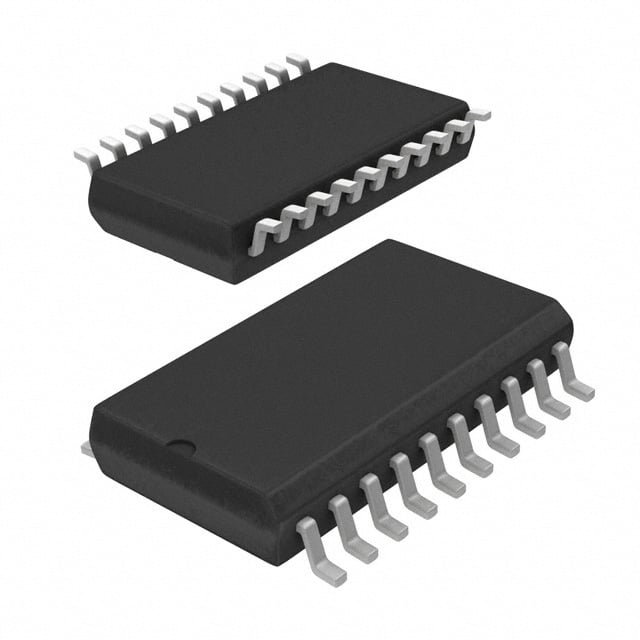
Q1: What type of device is STMicroelectronics ST7FLITE25F2M6?
A: The ST7FLITE25F2M6 is an 8-bit Flash microcontroller featuring an embedded CPU, Flash memory, and peripherals for embedded control applications.
Q2: What is the Flash memory capacity of STMicroelectronics ST7FLITE25F2M6?
A: It has 16 KB of in-system programmable Flash memory for storing application code and non-volatile data.
Q3: How much RAM does STMicroelectronics ST7FLITE25F2M6 have?
A: The device includes 1 KB of static RAM to support data manipulation and stack operations.
Q4: What is the maximum operating frequency of STMicroelectronics ST7FLITE25F2M6?
A: It can operate up to 16 MHz, enabling moderate-speed control and data processing for embedded systems.
Q5: What is the voltage range for STMicroelectronics ST7FLITE25F2M6 operation?
A: The microcontroller operates reliably within a 2.7V to 5.5V supply range, making it suitable for both battery-powered and industrial systems.
Q6: How many GPIO pins are available on STMicroelectronics ST7FLITE25F2M6?
A: It provides 30 general-purpose I/O pins, configurable for digital input, output, or alternate peripheral functions.
Q7: Does STMicroelectronics ST7FLITE25F2M6 include communication interfaces?
A: Yes, it includes a UART, SPI, and I²C interface for serial communication and peripheral control.
Q8: What type of timers are integrated into STMicroelectronics ST7FLITE25F2M6?
A: It features multiple 8-bit and 16-bit timers for event counting, pulse generation, and PWM control.
Q9: Does STMicroelectronics ST7FLITE25F2M6 have an ADC?
A: Yes, it includes a 10-bit analog-to-digital converter with multiple input channels for sensor interfacing.
Q10: What type of packages does STMicroelectronics ST7FLITE25F2M6 come in?
A: It is available in 44-lead LQFP or other compact packages suitable for surface-mount PCB integration.
Q11: Can STMicroelectronics ST7FLITE25F2M6 operate in low-power modes?
A: Yes, it supports standby and idle modes, reducing power consumption during inactive periods.
Q12: How is the Flash memory programmed in STMicroelectronics ST7FLITE25F2M6?
A: Flash memory can be programmed in-system via a serial or parallel interface, allowing firmware updates without removing the device.
Q13: What is the operating temperature range for STMicroelectronics ST7FLITE25F2M6?
A: It functions reliably from -40°C to +85°C, suitable for industrial and automotive applications.
Q14: Does STMicroelectronics ST7FLITE25F2M6 support external interrupts?
A: Yes, multiple external interrupt sources allow responsive event-driven applications.
Q15: What is the watchdog timer capability of STMicroelectronics ST7FLITE25F2M6?
A: It includes a built-in watchdog timer to detect and recover from software malfunctions.
Q16: Can STMicroelectronics ST7FLITE25F2M6 handle PWM generation?
A: Yes, the integrated timers provide pulse-width modulation outputs for motor control and LED dimming applications.
Q17: Does STMicroelectronics ST7FLITE25F2M6 have EEPROM?
A: No, it does not have dedicated EEPROM; persistent storage is achieved using Flash memory.
Q18: How does STMicroelectronics ST7FLITE25F2M6 manage clock sources?
A: It supports an internal RC oscillator and external crystal or resonator for accurate timing and system clock flexibility.
Q19: Is STMicroelectronics ST7FLITE25F2M6 suitable for real-time control applications?
A: Yes, with its timers, ADC, and communication interfaces, it is capable of real-time sensing, control, and communication tasks.
Q20: What makes STMicroelectronics ST7FLITE25F2M6 reliable in embedded systems?
A: Its integrated safety features, low-power operation, wide temperature range, and robust Flash memory ensure long-term reliable performance in various applications.