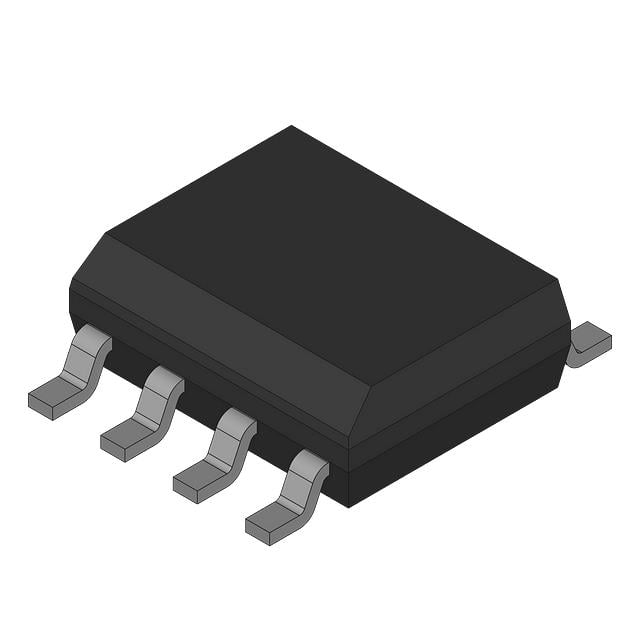
The Texas Instruments LM211QDREP is a dual voltage comparator designed for high-speed operation and versatility in various applications. This device is an ideal choice for applications such as zero-crossing detection, signal conditioning, and level shifting, thanks to its fast response time and low power consumption.
## Key Specifications
1. Device Type: Dual Voltage Comparator
2. Package Type: VQFN (4x4)
3. Supply Voltage Range (V_CC): 2.0V to 36V
4. Input Common Mode Voltage Range:
- V_CC - 2V to V_EE + 2V
5. Output Voltage Swing:
- Typically V_CC - 1.5V (at I_OUT = 2mA)
6. Input Offset Voltage (V_OS):
- ±5mV (max)
7. Input Bias Current (I_B):
- 20 nA (typ), 100 nA (max)
8. Propagation Delay Time (t_PD):
- 160 ns (typ) at V_CC = 15V
9. Power Supply Current (I_CC):
- 1.5 mA (typ) per comparator
10. Temperature Range:
- Operating: -40°C to 125°C
11. Hysteresis Voltage:
- Adjustable, typically set by external resistors
## Features
- Dual Comparator Configuration: The LM211QDREP contains two independent comparators, allowing for multiple comparisons in a single package, which can save space and simplify circuit design.
- High-Speed Operation: With a propagation delay of only 160 ns, this comparator can handle high-speed signals effectively, making it suitable for fast applications.
- Wide Supply Voltage Range: Its ability to operate from as low as 2.0V to as high as 36V provides design flexibility across various voltage levels.
- Low Power Consumption: With a typical supply current of just 1.5 mA, the LM211QDREP is efficient for battery-powered and portable applications.
- Internal Hysteresis: The built-in hysteresis feature allows for improved noise immunity, making it suitable for noisy environments and reducing false triggering.
## Applications
- Zero-Crossing Detectors: The LM211QDREP is commonly used in zero-crossing detection circuits, where it can help determine when a signal crosses a specified threshold.
- Voltage Level Shifters: This comparator can be employed to shift voltage levels between different parts of a circuit, facilitating communication between devices operating at different voltages.
- Signal Conditioning: It can be utilized in signal conditioning applications to compare input signals against reference voltages, enhancing signal integrity.
- Pulse Width Modulation (PWM): The device can be integrated into PWM circuits for motor control and other applications requiring precise control of duty cycles.
## Performance Characteristics
- Fast Switching Speed: The LM211QDREP exhibits fast switching characteristics, enabling rapid response times in applications that require quick signal processing.
- Temperature Stability: With an operating temperature range of -40°C to 125°C, the device is suitable for industrial and automotive environments where temperature variation can be significant.
- Robustness: The device is designed to withstand harsh conditions, ensuring reliability in various applications.
## Conclusion
The Texas Instruments LM211QDREP dual voltage comparator offers a combination of high performance, low power consumption, and versatile applications. Its specifications make it an excellent choice for engineers seeking to implement fast, reliable signal comparison in their designs. For detailed information, including application circuits and design recommendations, refer to the Texas Instruments datasheet and technical documentation.