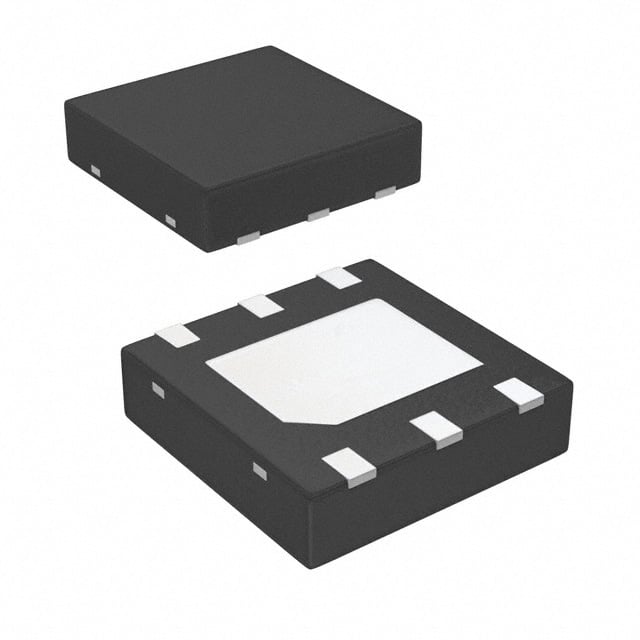
The Texas Instruments LMR23630DRRT is a highly integrated, synchronous step-down voltage regulator designed to deliver efficient power conversion in compact spaces. This device is ideal for applications where a small form factor and high efficiency are critical, such as in battery-powered devices, portable electronics, and power management systems in industrial applications. With its advanced features, the LMR23630 simplifies design and enhances reliability.
## Key Features
1. Wide Input Voltage Range:
- The LMR23630 operates with an input voltage range of 4.5V to 36V, making it versatile for various power sources.
2. High Efficiency:
- The device achieves efficiencies up to 95%, reducing thermal dissipation and enhancing battery life in portable applications.
3. Output Voltage Options:
- Adjustable output voltage can be set from 0.8V to 5V, allowing it to power a wide range of devices.
4. High Output Current:
- Capable of delivering up to 3A of output current, suitable for high-performance applications.
5. Synchronous Operation:
- Integrated high-side and low-side MOSFETs enhance efficiency and minimize external component counts.
6. Compact Size:
- Housed in a small 8-pin VSON package (3mm x 3mm), ideal for space-constrained designs.
7. Built-in Soft Start:
- The soft start feature reduces inrush current during startup, preventing potential damage to the load.
8. Thermal Protection:
- Integrated thermal shutdown safeguards against overheating, ensuring long-term reliability.
9. Adjustable Switching Frequency:
- Switching frequency can be set from 200 kHz to 2.2 MHz, allowing for design flexibility and optimization of size vs. efficiency.
10. Compensation:
- Internal compensation minimizes external component requirements, simplifying design.
## Electrical Specifications
Here are the critical electrical specifications for the LMR23630DRRT:
- Input Voltage Range: 4.5V to 36V
- Output Voltage Range: Adjustable from 0.8V to 5V
- Maximum Output Current: 3A
- Efficiency: Up to 95%
- Switching Frequency: Adjustable from 200 kHz to 2.2 MHz
- Soft Start Time: Typically 1 ms
- Thermal Shutdown Temperature: 160°C (typical)
- Operating Temperature Range: -40°C to +125°C
- Quiescent Current: 14 µA (typical)
- Maximum Duty Cycle: 95%
- Output Voltage Regulation: ±2%
## Pin Configuration
The LMR23630DRRT is available in an 8-pin VSON package. The pin configuration includes:
- VIN: Input voltage pin.
- GND: Ground reference pin.
- SW: Switch pin, connected to the inductor.
- VOUT: Output voltage pin.
- COMP: Compensation pin for stability.
- FB: Feedback pin, used to set the output voltage.
- SS: Soft start pin, controls the soft start function.
- SW2: Additional switch pin for improved efficiency.
## Applications
The LMR23630DRRT is suitable for a wide range of applications, including:
1. Battery-Powered Devices:
- Ideal for portable electronics that require efficient power management.
2. Consumer Electronics:
- Can be used in devices such as smartphones, tablets, and wearable technology.
3. Industrial Power Management:
- Supports industrial automation systems and sensors, providing stable voltage levels.
4. Telecommunications:
- Suitable for powering communication equipment where efficiency and reliability are crucial.
5. Automotive Applications:
- Can be employed in automotive electronics, ensuring robust performance under varying conditions.
## Development Tools
Texas Instruments offers various development tools to assist engineers in designing with the LMR23630DRRT:
- Evaluation Module (EVM): Provides a platform for testing and validating performance under real-world conditions.
- WEBENCH® Power Designer: An online tool that helps designers simulate circuit performance and select components.
- Data Sheets and Application Notes: Comprehensive documentation that includes specifications, typical applications, and design considerations.
## Conclusion
The Texas Instruments LMR23630DRRT is a versatile, efficient step-down voltage regulator suitable for a wide range of applications. Its high efficiency, compact size, and advanced features make it an excellent choice for designers looking to enhance power management in their systems. For further details, including design guidelines and application circuits, refer to the official Texas Instruments documentation.