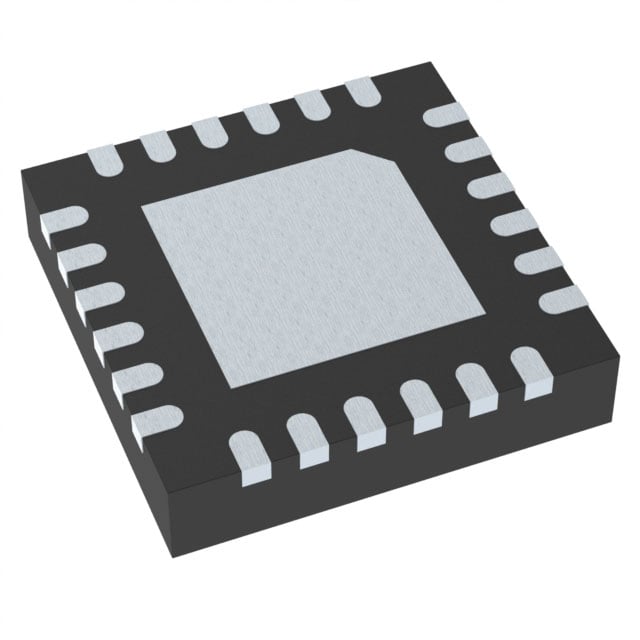
The Texas Instruments TLK110PT is an industrial-grade single-port 10/100 Mbps Ethernet Physical Layer (PHY) transceiver designed to provide robust and reliable Ethernet connectivity for industrial, automotive, and embedded systems. As part of the TLK110 family, this device supports both Media Independent Interface (MII) and Reduced Media Independent Interface (RMII) protocols, ensuring compatibility with a wide range of microcontrollers and Ethernet controllers. Housed in a compact 48-pin LQFP package, the TLK110PT is optimized for low power consumption, enhanced EMC performance, and operation in harsh environments. Below is a comprehensive overview of the TLK110PT, covering its specifications, features, applications, and design considerations.
# TLK110PT Specifications and Overview
## Overview and Functionality
The TLK110PT is a single-port Ethernet PHY transceiver compliant with the IEEE 802.3 and IEEE 802.3u standards, supporting 10Base-T and 100Base-TX Ethernet protocols. It facilitates reliable data transmission and reception over standard twisted-pair cables (e.g., Cat5) at data rates of 10 Mbps or 100 Mbps in both full-duplex and half-duplex modes. The device integrates all necessary physical-layer functions, including digital signal processing, adaptive equalization, and baseline wander correction, to ensure robust performance over long cable lengths and in noisy environments.
The TLK110PT is designed for industrial applications, with an extended operating temperature range of -40°C to +85°C and features like low electromagnetic emissions (EME) and high immunity to electromagnetic interference (EMI). It supports transformerless operation for short cable lengths, reducing system cost, and includes power-saving modes to optimize energy efficiency. The device’s flexibility in interfacing (MII and RMII) and robust diagnostic features make it a versatile choice for industrial Ethernet applications.
## Key Specifications
The following are the detailed electrical and physical specifications of the TLK110PT:
- Device Type: Ethernet PHY Transceiver (1/1, full-duplex or half-duplex)
- Data Rate: 10 Mbps (10Base-T), 100 Mbps (100Base-TX)
- Ethernet Standards: IEEE 802.3, IEEE 802.3u
- Interface: MII, RMII
- Supply Voltage:
- Core Supply (VCC): 1.5 V ± 5%
- I/O Supply (VDDIO): 3.0 V to 3.6 V
- Power Consumption:
- Typical: 270 mW (100Base-TX, full-duplex)
- Low-Power Mode: <100 mW
- ESD Protection:
- Human Body Model (HBM): ±2 kV
- Charged Device Model (CDM): ±500 V
- Cable Length Support: Up to 150 meters (Cat5 cable, 100Base-TX)
- Input Low Voltage (VIL): 0.8 V (maximum, for digital inputs)
- Input High Voltage (VIH): 2.0 V (minimum, for digital inputs)
- Output Low Voltage (VOL): 0.4 V (maximum, at 4 mA)
- Output High Voltage (VOH): 2.4 V (minimum, at -4 mA)
- Operating Temperature Range: -40°C to +85°C
- Package: 48-pin LQFP (7 mm × 7 mm × 1.4 mm)
- Pin Count: 48
- Thermal Resistance (θJA): 85°C/W (junction-to-ambient, typical)
- Power Dissipation: 270 mW (maximum, typical operation)
- Propagation Delay: 15 ns (typical, MII interface)
- Jitter: <1 ns (typical, 100Base-TX)
- RoHS Compliance: Yes (2011/65/EU, 2015/863)
- Weight: Approximately 0.18 g
- Packaging: Tray (250 units) or Tape and Reel (1000 units)
- Lifecycle Status: NRND (Not Recommended for New Designs)
- ECCN: 5A991.b.1
- HTSUSA: 8542390001
These specifications highlight the TLK110PT’s ability to deliver reliable Ethernet connectivity in industrial environments with low power consumption and robust performance.
## Electrical Characteristics
The TLK110PT operates with a dual power supply: a 1.5 V core supply for internal digital and analog circuits and a 3.0 V to 3.6 V I/O supply for interfacing with external controllers. Its typical power consumption of 270 mW in 100Base-TX full-duplex mode is relatively low for an industrial-grade PHY, and power-saving modes (e.g., IEEE 802.3az Energy Efficient Ethernet) further reduce consumption to below 100 mW in low-activity states. The device supports auto-negotiation, automatically selecting the optimal speed (10 Mbps or 100 Mbps) and duplex mode based on the link partner’s capabilities.
The TLK110PT’s low jitter (<1 ns) and fast propagation delay (15 ns for MII) ensure reliable data transmission in high-speed applications. Its adaptive equalization and baseline wander correction compensate for signal degradation over long cables, supporting up to 150 meters of Cat5 cable in 100Base-TX mode. The device’s ESD protection (±2 kV HBM, ±500 V CDM) provides robustness against electrostatic discharge, though additional external protection may be needed in harsh environments.
## Key Features
The TLK110PT offers a range of features that enhance its performance and flexibility:
- MII and RMII Support: Provides compatibility with a wide range of Ethernet controllers, with RMII reducing pin count for space-constrained designs.
- Auto-Negotiation: Automatically configures speed (10/100 Mbps) and duplex mode (full/half) for plug-and-play connectivity.
- Transformerless Operation: Supports short cable lengths (<10 meters) without external magnetics, reducing system cost in specific applications.
- Low Power Modes: Supports IEEE 802.3az Energy Efficient Ethernet and other power-saving features, minimizing consumption during idle periods.
- Cable Diagnostics: Includes Time Domain Reflectometry (TDR) for detecting cable faults, such as open or short circuits, enhancing system reliability.
- Robust EMC Performance: Optimized for low EME and high EMI immunity, ensuring reliable operation in noisy industrial environments.
- Loopback Modes: Supports internal and external loopback for system testing and diagnostics.
- LED Indicators: Provides configurable LED outputs for link status, activity, and speed, simplifying system monitoring.
- Industrial Temperature Range: Operates reliably from -40°C to +85°C, suitable for harsh industrial and automotive applications.
## Applications
The TLK110PT is designed for industrial and embedded systems requiring reliable Ethernet connectivity, including:
- Industrial Automation: Used in PLCs, industrial communication modules, and sensor interfaces for real-time control and monitoring.
- Automotive Systems: Supports in-vehicle networking for diagnostics, infotainment, and body control modules (non-AEC-Q100 qualified).
- Building Automation: Facilitates Ethernet connectivity in HVAC systems, lighting controls, and security systems.
- IoT and Embedded Systems: Provides Ethernet interfaces for IoT gateways, embedded controllers, and networked devices.
- Motor Drives: Enables communication in motor control systems with integrated Ethernet for feedback and diagnostics.
- Telecommunications: Used in network extenders and gateways requiring robust 10/100 Mbps connectivity.
The device’s industrial temperature range and robust feature set make it suitable for harsh environments where reliability and uptime are critical.
## Design Considerations
When designing with the TLK110PT, engineers should consider the following:
- Power Supply: Provide stable 1.5 V and 3.3 V supplies with 0.1 µF and 10 µF ceramic decoupling capacitors near the VCC and VDDIO pins to minimize noise.
- Magnetics: Use an Ethernet transformer (magnetics) for standard 100Base-TX operation over long cables. For transformerless operation, ensure cable lengths are <10 meters and follow TI’s guidelines for PCB layout.
- PCB Layout: Minimize trace lengths for TX and RX pairs to reduce EMI and signal degradation. Use differential pair routing with 100 Ω impedance for twisted-pair signals.
- Clocking: Provide a 25 MHz reference clock (crystal or oscillator) with ±50 ppm accuracy for reliable operation.
- Thermal Management: The LQFP-48 package’s thermal resistance (85°C/W) requires adequate PCB thermal design, such as thermal vias, to dissipate heat in high-temperature environments.
- EMC Compliance: Follow TI’s TLK1XX Design & Layout Guide for optimizing EMI/EME performance, including proper grounding and shielding.
- Interface Selection: Choose MII for maximum compatibility or RMII for reduced pin count, ensuring the microcontroller supports the selected interface.
- Cable Diagnostics: Leverage the TDR feature for cable fault detection, but ensure firmware supports diagnostic routines for full functionality.
## Package and Physical Characteristics
The TLK110PT is housed in a 48-pin LQFP package (7 mm × 7 mm × 1.4 mm), offering a balance between pin count and board space. The package supports surface-mount assembly and is available in tray (250 units) or tape-and-reel (1000 units) packaging for automated manufacturing. The low weight (approximately 0.18 g) and RoHS-compliant construction align with modern environmental and manufacturing standards. The package’s thermal resistance of 85°C/W requires attention to PCB thermal design to ensure reliable operation at high temperatures.
## Performance Advantages
The TLK110PT offers several performance advantages:
- Robust Connectivity: Supports reliable 10/100 Mbps Ethernet over 150 meters of Cat5 cable, with adaptive equalization and baseline wander correction.
- Low Power Consumption: Achieves 270 mW typical power consumption, with power-saving modes reducing it to <100 mW in idle states.
- Flexible Interfacing: MII and RMII support ensures compatibility with a wide range of controllers, while RMII reduces pin count for compact designs.
- EMC Optimization: Low EME and high EMI immunity enable reliable operation in noisy industrial environments.
- Diagnostic Capabilities: TDR-based cable diagnostics and loopback modes enhance system reliability and troubleshooting.
- Industrial-Grade Reliability: The -40°C to +85°C temperature range supports demanding applications.
## Comparison with Similar Devices
Within the Texas Instruments portfolio, the TLK110PT is similar to the TLK111PT, which offers enhanced features like faster link-up times but is otherwise comparable. Compared to the DP83848I (another TI Ethernet PHY), the TLK110PT is optimized for industrial applications with a focus on low power and transformerless operation. Against competitors like the Microchip LAN8700, the TLK110PT offers similar 10/100 Mbps performance but stands out with its cable diagnostics and power-saving features. The TLK110PT’s NRND status suggests designers consider newer alternatives like the DP83822 for new designs.
## Availability and Packaging
The TLK110PT is listed as Not Recommended for New Designs (NRND), indicating that while it remains available through distributors, Texas Instruments recommends newer devices for new projects. It is supplied in tray (250 units) or tape-and-reel (1000 units) packaging, with pricing varying based on quantity and distributor. The RoHS-compliant LQFP-48 package supports high-volume manufacturing and environmentally conscious designs.
## Conclusion
The Texas Instruments TLK110PT is a robust, industrial-grade 10/100 Mbps Ethernet PHY transceiver that delivers reliable connectivity for industrial, automotive, and embedded applications. Its support for MII and RMII, low power consumption, and advanced features like cable diagnostics and transformerless operation make it a versatile choice for space- and power-constrained designs. Despite its NRND status, the TLK110PT remains a reliable option for legacy systems, with robust EMC performance and industrial temperature support. Engineers should follow TI’s design guidelines for power supply, PCB layout, and magnetics to maximize performance in their applications.