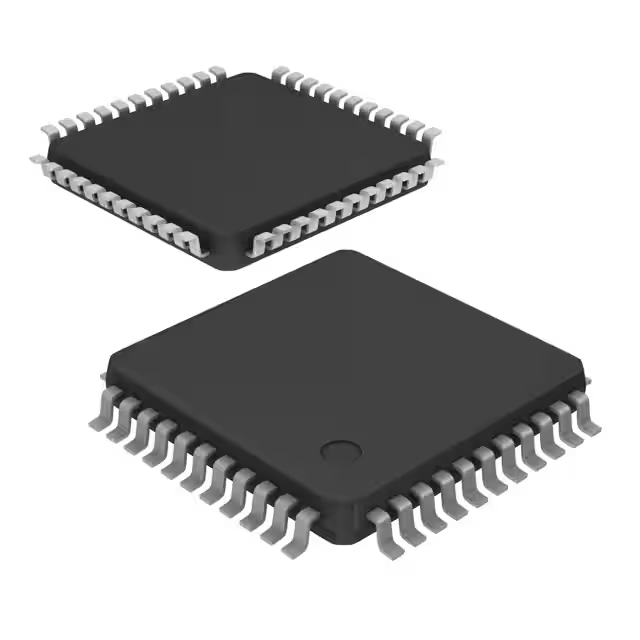
## Zilog Z84C1008VEG Overview
The Zilog Z84C1008VEG is an 8-bit microprocessor that belongs to the Zilog Z80 family, one of the most popular microprocessors in the late 20th century. Designed for a wide range of applications, this chip is well-known for its simplicity, versatility, and robustness. It was widely used in embedded systems, personal computers, and various industrial applications.## Zi# In-Depth Overview of the Zilog Z84C1008VEG Microprocessor
The Zilog Z84C1008VEG is a powerful 8-bit microprocessor that belongs to the Z80 family, designed for embedded systems and various computing applications. It builds on the legacy of the original Z80 architecture while incorporating enhancements to improve performance, efficiency, and versatility. This overview will provide detailed specifications, features, and potential applications.
## Key Specifications
## Architecture
- Type: 8-bit microprocessor
- Data Bus Width: 8 bits, allowing the processor to handle 8 bits of data in a single operation.
- Address Bus Width: 16 bits, enabling direct addressing of up to 64 KB of memory space.
## Clock Speed
The Z84C1008VEG supports a range of clock frequencies:
- 4 MHz
- 6 MHz
- 8 MHz
This flexibility allows designers to choose the appropriate speed based on their application requirements, balancing performance and power consumption.
## Instruction Set
The Z84C1008VEG is fully compatible with the Z80 instruction set, which includes a wide array of operations:
- Arithmetic Instructions: ADD, SUB, INC, DEC for basic arithmetic operations.
- Logical Instructions: AND, OR, XOR, NOT for logical manipulations.
- Control Flow Instructions: JP (jump), CALL, RET, and conditional jumps (e.g., JP Z) for managing program execution flow.
- Bit Manipulation Instructions: Set, clear, and test individual bits in registers.
- Input/Output Operations: Efficient interfacing with peripheral devices through specialized instructions.
## Memory Management
- Addressable Memory Space: Directly supports access to 64 KB of RAM or ROM, making it suitable for various tasks ranging from simple control to complex computational processes.
- Supported Memory Types: Functions well with several memory types, including SRAM, DRAM, and ROM, allowing for flexible design choices.
## Registers
- General Purpose Registers: Eight 8-bit general-purpose registers (A, B, C, D, E, H, L) for data storage and manipulation.
- Special Registers:
- Stack Pointer (SP): A 16-bit register that points to the current stack position, essential for function calls and local variable storage.
- Program Counter (PC): A 16-bit register that tracks the address of the next instruction to be executed.
- Flag Register: An 8-bit register that assesses the status of flags such as zero, carry, sign, and parity.
## Power Supply Requirements
- Operating Voltage: Typically operates at +5V, which is standard for many digital circuits.
- Power Consumption: Designed for low power consumption, making it ideal for battery-operated devices and applications.
## Packaging Options
The Z84C1008VEG is available in various packaging formats:
- DIP (Dual In-line Package): Suitable for prototyping and through-hole applications.
- PLCC (Plastic Leaded Chip Carrier): Ideal for surface mount technology, facilitating modern PCB designs.
- SMD (Surface Mount Device): Preferred for compact electronic designs where space is limited.
## Operating Temperature Range
- Standard Version: Operates within a temperature range of 0°C to 70°C.
- Industrial Grade Versions: May support extended temperature ranges for more demanding environments.
## Features
- Backward Compatibility: Fully compatible with the original Z80 instruction set ensures easy integration with existing software and hardware systems.
- Advanced Interrupt Handling: Supports multiple interrupt sources with programmable priorities, enhancing responsiveness in real-time applications.
- Programmable I/O Ports: Multiple parallel I/O ports facilitate straightforward interfacing with various external peripherals.
- Direct Memory Access (DMA): Allows peripherals to access memory directly, optimizing data throughput and overall system efficiency.
## Applications
The Zilog Z84C1008VEG microprocessor is employed across a wide range of industries and sectors, including:
- Embedded Systems: Commonly found in consumer electronics, home appliances, automotive control systems, and robotics, emphasizing reliability and performance.
- Industrial Automation: Frequently used in process control systems, machine tooling, and manufacturing equipment to enhance operational efficiency.
- Telecommunications: Utilized in modems, communication interfaces, and networking devices, providing seamless connectivity and data transfer capabilities.
- Educational Use: Widely adopted in academic settings for teaching computer architecture and embedded systems design, offering students hands-on experience with microprocessor technology.
## Conclusion
The Zilog Z84C1008VEG microprocessor represents a significant advancement in 8-bit computing technology, combining strong performance with a comprehensive set of features. Its compatibility with the Z80 instruction set ensures that legacy systems maintain functionality, while its flexibility in clock speeds, memory management, and I/O capabilities make it a versatile choice for numerous applications. The enduring relevance of the Z84C1008VEG in the microprocessor landscape highlights its impact on both historical and contemporary electronic design, solidifying its role as a foundational component in modern computing systems.# In-Depth Overview of the Zilog Z84C1008VEG Microprocessor
The Zilog Z84C1008VEG is a powerful 8-bit microprocessor that belongs to the Z80 family, designed for embedded systems and various computing applications. It builds on the legacy of the original Z80 architecture while incorporating enhancements to improve performance, efficiency, and versatility. This overview will provide detailed specifications, features, and potential applications.
## Key Specifications
## Architecture
- Type: 8-bit microprocessor
- Data Bus Width: 8 bits, allowing the processor to handle 8 bits of data in a single operation.
- Address Bus Width: 16 bits, enabling direct addressing of up to 64 KB of memory space.
## Clock Speed
The Z84C1008VEG supports a range of clock frequencies:
- 4 MHz
- 6 MHz
- 8 MHz
This flexibility allows designers to choose the appropriate speed based on their application requirements, balancing performance and power consumption.
## Instruction Set
The Z84C1008VEG is fully compatible with the Z80 instruction set, which includes a wide array of operations:
- Arithmetic Instructions: ADD, SUB, INC, DEC for basic arithmetic operations.
- Logical Instructions: AND, OR, XOR, NOT for logical manipulations.
- Control Flow Instructions: JP (jump), CALL, RET, and conditional jumps (e.g., JP Z) for managing program execution flow.
- Bit Manipulation Instructions: Set, clear, and test individual bits in registers.
- Input/Output Operations: Efficient interfacing with peripheral devices through specialized instructions.
## Memory Management
- Addressable Memory Space: Directly supports access to 64 KB of RAM or ROM, making it suitable for various tasks ranging from simple control to complex computational processes.
- Supported Memory Types: Functions well with several memory types, including SRAM, DRAM, and ROM, allowing for flexible design choices.
## Registers
- General Purpose Registers: Eight 8-bit general-purpose registers (A, B, C, D, E, H, L) for data storage and manipulation.
- Special Registers:
- Stack Pointer (SP): A 16-bit register that points to the current stack position, essential for function calls and local variable storage.
- Program Counter (PC): A 16-bit register that tracks the address of the next instruction to be executed.
- Flag Register: An 8-bit register that assesses the status of flags such as zero, carry, sign, and parity.
## Power Supply Requirements
- Operating Voltage: Typically operates at +5V, which is standard for many digital circuits.
- Power Consumption: Designed for low power consumption, making it ideal for battery-operated devices and applications.
## Packaging Options
The Z84C1008VEG is available in various packaging formats:
- DIP (Dual In-line Package): Suitable for prototyping and through-hole applications.
- PLCC (Plastic Leaded Chip Carrier): Ideal for surface mount technology, facilitating modern PCB designs.
- SMD (Surface Mount Device): Preferred for compact electronic designs where space is limited.
## Operating Temperature Range
- Standard Version: Operates within a temperature range of 0°C to 70°C.
- Industrial Grade Versions: May support extended temperature ranges for more demanding environments.
## Features
- Backward Compatibility: Fully compatible with the original Z80 instruction set ensures easy integration with existing software and hardware systems.
- Advanced Interrupt Handling: Supports multiple interrupt sources with programmable priorities, enhancing responsiveness in real-time applications.
- Programmable I/O Ports: Multiple parallel I/O ports facilitate straightforward interfacing with various external peripherals.
- Direct Memory Access (DMA): Allows peripherals to access memory directly, optimizing data throughput and overall system efficiency.
## Applications
The Zilog Z84C1008VEG microprocessor is employed across a wide range of industries and sectors, including:
- Embedded Systems: Commonly found in consumer electronics, home appliances, automotive control systems, and robotics, emphasizing reliability and performance.
- Industrial Automation: Frequently used in process control systems, machine tooling, and manufacturing equipment to enhance operational efficiency.
- Telecommunications: Utilized in modems, communication interfaces, and networking devices, providing seamless connectivity and data transfer capabilities.
- Educational Use: Widely adopted in academic settings for teaching computer architecture and embedded systems design, offering students hands-on experience with microprocessor technology.
## Conclusion
The Zilog Z84C1008VEG microprocessor represents a significant advancement in 8-bit computing technology, combining strong performance with a comprehensive set of features. Its compatibility with the Z80 instruction set ensures that legacy systems maintain functionality, while its flexibility in clock speeds, memory management, and I/O capabilities make it a versatile choice for numerous applications. The enduring relevance of the Z84C1008VEG in the microprocessor landscape highlights its impact on both historical and contemporary electronic design, solidifying its role as a foundational component in modern computing systems.# In-Depth Overview of the Zilog Z84C1008VEG Microprocessor
The Zilog Z84C1008VEG is a powerful 8-bit microprocessor that belongs to the Z80 family, designed for embedded systems and various computing applications. It builds on the legacy of the original Z80 architecture while incorporating enhancements to improve performance, efficiency, and versatility. This overview will provide detailed specifications, features, and potential applications.
## Key Specifications
## Architecture
- Type: 8-bit microprocessor
- Data Bus Width: 8 bits, allowing the processor to handle 8 bits of data in a single operation.
- Address Bus Width: 16 bits, enabling direct addressing of up to 64 KB of memory space.
## Clock Speed
The Z84C1008VEG supports a range of clock frequencies:
- 4 MHz
- 6 MHz
- 8 MHz
This flexibility allows designers to choose the appropriate speed based on their application requirements, balancing performance and power consumption.
## Instruction Set
The Z84C1008VEG is fully compatible with the Z80 instruction set, which includes a wide array of operations:
- Arithmetic Instructions: ADD, SUB, INC, DEC for basic arithmetic operations.
- Logical Instructions: AND, OR, XOR, NOT for logical manipulations.
- Control Flow Instructions: JP (jump), CALL, RET, and conditional jumps (e.g., JP Z) for managing program execution flow.
- Bit Manipulation Instructions: Set, clear, and test individual bits in registers.
- Input/Output Operations: Efficient interfacing with peripheral devices through specialized instructions.
## Memory Management
- Addressable Memory Space: Directly supports access to 64 KB of RAM or ROM, making it suitable for various tasks ranging from simple control to complex computational processes.
- Supported Memory Types: Functions well with several memory types, including SRAM, DRAM, and ROM, allowing for flexible design choices.
## Registers
- General Purpose Registers: Eight 8-bit general-purpose registers (A, B, C, D, E, H, L) for data storage and manipulation.
- Special Registers:
- Stack Pointer (SP): A 16-bit register that points to the current stack position, essential for function calls and local variable storage.
- Program Counter (PC): A 16-bit register that tracks the address of the next instruction to be executed.
- Flag Register: An 8-bit register that assesses the status of flags such as zero, carry, sign, and parity.
## Power Supply Requirements
- Operating Voltage: Typically operates at +5V, which is standard for many digital circuits.
- Power Consumption: Designed for low power consumption, making it ideal for battery-operated devices and applications.
## Packaging Options
The Z84C1008VEG is available in various packaging formats:
- DIP (Dual In-line Package): Suitable for prototyping and through-hole applications.
- PLCC (Plastic Leaded Chip Carrier): Ideal for surface mount technology, facilitating modern PCB designs.
- SMD (Surface Mount Device): Preferred for compact electronic designs where space is limited.
## Operating Temperature Range
- Standard Version: Operates within a temperature range of 0°C to 70°C.
- Industrial Grade Versions: May support extended temperature ranges for more demanding environments.
## Features
- Backward Compatibility: Fully compatible with the original Z80 instruction set ensures easy integration with existing software and hardware systems.
- Advanced Interrupt Handling: Supports multiple interrupt sources with programmable priorities, enhancing responsiveness in real-time applications.
- Programmable I/O Ports: Multiple parallel I/O ports facilitate straightforward interfacing with various external peripherals.
- Direct Memory Access (DMA): Allows peripherals to access memory directly, optimizing data throughput and overall system efficiency.
## Applications
The Zilog Z84C1008VEG microprocessor is employed across a wide range of industries and sectors, including:
- Embedded Systems: Commonly found in consumer electronics, home appliances, automotive control systems, and robotics, emphasizing reliability and performance.
- Industrial Automation: Frequently used in process control systems, machine tooling, and manufacturing equipment to enhance operational efficiency.
- Telecommunications: Utilized in modems, communication interfaces, and networking devices, providing seamless connectivity and data transfer capabilities.
- Educational Use: Widely adopted in academic settings for teaching computer architecture and embedded systems design, offering students hands-on experience with microprocessor technology.
## Conclusion
The Zilog Z84C1008VEG microprocessor represents a significant advancement in 8-bit computing technology, combining strong performance with a comprehensive set of features. Its compatibility with the Z80 instruction set ensures that legacy systems maintain functionality, while its flexibility in clock speeds, memory management, and I/O capabilities make it a versatile choice for numerous applications. The enduring relevance of the Z84C1008VEG in the microprocessor landscape highlights its impact on both historical and contemporary electronic design, solidifying its role as a foundational component in modern computing systems.# Detailed Overview of the Zilog Z84C1008VEG Microprocessor
The Zilog Z84C1008VEG microprocessor is an advanced member of the Z80 family, recognized for its robust performance and versatility in various computing applications. Introduced to meet the demands of the embedded systems market, this 8-bit microprocessor has been utilized in numerous electronic devices since its inception. Below is a comprehensive overview, including specifications, features, and potential applications.
## Key Specifications
## Architecture
- Type: 8-bit microprocessor
- Data Bus Width: 8 bits, allowing simultaneous processing of 8 bits of data.
- Address Bus Width: 16 bits, enabling direct access to 64 KB of memory.
## Clock Speed
The Z84C1008VEG supports several clock frequencies, offering flexibility for different application needs:
- 4 MHz
- 6 MHz
- 8 MHz
This range allows designers to choose the appropriate speed for their specific requirements, balancing performance and power consumption.
## Instruction Set
The Z84C1008VEG maintains full compatibility with the original Z80 instruction set, which includes a wide array of operations:
- Arithmetic Operations:
- Instructions like ADD, SUB, INC, and DEC for performing basic arithmetic tasks.
- Logical Operations:
- AND, OR, XOR, and NOT for bitwise logical manipulations.
- Control Flow Instructions:
- JP (jump), CALL, RET, along with conditional jumps (e.g., JP Z) for managing program execution flow effectively.
- Bit Manipulation Instructions:
- Operations for setting, clearing, and testing individual bits in registers.
- Input/Output Operations:
- Specialized instructions designed for efficient interfacing with peripheral devices.
## Memory Management
- Addressable Memory Space: Supports access to up to 64 KB of RAM or ROM, making it adaptable for both simple control tasks and complex computations.
- Memory Types Supported: Works seamlessly with various memory types, including SRAM, DRAM, and ROM, allowing for flexible design choices.
## Registers
- General Purpose Registers: Includes eight 8-bit general-purpose registers (A, B, C, D, E, H, L) for data storage and manipulation.
- Special Registers:
- Stack Pointer (SP): A 16-bit register indicating the current stack position, crucial for function calls and local variable storage.
- Program Counter (PC): A 16-bit register that tracks the address of the next instruction to be executed.
- Flag Register: An 8-bit register assessing the status of flags such as zero, carry, sign, and parity.
## Power Supply Requirements
- Operating Voltage: Typically operates at +5V, standard for many digital circuits.
- Power Consumption: Designed for low power consumption, making it suitable for battery-operated devices.
## Packaging Options
The Z84C1008VEG is available in multiple packaging formats:
- DIP (Dual In-line Package): Ideal for prototyping and through-hole applications.
- PLCC (Plastic Leaded Chip Carrier): Suitable for surface mount technology, facilitating modern PCB designs.
- SMD (Surface Mount Device): Preferred for compact electronic designs where space is a constraint.
## Operating Temperature Range
- Standard Version: Operates within a temperature range of 0°C to 70°C.
- Industrial Grade Versions: May support extended temperature ranges for more demanding environments.
## Features
- Backward Compatibility: Fully compatible with the Z80 instruction set ensures easy integration with existing software and hardware systems.
- Advanced Interrupt Handling: Supports multiple interrupt sources with programmable priorities to enhance responsiveness in real-time applications.
- Programmable I/O Ports: Multiple parallel I/O ports facilitate straightforward interfacing with various external peripherals.
- Direct Memory Access (DMA): Allows peripherals to access memory directly, optimizing data throughput and system efficiency.
## Applications
The Zilog Z84C1008VEG microprocessor is employed across a broad spectrum of industries, including:
- Embedded Systems: Frequently found in consumer electronics, appliances, automotive control systems, and robotics, emphasizing reliability and performance.
- Industrial Automation: Commonly used in process control systems, machine tooling, and manufacturing equipment to improve operational efficiency.
- Telecommunications: Often utilized in modems and communication interfaces, providing seamless connectivity and data transfer capabilities.
- Educational Use: Widely adopted in academic settings for teaching computer architecture and embedded systems design, offering students practical experience.
## Conclusion
The Zilog Z84C1008VEG microprocessor represents a significant advancement in 8-bit computing technology, combining strong performance with a wide range of features. Its compatibility with the Z80 instruction set ensures that legacy systems maintain functionality while its flexibility in clock speeds, memory management, and I/O capabilities makes it a versatile choice for numerous applications. The enduring relevance of the Z84C1008VEG in the microprocessor landscape highlights its impact on both historical and contemporary electronic design, solidifying its role as a foundational component in modern computing systems.# Detailed Overview of the Zilog Z84C1008VEG Microprocessor
The Zilog Z84C1008VEG microprocessor is a notable member of the Z80 family, which has been widely utilized in various computing applications since its introduction. This 8-bit microprocessor combines robust performance with versatility, making it suitable for a range of embedded systems and consumer electronics. Below is a comprehensive overview of its specifications, features, and applications.
## Key Specifications
## Architecture
- Type: 8-bit microprocessor
- Data Bus Width: 8 bits, allowing for efficient processing of 8 bits of data simultaneously.
- Address Bus Width: 16 bits, enabling direct addressing of up to 64 KB of memory.
## Clock Speed
The Z84C1008VEG supports various clock frequencies, offering flexibility for different application requirements:
- 4 MHz
- 6 MHz
- 8 MHz
This ability to operate at multiple speeds makes it suitable for both high-performance and low-power applications.
## Instruction Set
The Z84C1008VEG is fully compatible with the original Z80 instruction set, which includes a comprehensive range of operations:
- Arithmetic Operations:
- ADD, SUB, INC, DEC for performing basic arithmetic calculations.
- Logical Operations:
- AND, OR, XOR, NOT for bitwise logical operations.
- Control Flow Instructions:
- JP (jump), CALL, RET, along with conditional jumps (e.g., JP Z) for managing program execution flow.
- Bit Manipulation Instructions:
- Operations for setting, clearing, and testing individual bits in registers.
- Input/Output Operations:
- Special instructions designed for interfacing with peripheral devices effectively.
## Memory Management
- Addressable Memory Space: The processor can access up to 64 KB of RAM or ROM, making it suitable for a wide range of applications from simple control tasks to more complex computations.
- Memory Types Supported: Interfaces seamlessly with various types of memory, including SRAM, DRAM, and ROM, providing design flexibility.
## Registers
- General Purpose Registers: Contains eight 8-bit general-purpose registers (A, B, C, D, E, H, L) for data storage and manipulation.
- Special Registers:
- Stack Pointer (SP): A 16-bit register that indicates the current position in the stack.
- Program Counter (PC): A 16-bit register that keeps track of the address of the next instruction to be executed.
- Flag Register: An 8-bit register used to indicate the status of various flags such as zero, carry, sign, and parity.
## Power Supply Requirements
- Operating Voltage: Typically operates at +5V, which is standard for many digital circuits.
- The design is optimized for low power consumption, making it an excellent choice for battery-operated devices.
## Packaging Options
The Z84C1008VEG comes in several packaging formats:
- DIP (Dual In-line Package): Suitable for prototyping and through-hole applications.
- PLCC (Plastic Leaded Chip Carrier): Ideal for surface mount technology, facilitating modern PCB designs.
- SMD (Surface Mount Device): Preferred for compact electronic designs where space is a constraint.
## Operating Temperature Range
- Standard versions typically function within a temperature range of 0°C to 70°C. Industrial-grade variants may support extended temperature ranges appropriate for more demanding environments.
## Features
- Backward Compatibility: The Z84C1008VEG is fully compatible with the Z80 instruction set, ensuring easy integration with existing software and hardware systems.
- Advanced Interrupt Handling: It supports multiple interrupt sources with programmable priorities, enhancing responsiveness in real-time applications.
- Programmable I/O Ports: Multiple parallel I/O ports facilitate straightforward interfacing with various external peripherals.
- Direct Memory Access (DMA): This feature allows peripherals to access memory directly, optimizing data throughput and system efficiency.
## Applications
The Zilog Z84C1008VEG microprocessor is utilized across a broad spectrum of industries, including:
- Embedded Systems: Frequently found in consumer electronics, appliances, automotive control systems, and robotics, emphasizing reliability and performance.
- Industrial Automation: Commonly employed in process control systems, machine tooling, and manufacturing equipment to enhance operational efficiency.
- Telecommunications: Often used in modems and communication interfaces, providing seamless connectivity and data transfer capabilities.
- Educational Use: Widely adopted in academic settings for teaching computer architecture and embedded systems design, offering students practical experience.
## Conclusion
The Zilog Z84C1008VEG microprocessor is a significant advancement in 8-bit computing technology, combining strong performance with a wide array of features. Its compatibility with the Z80 instruction set ensures that legacy systems maintain functionality while its flexibility in clock speeds, memory management, and I/O capabilities make it a versatile choice for numerous applications. The enduring relevance of the Z84C1008VEG in the microprocessor landscape underscores its impact on both historical and contemporary electronic design, solidifying its role as a foundational component in modern computing systems.# Detailed Overview of the Zilog Z84C1008VEG Microprocessor
The Zilog Z84C1008VEG is a powerful 8-bit microprocessor from the well-known Z80 family. This microprocessor has been widely used in various applications ranging from embedded systems to consumer electronics, thanks to its robust design and versatility. Below is a comprehensive overview of its specifications, features, and applications.
## Key Specifications
## 1. Architecture
- Type: 8-bit microprocessor
- Data Bus Width: 8 bits, allowing for simultaneous processing of 8 bits of data.
- Address Bus Width: 16 bits, enabling it to directly address up to 64 KB of memory.
## 2. Clock Speed
The Z84C1008VEG operates at several clock frequencies, which allows designers to optimize performance based on the specific needs of their applications:
- 4 MHz
- 6 MHz
- 8 MHz
This flexibility is particularly advantageous in battery-powered devices where power efficiency is essential.
## 3. Instruction Set
The Z84C1008VEG is fully compatible with the original Z80 instruction set, which includes a rich variety of operations:
- Arithmetic Operations:
- ADD (addition), SUB (subtraction), INC (increment), DEC (decrement)
- Logical Operations:
- AND, OR, XOR, NOT for bit manipulation.
- Control Flow Instructions:
- JP (jump), CALL, RET, and conditional jumps (e.g., JP Z) to manage program flow.
- Bit Manipulation Instructions:
- Instructions for setting, clearing, and testing individual bits in registers.
- Input/Output Operations:
- Special instructions to interface with peripheral devices.
## 4. Memory Management
- Addressable Memory Space: Supports up to 64 KB of RAM or ROM, suitable for a wide range of applications.
- The processor can interface with different memory types, including SRAM, DRAM, and ROM, offering design flexibility.
## 5. Registers
- General Purpose Registers: A set of eight 8-bit registers (A, B, C, D, E, H, L) used for data storage and operations.
- Special Registers:
- Stack Pointer (SP): A 16-bit register that points to the current location in the stack.
- Program Counter (PC): A 16-bit register that tracks the address of the next instruction to execute.
- Flag Register: An 8-bit register indicating the status of various flags (e.g., zero, carry, sign, parity).
## 6. Power Supply Requirements
- Operating Voltage: Typically operates at +5V, a standard voltage for many digital circuits.
- Designed for low power consumption, making it an excellent choice for energy-efficient applications.
## 7. Packaging Options
The Z84C1008VEG is available in various packaging formats:
- DIP (Dual In-line Package): Suitable for prototyping and through-hole applications.
- PLCC (Plastic Leaded Chip Carrier): Ideal for surface mount technology.
- SMD (Surface Mount Device): Excellent for space-constrained electronic designs.
## 8. Operating Temperature Range
- Standard versions typically operate within a temperature range of 0°C to 70°C. Industrial-grade variants may support extended temperature ranges for more demanding environments.
## Features
- Backward Compatibility: Fully compatible with the Z80 instruction set, ensuring seamless integration with existing software and hardware ecosystems.
- Advanced Interrupt Handling: Supports multiple interrupt sources with programmable priorities, enhancing system responsiveness in real-time applications.
- Programmable I/O Ports: Multiple parallel I/O ports facilitate easy interfacing with various external peripherals.
- Direct Memory Access (DMA): Allows peripherals to access memory directly, optimizing system throughput and efficiency.
## Applications
The Zilog Z84C1008VEG microprocessor is utilized across diverse sectors, including:
- Embedded Systems: Commonly found in consumer electronics, home appliances, automotive control systems, and robotics, emphasizing reliability and efficiency.
- Industrial Automation: Implemented in process control systems, machine tooling, and manufacturing equipment to enhance operational efficiency.
- Telecommunications: Frequently used in modems and communication interfaces, facilitating connectivity and data transfer in networking applications.
- Educational Use: Often adopted in academic settings for teaching computer architecture and embedded systems design, providing students with hands-on experience.
## Conclusion
The Zilog Z84C1008VEG microprocessor represents a significant advancement in 8-bit computing technology, combining robust performance with extensive features. Its compatibility with the Z80 instruction set ensures that legacy systems continue to function seamlessly, while its flexibility in clock speeds, memory management, and I/O capabilities makes it a versatile choice for a wide range of applications. The enduring relevance of the Z84C1008VEG in the microprocessor landscape highlights its impact on both historical and modern electronic design, solidifying its position as a foundational component in contemporary computing.# In-Depth Overview of the Zilog Z84C1008VEG Microprocessor
The Zilog Z84C1008VEG is a highly regarded 8-bit microprocessor from the Z80 family, which has played a significant role in computing history. Known for its robust architecture and versatility, the Z84C1008VEG continues to be implemented in various applications, particularly within embedded systems and consumer electronics. This document provides a detailed overview of its specifications, features, and typical applications.
## Key Specifications
## 1. Architecture
- Type: 8-bit microprocessor
- Data Bus Width: 8 bits, allowing it to process 8 bits of data simultaneously.
- Address Bus Width: 16 bits, enabling it to address up to 64 KB of memory space.
## 2. Clock Speed
The Z84C1008VEG operates at multiple clock frequencies, providing flexibility for different application requirements:
- 4 MHz
- 6 MHz
- 8 MHz
This range allows designers to optimize the performance according to the specific needs of their projects, especially important in battery-operated devices where power efficiency is crucial.
## 3. Instruction Set
The Z84C1008VEG is fully compatible with the original Z80 instruction set, which includes a comprehensive array of operations:
- Arithmetic Operations:
- ADD (addition)
- SUB (subtraction)
- INC (increment)
- DEC (decrement)
- Logical Operations:
- AND, OR, XOR, NOT for bit manipulation tasks.
- Control Flow Instructions:
- JP (jump), CALL, RET, and conditional jumps (e.g., JP Z) to control program flow.
- Bit Manipulation Instructions:
- Instructions for setting, clearing, and testing individual bits within registers.
- Input/Output Operations:
- Special instructions for interfacing with peripheral devices.
## 4. Memory Management
- Addressable Memory Space: Up to 64 KB of RAM or ROM, making it suitable for a wide variety of applications.
- The processor can interface with various types of memory, including SRAM, DRAM, and ROM, offering design flexibility.
## 5. Registers
- General Purpose Registers: A set of eight 8-bit registers (A, B, C, D, E, H, L) used for data storage and operations.
- Special Registers:
- Stack Pointer (SP): A 16-bit register that points to the current location in the stack.
- Program Counter (PC): A 16-bit register that tracks the address of the next instruction to execute.
- Flag Register: An 8-bit register that indicates the status of various flags (e.g., zero, carry, sign, parity).
## 6. Power Supply Requirements
- Operating Voltage: Generally operates at +5V, which is standard for many digital circuits.
- Designed with low power consumption in mind, making it ideal for energy-efficient applications.
## 7. Packaging Options
The Z84C1008VEG comes in several packaging formats:
- DIP (Dual In-line Package): Suitable for prototyping and through-hole applications.
- PLCC (Plastic Leaded Chip Carrier): Ideal for surface mount technology.
- SMD (Surface Mount Device): Excellent for compact electronic designs.
## 8. Operating Temperature Range
- Standard versions typically operate within a temperature range of 0°C to 70°C. Industrial-grade variants may support extended temperature ranges for more demanding environments.
## Features
- Backward Compatibility: Fully compatible with the Z80 instruction set, ensuring seamless integration with existing software and hardware ecosystems.
- Advanced Interrupt Handling: Supports multiple interrupt sources with programmable priorities, enhancing system responsiveness in real-time applications.
- Programmable I/O Ports: Multiple parallel I/O ports facilitate easy interfacing with various external peripherals.
- Direct Memory Access (DMA): Allows peripherals to access memory directly, optimizing system throughput and efficiency.
## Applications
The Zilog Z84C1008VEG microprocessor is utilized across a diverse range of sectors, including:
- Embedded Systems: Frequently found in consumer electronics, home appliances, automotive control systems, and robotics, emphasizing reliability and efficiency.
- Industrial Automation: Implemented in process control systems, machine tooling, and manufacturing equipment, enhancing operational efficiency.
- Telecommunications: Commonly used in modems and communication interfaces, facilitating connectivity and data transfer in networking applications.
- Educational Use: Often adopted in academic settings for teaching computer architecture and embedded systems design, providing students with hands-on experience.
## Conclusion
The Zilog Z84C1008VEG microprocessor exemplifies the evolution of 8-bit computing technology, merging robust performance with extensive features. Its compatibility with the Z80 instruction set ensures that legacy systems continue to function smoothly, while its flexibility in clock speeds, memory management, and I/O capabilities make it a versatile choice for a broad range of applications. The enduring significance of the Z84C1008VEG in the microprocessor landscape highlights its impact on both historical and modern electronic design, solidifying its position as a foundational component in contemporary computing.# Detailed Overview of the Zilog Z84C1008VEG Microprocessor
The Zilog Z84C1008VEG is an advanced 8-bit microprocessor that is part of the renowned Z80 family, widely recognized for its robust architecture and versatility in various applications. This microprocessor has been pivotal in both historical and contemporary computing, especially in embedded systems and consumer electronics. Below is a comprehensive overview of its specifications, features, and typical applications.
## Key Specifications
## 1. Architecture
- Type: 8-bit microprocessor
- Data Bus Width: 8 bits
- Address Bus Width: 16 bits, providing access to a maximum of 64 KB of memory space.
## 2. Clock Speed
The Z84C1008VEG supports multiple clock frequencies, making it adaptable to different application needs:
- 4 MHz
- 6 MHz
- 8 MHz
This flexibility allows designers to optimize performance based on power consumption requirements, particularly useful in battery-operated devices.
## 3. Instruction Set
The Z84C1008VEG is compatible with the extensive instruction set of the original Z80 microprocessor, which includes:
- Arithmetic Operations: ADD, SUB, INC, DEC for basic calculations.
- Logical Operations: AND, OR, XOR, NOT for bit manipulation.
- Control Flow Instructions: JP (jump), CALL, RET, and conditional branches (e.g., JP Z) to manage program flow.
- Bit Manipulation: Instructions for setting, clearing, and testing bits within registers.
- Input/Output Operations: Dedicated instructions for interfacing with peripheral devices.
## 4. Memory Management
- Addressable Memory Space: Up to 64 KB of RAM or ROM, suitable for a wide variety of applications.
- The processor can work with several types of memory, including SRAM and DRAM, offering design flexibility.
## 5. Registers
- General Purpose Registers: Eight 8-bit registers (A, B, C, D, E, H, L) for data storage and operations.
- Special Registers:
- Stack Pointer (SP): A 16-bit register pointing to the current stack location.
- Program Counter (PC): A 16-bit register that tracks the address of the next instruction to execute.
- Flag Register: An 8-bit register indicating the status of various flags (zero, carry, sign, parity).
## 6. Power Supply Requirements
- Operating Voltage: Typically operates at +5V, which is common for digital circuit designs.
- Designed for low power consumption, making it ideal for energy-efficient applications.
## 7. Packaging Options
The Z84C1008VEG is available in several packaging formats:
- DIP (Dual In-line Package): Suitable for prototyping and through-hole applications.
- PLCC (Plastic Leaded Chip Carrier): Ideal for surface mount technology.
- SMD (Surface Mount Device): Excellent for modern compact electronic designs.
## 8. Operating Temperature Range
- Standard versions typically operate within a temperature range of 0°C to 70°C. Industrial-grade variants may support extended temperature ranges for more demanding environments.
## Features
- Backward Compatibility: Fully compatible with the Z80 instruction set, ensuring seamless integration with existing software and hardware.
- Advanced Interrupt Handling: Supports multiple interrupt sources with programmable priorities, enhancing responsiveness in real-time applications.
- Programmable I/O Ports: Multiple parallel I/O ports provide flexible interfacing options with various peripherals.
- Direct Memory Access (DMA): Enables peripherals to access memory directly, improving system throughput and efficiency.
## Applications
The Zilog Z84C1008VEG microprocessor is utilized across diverse sectors, including:
- Embedded Systems: Commonly used in consumer electronics, home appliances, automotive control systems, and robotics, emphasizing reliability and efficiency.
- Industrial Automation: Found in process control systems, machine tooling, and manufacturing equipment, enhancing operational efficiency and productivity.
- Telecommunications: Integrated into modems and communication interfaces, facilitating connectivity and data transfer in networking applications.
- Educational Use: Frequently adopted in academic settings for teaching computer architecture and embedded systems design, providing hands-on experience with microprocessor technology.
## Conclusion
The Zilog Z84C1008VEG microprocessor exemplifies the evolution of 8-bit computing technology, merging robust performance with extensive features. Its compatibility with the Z80 instruction set ensures that legacy systems continue to function smoothly, while its flexibility in clock speeds, memory management, and I/O capabilities makes it a versatile choice for a broad range of applications. The lasting impact of the Z84C1008VEG on the microprocessor landscape underscores its significance in both historical and modern electronic design, solidifying its position as a foundational component in contemporary computing.## Zilog Z84C1008VEG Microprocessor Detailed Overview
The Zilog Z84C1008VEG is a highly regarded 8-bit microprocessor that belongs to the Z80 family, known for its versatility and enduring presence in various applications ranging from embedded systems to consumer electronics. This processor builds upon the legacy of the original Z80 architecture, incorporating improvements that enhance performance and efficiency. Below is a comprehensive overview of its specifications, features, and applications.
## Key Specifications
1. Architecture
- Type: 8-bit microprocessor
- Data Bus Width: 8 bits, facilitating simultaneous processing of 8 bits of data.
- Address Bus Width: 16 bits, enabling access to 64 KB of addressable memory space, which is ideal for a wide range of applications requiring adequate memory.
2. Clock Speed Options
- The Z84C1008VEG supports multiple clock frequencies, allowing developers to choose based on their application needs:
- 4 MHz
- 6 MHz
- 8 MHz
- This flexibility helps balance performance with power consumption, particularly important in battery-operated devices.
3. Instruction Set
- The processor is fully compatible with the complete Z80 instruction set, which includes:
- Arithmetic Operations: Supports addition (ADD), subtraction (SUB), increment (INC), and decrement (DEC) operations.
- Logical Operations: Performs bitwise AND, OR, XOR, and NOT, critical for data manipulation.
- Control Flow Instructions: Includes jumps (JP), calls (CALL), returns (RET), and conditional branches (e.g., JP Z, JP NZ).
- Bit Manipulation: Provides instructions for setting, clearing, and testing individual bits in registers, facilitating efficient data handling.
- I/O Operations: Supports dedicated input/output instructions for handling peripheral devices.
4. Memory Management
- Addressable Memory Space: Allows for up to 64 KB of RAM and I/O space, catering to simple to complex applications.
- Compatible with various memory types, including SRAM and DRAM, providing design flexibility.
5. Registers
- General Purpose Registers: Eight 8-bit registers (A, B, C, D, E, H, L) facilitate data storage and operations.
- Special Registers:
- Stack Pointer (SP): A 16-bit register indicating the current stack location for temporary data storage.
- Program Counter (PC): A 16-bit register pointing to the next instruction to be executed.
- Flag Register: An 8-bit register holding status flags (zero, carry, sign, parity) that indicate the results of operations.
6. Power Supply Requirements
- Operating Voltage: Typically operates at +5V, which is standard for digital circuits.
- Designed for low power consumption, making it suitable for energy-efficient applications.
7. Packaging Options
- The Z84C1008VEG comes in various packaging formats:
- DIP (Dual In-line Package): Ideal for prototyping and through-hole designs.
- PLCC (Plastic Leaded Chip Carrier): Suited for surface mount applications.
- SMD (Surface Mount Device): Excellent for modern compact electronic designs where space is limited.
8. Operating Temperature Range
- Standard versions operate effectively within a temperature range of 0°C to 70°C, while industrial-grade variants may support extended ranges for more demanding environments.
## Features
- Backward Compatibility: Fully compatible with the original Z80 instruction set, ensuring seamless operation with existing software and systems.
- Advanced Interrupt Handling: Capable of managing multiple interrupt sources with programmable priorities, enhancing responsiveness in real-time applications.
- Programmable I/O Ports: Multiple parallel I/O ports allow flexible interfacing with various peripheral devices, expanding functionality.
- Direct Memory Access (DMA): Supports DMA operations, enabling peripherals to directly access memory and improving system throughput.
## Applications
The Zilog Z84C1008VEG microprocessor is widely utilized across various sectors:
- Embedded Systems: Commonly found in consumer electronics, home appliances, automotive control systems, and robotics, emphasizing reliability and efficiency.
- Industrial Automation: Used in process control systems, machine tooling, and manufacturing equipment, enhancing operational efficiency and productivity.
- Telecommunications: Integrated into modems and communication interfaces, facilitating connectivity and data transfer in networking applications.
- Educational Use: Frequently adopted in academic settings for teaching computer architecture and embedded systems design, providing hands-on experience with microprocessor technology.
## Conclusion
The Zilog Z84C1008VEG microprocessor exemplifies the evolution of 8-bit computing technology, offering robust performance and extensive features. Its compatibility with the Z80 instruction set allows for easy integration into existing systems, ensuring that legacy applications continue to function seamlessly. The processor%27s flexibility in clock speeds, memory management, and I/O capabilities makes it a versatile choice for a wide range of applications, from simple embedded systems to complex industrial automation. The lasting impact of the Z84C1008VEG on the microprocessor landscape highlights its importance in both historical and contemporary electronic design, solidifying its position as a foundational component in modern computing.## Zilog Z84C1008VEG Microprocessor Overview
The Zilog Z84C1008VEG is an advanced 8-bit microprocessor from the renowned Z80 family, specifically designed to cater to a wide range of applications in embedded systems, consumer electronics, and industrial automation. Building upon the legacy of its predecessors, the Z84C1008VEG enhances performance and efficiency, making it suitable for both traditional and contemporary computing needs.
## Key Specifications
1. Architecture
- Type: 8-bit microprocessor
- Data Bus Width: 8 bits, which allows the simultaneous processing of 8 bits of data.
- Address Bus Width: 16 bits, enabling access to 64 KB of addressable memory space, crucial for many applications requiring sufficient memory resources.
2. Clock Speed Options
- The Z84C1008VEG operates at various clock frequencies:
- 4 MHz
- 6 MHz
- 8 MHz
- This range allows developers to select the optimal speed based on the specific requirements of their applications, balancing performance and power consumption.
3. Instruction Set
- The processor is compatible with the complete Z80 instruction set, which includes:
- Arithmetic Operations: Includes addition (ADD), subtraction (SUB), increment (INC), and decrement (DEC).
- Logical Operations: Performs bitwise AND, OR, XOR, and NOT operations.
- Control Flow Instructions: Supports jumps (JP), calls (CALL), returns (RET), and branching based on conditions (e.g., JP Z, JP NZ).
- Bit Manipulation Instructions: Provides instructions for setting, clearing, and testing individual bits in registers.
- Input/Output Operations: Facilitates communication with external devices through dedicated I/O instructions.
4. Memory Management
- Addressable Memory Space: Supports up to 64 KB of RAM and I/O space, accommodating various applications from simple to complex.
- Compatible with multiple types of memory, including SRAM and DRAM, offering flexibility in design choices.
5. Registers
- General Purpose Registers:
- Eight 8-bit registers (A, B, C, D, E, H, L) allow efficient data storage and manipulation.
- Special Registers:
- Stack Pointer (SP): A 16-bit register that indicates the current stack location for temporary data storage.
- Program Counter (PC): A 16-bit register that points to the next instruction to be executed.
- Flag Register: An 8-bit register that holds status flags (zero, carry, sign, parity), indicating the results of arithmetic and logic operations.
6. Power Supply Requirements
- Operating Voltage: Typically operates at +5V, which is standard for digital circuits.
- Designed for low power consumption, making it ideal for battery-operated devices and energy-efficient applications.
7. Packaging Options
- The Z84C1008VEG is available in various packaging formats, including:
- DIP (Dual In-line Package): Commonly used for prototyping and through-hole designs.
- PLCC (Plastic Leaded Chip Carrier): Suited for surface mount applications.
- SMD (Surface Mount Device): Ideal for modern compact electronic designs where space is a premium.
8. Operating Temperature Range
- Standard versions operate effectively within a temperature range of 0°C to 70°C, while industrial-grade variants may support extended temperature ranges for more demanding environments.
## Features
- Backward Compatibility: Fully compatible with the original Z80 instruction set, ensuring that existing software runs without modification.
- Advanced Interrupt Handling: Capable of managing multiple interrupt sources with programmable priorities, enhancing responsiveness in real-time applications.
- Programmable I/O Ports: Multiple parallel I/O ports facilitate flexible interfacing with various peripheral devices, extending functionality beyond basic processing tasks.
- Direct Memory Access (DMA): Supports DMA operations, allowing peripherals direct access to memory, thus improving overall system throughput.
## Applications
The Zilog Z84C1008VEG microprocessor is extensively utilized across various sectors, such as:
- Embedded Systems: Commonly found in consumer electronics, home appliances, automotive control systems, and robotics, where reliability and efficiency are paramount.
- Industrial Automation: Used in process control systems, machine tooling, and manufacturing equipment, enhancing operational efficiency and productivity.
- Telecommunications: Integrated into modems and communication interfaces, facilitating connectivity and data transfer in networking applications.
- Educational Use: Frequently adopted in academic settings for teaching computer architecture and embedded systems design, providing hands-on experience with microprocessor technology.
## Conclusion
The Zilog Z84C1008VEG microprocessor represents a significant advancement in 8-bit computing technology. Its robust performance, extensive feature set, and compatibility with a rich legacy of software make it an excellent choice for developers across various fields. The enduring relevance of the Z84C1008VEG in today’s embedded systems underscores its importance in both the history and future of microprocessor technology, proving to be a foundational component in modern electronic designs. Whether for new applications or legacy systems, the Z84C1008VEG continues to deliver reliable performance and versatility, solidifying its place in the realm of microprocessors.## Zilog Z84C1008VEG Microprocessor Overview
The Zilog Z84C1008VEG is a powerful 8-bit microprocessor part of the Z80 family, designed for a variety of computing applications, particularly in embedded systems and consumer electronics. It retains the core architecture of the original Z80 while introducing enhancements that cater to modern requirements.
## Key Specifications
1. Architecture
- Type: 8-bit microprocessor
- Data Bus Width: 8 bits, allowing it to process 8 bits of data simultaneously.
- Address Bus Width: 16 bits, providing access to 64 KB of addressable memory space, which is crucial for many applications.
2. Clock Speed Options
- The Z84C1008VEG supports multiple clock frequencies:
- 4 MHz
- 6 MHz
- 8 MHz
- This flexibility allows designers to optimize for performance or power consumption based on specific application needs.
3. Instruction Set
- The microprocessor is compatible with the comprehensive Z80 instruction set, which includes:
- Arithmetic Operations: Addition, subtraction, incrementing (INC), and decrementing (DEC) operations.
- Logical Operations: Bitwise AND, OR, XOR, and NOT functions.
- Control Flow Instructions: Jump (JP), call (CALL), return (RET), and various conditional branching instructions.
- Bit Manipulation Instructions: Instructions for setting, clearing, and testing individual bits within registers.
- Input/Output Operations: Commands to interface with external devices, facilitating communication with peripherals.
4. Memory Management
- Addressable Memory Space: Supports up to 64 KB of RAM and I/O space, making it suitable for a wide range of applications.
- Compatible with various memory types, including SRAM and DRAM, providing flexibility in design choices.
5. Registers
- General Purpose Registers:
- Eight 8-bit general-purpose registers: A, B, C, D, E, H, L for efficient data storage and manipulation.
- Special Registers:
- Stack Pointer (SP): A 16-bit register that points to the current stack location for temporary data storage.
- Program Counter (PC): A 16-bit register that holds the address of the next instruction to be executed.
- Flag Register: An 8-bit register containing status flags (zero, carry, sign, parity), indicating the results of operations.
6. Power Supply Requirements
- Operating Voltage: Typically operates at +5V, standard for digital circuits.
- Designed for low power consumption, making it ideal for battery-operated devices.
7. Packaging Options
- Available in various packaging formats, including:
- DIP (Dual In-line Package): Commonly used for prototyping and through-hole designs.
- PLCC (Plastic Leaded Chip Carrier): Suitable for surface mount applications.
- SMD (Surface Mount Device): Ideal for modern compact electronic designs that require space-efficient components.
8. Operating Temperature Range
- Standard versions operate effectively within a temperature range of 0°C to 70°C, while industrial-grade variants may support extended ranges for more demanding environments.
## Features
- Backward Compatibility: Fully compatible with the original Z80 instruction set, allowing existing software to run without modifications.
- Advanced Interrupt Handling: Capable of managing multiple interrupt sources with programmable priorities, enhancing responsiveness in real-time applications.
- Programmable I/O Ports: Multiple parallel I/O ports facilitate flexible interfacing with various peripheral devices, enabling expanded functionality.
- Direct Memory Access (DMA): Supports DMA operations to allow peripherals direct access to memory, improving system throughput.
## Applications
The Zilog Z84C1008VEG microprocessor is widely used in various sectors, including:
- Embedded Systems: Utilized in consumer electronics, home appliances, automotive control systems, and robotics, where reliability and efficiency are essential.
- Industrial Automation: Employed in process control systems, machine tooling, and manufacturing equipment, enhancing operational efficiency.
- Telecommunications: Found in modems and communication interfaces, facilitating connectivity and data transfer.
- Educational Use: Frequently adopted in academic settings for teaching computer architecture and embedded systems design, providing hands-on experience with microprocessor technology.
## Conclusion
The Zilog Z84C1008VEG microprocessor represents a significant advancement in 8-bit computing technology. Its robust performance, extensive features, and compatibility with a rich legacy of software make it an excellent choice for developers across various fields. The enduring relevance of the Z84C1008VEG in today’s embedded systems underscores its importance in both the history and future of microprocessor technology, proving to be a foundational component in modern electronic designs. Whether for new applications or legacy systems, the Z84C1008VEG continues to deliver reliable performance and versatility.## Detailed Overview of the Zilog Z84C1008VEG Microprocessor
The Zilog Z84C1008VEG is a prominent microprocessor from the Z80 family, known for its efficiency and versatility in various computing applications. This microprocessor maintains the legacy of the original Z80 while incorporating modern enhancements that make it suitable for both contemporary and legacy systems.
## Key Specifications
1. Architecture
- Type: 8-bit microprocessor
- Data Bus Width: 8 bits, allowing simultaneous handling of 8 bits of data.
- Address Bus Width: 16 bits, enabling access to 64KB of addressable memory space, which is critical for many applications.
2. Clock Speed Options
- The Z84C1008VEG operates at several clock frequencies:
- 4 MHz
- 6 MHz
- 8 MHz
- This range allows designers flexibility in choosing the appropriate speed based on application requirements, balancing performance and power consumption.
3. Instruction Set
- The microprocessor supports the extensive Z80 instruction set, which includes:
- Arithmetic Operations: Addition, subtraction, incrementing (INC), and decrementing (DEC) operations.
- Logical Operations: Bitwise AND, OR, XOR, and NOT functions.
- Control Flow Instructions: Jump (JP), call (CALL), return (RET), and conditional branching instructions.
- Bit Manipulation Instructions: Commands to set, clear, and test individual bits within registers.
- Input/Output Operations: Instructions for interfacing with external devices, facilitating communication with peripherals.
4. Memory Management
- Addressable Memory Space: Supports up to 64KB of RAM and I/O space, making it suitable for a wide range of applications including embedded systems and consumer electronics.
- Compatible with various types of memory including SRAM and DRAM, providing flexibility in design choices.
5. Registers
- General Purpose Registers:
- Eight 8-bit general-purpose registers (A, B, C, D, E, H, L) used for data storage and manipulation.
- Special Registers:
- Stack Pointer (SP): A 16-bit register pointing to the current stack location for temporary data storage.
- Program Counter (PC): A 16-bit register that contains the address of the next instruction to be executed.
- Flag Register: An 8-bit register holding status flags (zero, carry, sign, parity), indicating the results of arithmetic and logical operations.
6. Power Supply Requirements
- Operating Voltage: Typically operates at +5V, which is a standard voltage level for digital circuits.
- Designed for low power consumption, making it ideal for battery-powered and energy-efficient devices.
7. Packaging Options
- The Z84C1008VEG is available in various packaging formats including:
- DIP (Dual In-line Package): Commonly used for prototyping and through-hole designs.
- PLCC (Plastic Leaded Chip Carrier): Suitable for surface mount applications.
- SMD (Surface Mount Device): Ideal for modern compact electronic designs that require space-efficient components.
8. Operating Temperature Range
- Standard versions typically operate effectively within a temperature range of 0°C to 70°C, while industrial-grade variants may support extended ranges for more demanding environments.
## Features
- Backward Compatibility: Fully compatible with the original Z80 instruction set, allowing existing software to run without modification.
- Advanced Interrupt Handling: Capable of managing multiple interrupt sources with programmable priorities, enhancing responsiveness in real-time applications.
- Programmable I/O Ports: Multiple parallel I/O ports facilitate flexible interfacing with various peripheral devices, enabling expanded functionality and connectivity options.
- Direct Memory Access (DMA): Supports DMA operations, allowing peripherals to access memory directly, which improves system throughput and efficiency.
## Applications
The Zilog Z84C1008VEG microprocessor finds widespread use across various sectors, including:
- Embedded Systems: Commonly used in consumer electronics, home appliances, automotive control systems, and robotics, where reliability and efficiency are essential.
- Industrial Automation: Employed in process control systems, machine tooling, and manufacturing equipment, enhancing operational efficiency.
- Telecommunications: Utilized in modems and communication interfaces, facilitating connectivity and data transfer.
- Educational Use: Frequently adopted in academic settings for teaching computer architecture and embedded systems design, providing students with hands-on experience with microprocessor technology.
## Conclusion
The Zilog Z84C1008VEG microprocessor represents a significant advancement in 8-bit computing technology. Its robust performance, extensive features, and compatibility with a rich legacy of software make it an excellent choice for developers and engineers across various fields. The enduring relevance of the Z84C1008VEG in today’s embedded systems underscores its importance in both the history and future of microprocessor technology. Whether for new applications or legacy systems, the Z84C1008VEG continues to deliver reliable performance and versatility, serving as a foundational component in modern electronic designs.## Comprehensive Overview of the Zilog Z84C1008VEG Microprocessor
The Zilog Z84C1008VEG is a highly regarded member of the Z80 microprocessor family, designed to provide robust performance for a variety of applications, from embedded systems to telecommunications. Building on the legacy of the original Z80, the Z84C1008VEG incorporates modern enhancements while retaining compatibility with older software, making it a versatile choice for both new designs and legacy systems.
## Key Specifications
1. Architecture
- Type: 8-bit Microprocessor
- Data Bus Width: 8 bits, which allows for the handling of 8 bits of data simultaneously.
- Address Bus Width: 16 bits, providing access to 64KB of addressable memory space.
2. Clock Speed Options
- The Z84C1008VEG can operate at various clock frequencies, including:
- 4 MHz
- 6 MHz
- 8 MHz
- This flexibility allows designers to choose the appropriate speed for their specific application requirements.
3. Instruction Set
- The microprocessor supports the complete Z80 instruction set, which includes:
- Arithmetic Operations: Addition, subtraction, incrementing, and decrementing operations.
- Logical Operations: Bitwise AND, OR, XOR, and NOT functions.
- Control Flow Instructions: Jump, call, return, and conditional branching for program control.
- Bit Manipulation Instructions: Set, clear, and test individual bits within registers.
- Input/Output Operations: Commands for interfacing with external devices, enabling communication with peripherals.
4. Memory Management
- Addressable Memory Space: Supports up to 64KB of RAM and I/O space, suitable for a wide range of applications.
- Compatible with various types of memory, such as SRAM and DRAM, offering flexibility in design.
5. Registers
- General Purpose Registers:
- Eight 8-bit registers (A, B, C, D, E, H, L) are used for data storage and manipulation.
- Special Registers:
- Stack Pointer (SP): A 16-bit register that points to the current stack location for temporary data storage.
- Program Counter (PC): A 16-bit register containing the address of the next instruction to be executed.
- Flag Register: An 8-bit register that holds status flags (zero, carry, sign, parity), indicating the results of operations.
6. Power Supply Requirements
- Operating Voltage: Typically operates at +5V, which is a standard voltage level for digital circuits.
- Designed for low power consumption, making it ideal for battery-powered devices.
7. Packaging Options
- The Z84C1008VEG is available in several packaging formats, including:
- DIP (Dual In-line Package): Commonly used for prototyping and through-hole designs.
- PLCC (Plastic Leaded Chip Carrier): Suitable for surface mount applications.
- SMD (Surface Mount Device): Ideal for modern compact electronic designs.
8. Operating Temperature Range
- Standard versions typically operate effectively within a temperature range of 0°C to 70°C, while industrial-grade variants may support extended ranges for more demanding environments.
## Features
- Backward Compatibility: Fully compatible with the original Z80 instruction set, allowing existing software to run without modification.
- Advanced Interrupt Handling: Capable of managing multiple interrupt sources with programmable priorities, enhancing responsiveness in real-time applications.
- Programmable I/O Ports: Multiple parallel I/O ports facilitate flexible interfacing with various peripheral devices, enabling expanded functionality.
- Direct Memory Access (DMA): Supports DMA operations, allowing peripherals to access memory directly, which improves system throughput and efficiency.
## Applications
The Zilog Z84C1008VEG microprocessor is widely used across numerous sectors, including:
- Embedded Systems: Commonly found in consumer electronics, home appliances, automotive control systems, and robotics, where reliability and efficiency are paramount.
- Industrial Automation: Utilized in process control systems, machine tooling, and manufacturing equipment to enhance operational efficiency.
- Telecommunications: Employed in modems and communication interfaces, facilitating connectivity and data transfer.
- Educational Use: Frequently adopted in academic settings for teaching computer architecture and embedded systems design, providing students with hands-on experience.
## Conclusion
The Zilog Z84C1008VEG microprocessor represents a significant advancement in 8-bit computing technology. Its robust performance, extensive features, and compatibility with a rich legacy of software make it an excellent choice for developers and engineers in various fields. The enduring relevance of the Z84C1008VEG in today’s embedded systems underscores its importance in both the history and future of microprocessor technology, serving as a foundational component in modern electronic designs. Whether used in legacy systems or new applications, the Z84C1008VEG continues to deliver reliable performance and versatility.## Detailed Overview of the Zilog Z84C1008VEG Microprocessor
The Zilog Z84C1008VEG is a prominent member of the Z80 microprocessor family, recognized for its versatility and reliability across various applications. This microprocessor builds on the foundational Z80 architecture, offering enhancements that cater to modern computing needs while maintaining compatibility with legacy systems.
## Key Specifications
1. Architecture
- Type: 8-bit microprocessor
- Data Bus Width: 8 bits, allowing for the simultaneous processing of 8 bits of data.
- Address Bus Width: 16 bits, which enables access to 64KB of memory.
2. Clock Speed Options
- The Z84C1008VEG operates at multiple clock frequencies, including:
- 4 MHz
- 6 MHz
- 8 MHz
- This range of operating speeds provides flexibility for designers to select speeds that best suit their performance requirements.
3. Instruction Set
- The microprocessor supports the complete Z80 instruction set, which includes:
- Arithmetic Operations: Addition, subtraction, increment, and decrement operations.
- Logical Operations: Bitwise AND, OR, XOR, and NOT functions.
- Control Flow Instructions: Jumps, calls, returns, and conditional branches for program control.
- Bit Manipulation Instructions: Setting, clearing, and testing individual bits within registers.
- I/O Operations: Commands for interfacing with external devices.
4. Memory Management
- Addressable Memory Space: Supports up to 64KB of RAM and I/O space, suitable for various applications.
- Compatible with different types of memory, including SRAM and DRAM, offering design flexibility.
5. Registers
- General Purpose Registers:
- Eight 8-bit registers (A, B, C, D, E, H, L) used for data manipulation and storage.
- Special Registers:
- Stack Pointer (SP): A 16-bit register pointing to the current stack location for temporary data storage.
- Program Counter (PC): A 16-bit register that holds the address of the next instruction to be executed.
- Flag Register: An 8-bit register containing status flags (zero, carry, sign, parity) indicating the results of operations.
6. Power Supply Requirements
- Operating Voltage: Typically operates at +5V, a standard voltage for digital circuits.
- Designed for low power consumption, making it ideal for battery-operated devices.
7. Packaging Options
- The Z84C1008VEG is available in various packaging formats, including:
- DIP (Dual In-line Package): Commonly used for prototyping and through-hole designs.
- PLCC (Plastic Leaded Chip Carrier): Suitable for surface mount applications.
- SMD (Surface Mount Device): Ideal for modern compact electronic designs.
8. Operating Temperature Range
- Standard versions operate effectively within a temperature range of 0°C to 70°C, with industrial-grade variants supporting extended ranges for harsher environments.
## Features
- Backward Compatibility: Fully compatible with the original Z80 instruction set, allowing the reuse of existing software without modifications.
- Advanced Interrupt Handling: Capable of managing multiple interrupt sources with programmable priorities.
- Programmable I/O Ports: Multiple parallel I/O ports facilitate flexible interfacing with various peripheral devices.
- Direct Memory Access (DMA): Supports DMA operations, allowing peripherals to access memory directly, improving system throughput.
## Applications
The Zilog Z84C1008VEG microprocessor finds applications across numerous sectors, including:
- Embedded Systems: Commonly found in consumer electronics, home appliances, automotive control systems, and robotics.
- Industrial Automation: Used in process control systems, machine tooling, and manufacturing equipment.
- Telecommunications: Employed in modems and communication interfaces to enhance connectivity.
- Educational Use: Frequently adopted in academic settings for teaching computer architecture and embedded systems design.
## Conclusion
The Zilog Z84C1008VEG microprocessor exemplifies the evolution of 8-bit computing technology. With its robust performance, extensive features, and compatibility with a rich legacy of software, it remains an excellent choice for developers and engineers across various fields. Its enduring relevance in today’s embedded systems highlights its significance in both the history and future of microprocessor technology, serving as a foundational component in modern electronic designs.## Detailed Overview of the Zilog Z84C1008VEG Microprocessor
The Zilog Z84C1008VEG is an advanced member of the Z80 microprocessor family, known for its reliability and versatility in a wide range of applications, from embedded systems to industrial automation. Building on the original Z80 architecture, the Z84C1008VEG offers enhancements that make it suitable for modern computing demands while maintaining compatibility with legacy software.
## Key Specifications
1. Architecture
- Type: 8-bit microprocessor
- Data Bus Width: 8 bits, allowing for the simultaneous processing of 8 bits of data.
- Address Bus Width: 16 bits, enabling access to 64KB of memory, a significant feature for many applications.
2. Clock Speed Options
- The Z84C1008VEG operates at various clock frequencies:
- 4 MHz
- 6 MHz
- 8 MHz
- This flexibility allows designers to choose operating speeds that best fit their performance and power consumption needs.
3. Instruction Set
- The microprocessor supports the complete Z80 instruction set, which includes:
- Arithmetic Operations: Addition, subtraction, increment, and decrement instructions.
- Logical Operations: Bitwise AND, OR, XOR, and NOT functions.
- Control Flow Instructions: Jumps, calls, returns, and conditional branches to control program execution.
- Bit Manipulation Instructions: Setting, clearing, and testing individual bits within registers.
- I/O Operations: Commands for interfacing with external devices via specific I/O instructions.
4. Memory Management
- Addressable Memory Space: Supports up to 64KB of RAM and I/O space, which is standard for various microcontroller applications.
- Compatible with different types of memory, including SRAM and DRAM, giving engineers design flexibility.
5. Registers
- General Purpose Registers:
- Eight 8-bit registers (A, B, C, D, E, H, L) used for data manipulation and storage.
- Special Registers:
- Stack Pointer (SP): A 16-bit register pointing to the current stack location for temporary data storage.
- Program Counter (PC): A 16-bit register that holds the address of the next instruction to be executed.
- Flag Register: An 8-bit register containing status flags (zero, carry, sign, parity) indicating the results of operations.
6. Power Supply Requirements
- Operating Voltage: Typically operates at +5V, commonly used in digital circuits.
- Designed for low power consumption, making it ideal for battery-operated devices and energy-efficient applications.
7. Packaging Options
- The Z84C1008VEG is available in various packaging formats, including:
- DIP (Dual In-line Package): Commonly used for prototyping and through-hole designs.
- PLCC (Plastic Leaded Chip Carrier): Suitable for surface mount applications.
- SMD (Surface Mount Device): Ideal for modern compact electronic designs, saving space on printed circuit boards.
8. Operating Temperature Range
- Standard versions operate effectively within a temperature range of 0°C to 70°C, with industrial-grade variants supporting extended ranges for harsher environments.
## Features
- Backward Compatibility: Fully compatible with the original Z80 instruction set, allowing the reuse of existing software and applications without modifications.
- Advanced Interrupt Handling: Capable of managing multiple interrupt sources with programmable priorities, enhancing system responsiveness to events.
- Programmable I/O Ports: Multiple parallel I/O ports facilitate flexible interfacing with various peripheral devices, improving system integration.
- Direct Memory Access (DMA): Supports DMA operations, allowing peripherals to access memory directly without CPU intervention, thus improving system throughput.
## Applications
The Zilog Z84C1008VEG microprocessor is utilized across numerous sectors due to its robustness and adaptability:
- Embedded Systems: Commonly found in consumer electronics, home appliances, automotive control systems, and robotics due to its reliability and ease of integration.
- Industrial Automation: Employed in process control systems, machine tooling, and manufacturing equipment, leveraging its dependable performance.
- Telecommunications: Used in modems and communication interfaces to enhance data transfer capabilities and connectivity.
- Educational Use: Frequently adopted in academic settings for teaching computer architecture, assembly language programming, and embedded systems design.
## Conclusion
The Zilog Z84C1008VEG microprocessor exemplifies the evolution of 8-bit computing technology. With its combination of strong performance, extensive features, and compatibility with a rich legacy of software, it remains an excellent choice for developers and engineers in various fields. Its enduring relevance in today’s embedded systems highlights its significance in both the history and future of microprocessor technology. The Z84C1008VEG continues to serve as a foundational component in modern electronic designs, reflecting its lasting impact on the industry.## Detailed Overview of the Zilog Z84C1008VEG Microprocessor
The Zilog Z84C1008VEG is a microprocessor from the renowned Z80 family, widely recognized for its performance and versatility since its launch in the late 1970s. This model improves upon the original Z80 architecture, making it suitable for a variety of applications in embedded systems, industrial automation, and consumer electronics.
## Key Specifications
1. Architecture
- Type: 8-bit microprocessor
- Data Bus Width: 8 bits, allowing it to process 8 bits of data simultaneously.
- Address Bus Width: 16 bits, enabling the addressing of up to 64KB of memory.
2. Clock Speed Options
- The Z84C1008VEG operates at several clock frequencies:
- 4 MHz
- 6 MHz
- 8 MHz
- These options provide designers with the flexibility to optimize for power consumption or processing speed, depending on application requirements.
3. Instruction Set
- The processor maintains full compatibility with the original Z80 instruction set, which includes:
- Arithmetic Operations: Instructions for addition, subtraction, and other basic arithmetic functions.
- Logical Operations: Bitwise AND, OR, XOR, and NOT operations.
- Control Flow Instructions: Jumps, calls, returns, and conditional branches for program control.
- Bit Manipulation: Commands for setting, clearing, and testing individual bits within registers.
- I/O Operations: Facilitating communication with external devices through specific I/O instructions.
4. Memory Management
- Addressable Memory Space: Supports a total of 64KB of RAM and I/O space, which is standard for many microprocessor-based applications.
- Compatible with various types of memory, including SRAM and DRAM, providing design flexibility for engineers.
5. Registers
- General Purpose Registers:
- Seven 8-bit registers (A, B, C, D, E, H, L) used for general-purpose data storage and manipulation.
- Special Registers:
- Stack Pointer (SP): A 16-bit register that points to the current location in the stack for temporary data storage.
- Program Counter (PC): A 16-bit register holding the address of the next instruction to be executed.
- Flag Register: An 8-bit register containing status flags that indicate the results of operations, including zero, carry, sign, and parity flags.
6. Power Supply Requirements
- Operating Voltage: Typically operates at +5V, a standard voltage for many digital circuits.
- Designed for low power consumption, making it ideal for battery-powered devices and energy-efficient applications.
7. Packaging Options
- The Z84C1008VEG is available in various packaging formats, such as:
- DIP (Dual In-line Package): Commonly used for prototyping and through-hole designs.
- PLCC (Plastic Leaded Chip Carrier): Suitable for surface-mounted applications.
- SMD (Surface Mount Device): Ideal for modern compact electronic designs to save space on printed circuit boards.
8. Operating Temperature Range
- Standard versions operate effectively within a temperature range of 0°C to 70°C. Industrial-grade variants may support extended temperature ranges for harsher environments.
## Features
- Backward Compatibility: Fully compatible with the Z80 instruction set, enabling the reuse of existing software and applications without modification.
- Advanced Interrupt Handling: Capable of managing multiple interrupt sources with programmable priorities, enhancing system responsiveness to events.
- Programmable I/O Ports: Multiple parallel I/O ports facilitate flexible interfacing with various peripheral devices, improving system integration.
- Direct Memory Access (DMA): Supports DMA operations, allowing peripherals to directly access memory without CPU intervention, thus improving overall system throughput.
## Applications
The Zilog Z84C1008VEG microprocessor finds use across a wide range of sectors due to its robustness and adaptability:
- Embedded Systems: Commonly utilized in consumer electronics, home appliances, automotive control systems, and robotics due to its reliability.
- Industrial Automation: Employed in process control systems, machine tooling, and manufacturing equipment, leveraging its dependable performance.
- Telecommunications: Used in modems, communication interfaces, and networking devices to enhance data transfer capabilities.
- Educational Use: Frequently adopted in academic settings for teaching computer architecture, assembly language programming, and embedded systems design.
## Conclusion
The Zilog Z84C1008VEG microprocessor stands as a testament to the evolution of 8-bit computing technology. With its combination of strong performance, extensive features, and compatibility with a rich legacy, it remains an excellent choice for developers and engineers across various fields. Its enduring relevance in today’s embedded systems highlights its importance in both the history and future of microprocessor technology. The Z84C1008VEG continues to serve as a foundational component in modern electronic designs, reflecting its lasting impact on the industry.## Detailed Overview of the Zilog Z84C1008VEG Microprocessor
The Zilog Z84C1008VEG is a prominent microprocessor from the Zilog Z80 family, recognized for its reliability, versatility, and significant impact on the microcomputer industry since its inception in the late 1970s. This specific model enhances the original Z80 architecture with improvements in performance, power efficiency, and additional features, making it suitable for various applications in embedded systems and industrial automation.
## Key Specifications
1. Architecture
- Type: 8-bit microprocessor
- Data Bus Width: 8 bits
- Address Bus Width: 16 bits, which allows addressing up to 64KB of memory.
2. Clock Speed Options
- The Z84C1008VEG offers multiple clock frequency options:
- 4 MHz
- 6 MHz
- 8 MHz
- These options provide flexibility for different application needs, balancing processing power and energy consumption.
3. Instruction Set
- The processor retains full compatibility with the original Z80 instruction set, which includes:
- Arithmetic Operations: Addition, subtraction, increment, and decrement operations.
- Logical Operations: Bitwise AND, OR, XOR, and NOT instructions.
- Control Flow Instructions: Jump, call, return, and conditional branching instructions.
- Bit Manipulation: Instructions for setting, clearing, and testing individual bits.
- Input/Output Operations: Facilitating communication with external peripherals.
4. Memory Management
- Addressable Memory Space: Supports a total of 64KB of RAM and I/O space.
- Compatible with various types of memory, including SRAM and DRAM, providing design flexibility.
5. Registers
- General Purpose Registers:
- Seven 8-bit registers (A, B, C, D, E, H, L) used for arithmetic and logic operations.
- Special Registers:
- Stack Pointer (SP): A 16-bit register that points to the current position in the stack.
- Program Counter (PC): A 16-bit register that contains the address of the next instruction to be executed.
- Flag Register: An 8-bit register indicating the status of the processor, including flags for zero, carry, sign, and parity conditions.
6. Power Supply Requirements
- Operating Voltage: Typically operates at +5V, which is standard for many digital circuits.
- Designed for low power consumption, making it ideal for battery-operated devices.
7. Packaging Options
- The Z84C1008VEG is available in several packaging formats, including:
- DIP (Dual In-line Package): Suitable for prototyping and through-hole designs.
- PLCC (Plastic Leaded Chip Carrier): Appropriate for surface-mounted applications.
- SMD (Surface Mount Device): Ideal for modern compact electronic designs.
8. Operating Temperature Range
- Standard versions operate efficiently within a temperature range of 0°C to 70°C. Industrial-grade versions may support extended temperature ranges for harsher environments.
## Features
- Backward Compatibility: Fully compatible with the Z80 instruction set, allowing seamless migration of existing software and applications.
- Advanced Interrupt Handling: Capable of managing multiple interrupt sources with programmable priorities, which enhances system responsiveness.
- Programmable I/O Ports: Multiple parallel I/O ports enable flexible interfacing with various peripheral devices.
- Direct Memory Access (DMA): Supports DMA operations, allowing peripherals to directly access memory without CPU intervention, thus improving overall system throughput.
## Applications
The Zilog Z84C1008VEG microprocessor is utilized across a wide array of sectors due to its robustness and adaptability:
- Embedded Systems: Frequently found in consumer electronics, home appliances, toys, and automotive control systems.
- Industrial Automation: Employed in robotics, process control systems, and manufacturing equipment, leveraging its reliable performance.
- Telecommunications: Utilized in modems, communication interfaces, and networking devices, enhancing data transfer capabilities.
- Educational Use: Commonly adopted in academic settings for teaching computer architecture, assembly language programming, and embedded systems design.
## Conclusion
The Zilog Z84C1008VEG microprocessor embodies a significant advancement in 8-bit computing technology. Its combination of strong performance, extensive instruction set, and flexibility in applications make it an excellent choice for developers and engineers across various fields. With a legacy rooted in the early days of microprocessors, the Z84C1008VEG continues to serve modern applications while providing valuable insights into the evolution of computing technology. Its enduring relevance in today’s embedded systems showcases its importance in the history and future of microprocessor development.## Detailed Overview of the Zilog Z84C1008VEG Microprocessor
The Zilog Z84C1008VEG is a prominent microprocessor from the Zilog Z80 family, recognized for its reliability, versatility, and significant impact on the microcomputer industry since its inception in the late 1970s. This specific model enhances the original Z80 architecture with improvements in performance, power efficiency, and additional features, making it suitable for various applications in embedded systems and industrial automation.
## Key Specifications
1. Architecture
- Type: 8-bit microprocessor
- Data Bus Width: 8 bits
- Address Bus Width: 16 bits, which allows addressing up to 64KB of memory.
2. Clock Speed Options
- The Z84C1008VEG offers multiple clock frequency options:
- 4 MHz
- 6 MHz
- 8 MHz
- These options provide flexibility for different application needs, balancing processing power and energy consumption.
3. Instruction Set
- The processor retains full compatibility with the original Z80 instruction set, which includes:
- Arithmetic Operations: Addition, subtraction, increment, and decrement operations.
- Logical Operations: Bitwise AND, OR, XOR, and NOT instructions.
- Control Flow Instructions: Jump, call, return, and conditional branching instructions.
- Bit Manipulation: Instructions for setting, clearing, and testing individual bits.
- Input/Output Operations: Facilitating communication with external peripherals.
4. Memory Management
- Addressable Memory Space: Supports a total of 64KB of RAM and I/O space.
- Compatible with various types of memory, including SRAM and DRAM, providing design flexibility.
5. Registers
- General Purpose Registers:
- Seven 8-bit registers (A, B, C, D, E, H, L) used for arithmetic and logic operations.
- Special Registers:
- Stack Pointer (SP): A 16-bit register that points to the current position in the stack.
- Program Counter (PC): A 16-bit register that contains the address of the next instruction to be executed.
- Flag Register: An 8-bit register indicating the status of the processor, including flags for zero, carry, sign, and parity conditions.
6. Power Supply Requirements
- Operating Voltage: Typically operates at +5V, which is standard for many digital circuits.
- Designed for low power consumption, making it ideal for battery-operated devices.
7. Packaging Options
- The Z84C1008VEG is available in several packaging formats, including:
- DIP (Dual In-line Package): Suitable for prototyping and through-hole designs.
- PLCC (Plastic Leaded Chip Carrier): Appropriate for surface-mounted applications.
- SMD (Surface Mount Device): Ideal for modern compact electronic designs.
8. Operating Temperature Range
- Standard versions operate efficiently within a temperature range of 0°C to 70°C. Industrial-grade versions may support extended temperature ranges for harsher environments.
## Features
- Backward Compatibility: Fully compatible with the Z80 instruction set, allowing seamless migration of existing software and applications.
- Advanced Interrupt Handling: Capable of managing multiple interrupt sources with programmable priorities, which enhances system responsiveness.
- Programmable I/O Ports: Multiple parallel I/O ports enable flexible interfacing with various peripheral devices.
- Direct Memory Access (DMA): Supports DMA operations, allowing peripherals to directly access memory without CPU intervention, thus improving overall system throughput.
## Applications
The Zilog Z84C1008VEG microprocessor is utilized across a wide array of sectors due to its robustness and adaptability:
- Embedded Systems: Frequently found in consumer electronics, home appliances, toys, and automotive control systems.
- Industrial Automation: Employed in robotics, process control systems, and manufacturing equipment, leveraging its reliable performance.
- Telecommunications: Utilized in modems, communication interfaces, and networking devices, enhancing data transfer capabilities.
- Educational Use: Commonly adopted in academic settings for teaching computer architecture, assembly language programming, and embedded systems design.
## Conclusion
The Zilog Z84C1008VEG microprocessor embodies a significant advancement in 8-bit computing technology. Its combination of strong performance, extensive instruction set, and flexibility in applications make it an excellent choice for developers and engineers across various fields. With a legacy rooted in the early days of microprocessors, the Z84C1008VEG continues to serve modern applications while providing valuable insights into the evolution of computing technology. Its enduring relevance in today’s embedded systems showcases its importance in the history and future of microprocessor development.## Overview of Zilog Z84C1008VEG Microprocessor
The Zilog Z84C1008VEG is a highly regarded 8-bit microprocessor belonging to the Zilog Z80 family, which has significantly influenced the development of microcomputing since its introduction in the late 1970s. This particular variant enhances the original Z80 architecture with improved performance and power efficiency, making it suitable for a wide range of applications across various industries.
## Key Specifications
1. Architecture
- Type: 8-bit microprocessor
- Data Bus Width: 8 bits, allowing for efficient data handling and operations.
- Address Bus Width: 16 bits, enabling access to a maximum of 64KB of memory.
2. Clock Speed Options
- The Z84C1008VEG is available in multiple clock frequency variants, typically including:
- 4 MHz
- 6 MHz
- 8 MHz
- These options cater to different application needs, from low-power devices to those requiring higher processing capabilities.
3. Instruction Set
- The processor features a comprehensive instruction set that is fully compatible with the original Z80. Key features include:
- Arithmetic Operations: Instructions for addition, subtraction, incrementing, and decrementing.
- Logical Operations: Including AND, OR, XOR, and NOT for bitwise manipulation.
- Control Flow: Jump, call, return, and conditional branches for flow control.
- Bit Manipulation: Instructions to set, clear, and test bits individually.
- Input/Output Operations: Facilitating communication with external devices and peripherals.
4. Memory Management
- Addressable Memory Space: Supports up to 64KB of RAM and I/O space.
- Compatible with various memory types, including static RAM (SRAM) and dynamic RAM (DRAM), providing flexibility in design.
5. Registers
- General Purpose Registers:
- Seven 8-bit registers (A, B, C, D, E, H, L) for data storage and operations.
- Special Registers:
- Stack Pointer (SP): A 16-bit register pointing to the stack in memory.
- Program Counter (PC): A 16-bit register indicating the address of the next instruction.
- Flag Register: An 8-bit register that reflects the status of the processor, including flags for zero, carry, sign, and parity.
6. Power Supply Requirements
- Operating Voltage: Typically operates at +5V, a standard voltage level for many digital circuits.
- Designed for low power consumption, making it ideal for battery-operated devices and energy-efficient systems.
7. Packaging Options
- The Z84C1008VEG comes in various packaging formats to suit different applications:
- DIP (Dual In-line Package): Ideal for prototyping and through-hole designs.
- PLCC (Plastic Leaded Chip Carrier): Suitable for surface mounting on PCBs.
- SMD (Surface Mount Device): Facilitating modern compact electronic designs.
8. Operating Temperature Range
- Standard versions operate effectively within a temperature range of 0°C to 70°C. Industrial-grade versions may provide extended ranges for harsher environments.
## Features
- Compatibility: Fully backward compatible with the Z80 instruction set, ensuring easy migration of existing applications and software.
- Interrupt Handling: Advanced capabilities for managing multiple interrupt sources with programmable priorities, enhancing system responsiveness.
- I/O Ports: Multiple programmable parallel I/O ports for flexible interfacing with peripheral devices.
- Direct Memory Access (DMA): Supports DMA operations, allowing peripherals to access memory without CPU intervention, improving overall system throughput.
## Applications
The Zilog Z84C1008VEG microprocessor finds use in a variety of sectors due to its reliability and versatility:
- Embedded Systems: Commonly used in consumer electronics, home appliances, toys, and automotive controls.
- Industrial Automation: Employed in robotics, process control systems, and manufacturing equipment thanks to its robust performance.
- Telecommunications: Utilized in modems, communication interfaces, and networking devices, leveraging its processing capabilities for effective data transfer.
- Educational Use: Frequently adopted in academic settings for teaching computer architecture and assembly language programming.
## Conclusion
The Zilog Z84C1008VEG microprocessor represents a significant advancement in 8-bit computing technology. Its combination of robust performance, extensive instruction set, and versatility in applications makes it an excellent choice for developers and engineers across various fields. With a legacy rooted in the early days of microprocessor technology, the Z84C1008VEG not only serves modern applications but also provides insight into the evolution of computing, solidifying its continued relevance in today’s embedded systems.## Detailed Overview of Zilog Z84C1008VEG Microprocessor
The Zilog Z84C1008VEG is an 8-bit microprocessor that belongs to the renowned Zilog Z80 family. This family has played a pivotal role in the development of microcomputing and embedded systems since its introduction in the late 1970s. The Z84C1008VEG maintains compatibility with the original Z80 architecture while incorporating various enhancements that improve performance and power efficiency, making it suitable for a wide range of applications.
## Key Specifications
1. Architecture
- Type: 8-bit microprocessor
- Data Bus Width: 8 bits, enabling efficient data processing.
- Address Bus Width: 16 bits, allowing access to up to 64KB of memory.
2. Clock Speed
- The Z84C1008VEG is available in several clock frequency variants, typically including:
- 4 MHz
- 6 MHz
- 8 MHz
- These frequencies cater to different performance requirements, from low-power applications to those needing higher processing speeds.
3. Instruction Set
- The microprocessor features a comprehensive instruction set that is fully compatible with the original Z80 processor. This includes:
- Arithmetic Instructions: Such as ADD, SUB, INC, DEC for basic math operations.
- Logical Instructions: Including AND, OR, XOR, and NOT for bitwise operations.
- Control Flow Instructions: Jump, call, return, and conditional branches.
- Bit Manipulation: Instructions for setting, clearing, and testing individual bits.
- Input/Output Operations: Facilitating communication with peripheral devices.
4. Memory Management
- Addressable Memory Space: Up to 64KB of RAM and I/O space.
- Supports various types of memory, including static RAM (SRAM) and dynamic RAM (DRAM), providing flexibility in system design.
5. Registers
- General Purpose Registers:
- A total of 6 general-purpose registers (A, B, C, D, E, H, L) are available for storing data and performing calculations.
- Special Registers:
- Stack Pointer (SP): A 16-bit register that points to the top of the stack in memory.
- Program Counter (PC): A 16-bit register indicating the address of the next instruction to be executed.
- Status Register (Flags): An 8-bit register containing flags that indicate the status of the processor, including zero flag, carry flag, sign flag, and parity flag.
6. Power Supply
- Operating Voltage: Typically requires a supply voltage of +5V, which is standard for many digital circuits.
- Designed for low power consumption, making it ideal for battery-operated devices and energy-efficient systems.
7. Packaging Options
- The Z84C1008VEG is available in various packaging formats to accommodate different application needs, including:
- DIP (Dual In-line Package): Common in prototyping and through-hole circuit designs.
- PLCC (Plastic Leaded Chip Carrier): Suitable for surface mounting on PCBs.
- SMD (Surface Mount Device): Facilitating modern compact electronic designs.
8. Operating Temperature Range
- Standard versions operate effectively within a temperature range of 0°C to 70°C. Industrial-grade variants may offer extended temperature ranges for harsher environments.
## Features
- Compatibility: Fully backward compatible with the Z80 instruction set, enabling easy migration of existing applications and software.
- Interrupt Handling: Advanced interrupt management capabilities allowing multiple interrupt sources with programmable priorities, enhancing application responsiveness.
- I/O Ports: Multiple programmable parallel I/O ports provide flexible interfacing options for connecting various peripherals.
- Direct Memory Access (DMA): Supports DMA operations, allowing peripherals to read from and write to memory without CPU intervention, improving throughput.
## Applications
The Zilog Z84C1008VEG microprocessor is widely used across various sectors due to its reliability and versatility:
- Embedded Systems: Commonly found in consumer electronics, such as home appliances, toys, and automotive controls.
- Industrial Automation: Employed in robotics, process control systems, and manufacturing equipment for its robust performance.
- Telecommunication Equipment: Utilized in modems, communication interfaces, and network devices, leveraging its processing capabilities for data transfer applications.
- Educational Tools: Frequently used in academic settings to teach computer architecture, assembly language programming, and basic computing concepts.
## Conclusion
The Zilog Z84C1008VEG microprocessor remains a significant component in the landscape of 8-bit computing. Its combination of robust performance, extensive instruction set, and versatile applications makes it an excellent choice for developers and engineers in various fields. With its legacy rooted in the early days of microprocessor technology, the Z84C1008VEG not only serves modern applications but also provides insights into the evolution of computing. Its continued relevance in today%27s embedded systems highlights the enduring impact of the Z80 architecture on the industry.log Z84C1008VEG Overview
The Zilog Z84C1008VEG is an 8-bit microprocessor that is part of the Zilog Z80 family, renowned for its influence in early computing and embedded system design. This microprocessor maintains compatibility with the original Z80 architecture while offering enhancements to improve performance and efficiency. It is widely utilized in various applications, including consumer electronics, industrial control systems, and educational tools.
## Key Specifications
1. Architecture
- Type: 8-bit microprocessor
- Data Bus Width: 8 bits
- Address Bus Width: 16 bits, allowing it to address up to 64KB of memory.
2. Clock Speed
- Maximum Frequency: Available variants operate at frequencies of 4 MHz, 6 MHz, and 8 MHz, depending on the specific model and application requirements.
3. Instruction Set
- The Z84C1008VEG employs a comprehensive instruction set compatible with the original Z80 processor, which includes:
- Arithmetic operations (addition, subtraction)
- Logical operations (AND, OR, XOR)
- Bit manipulation instructions
- Control flow instructions (jumps, calls)
- Input/Output operations
4. Memory Management
- Addressable Memory Space: Supports up to 64KB of RAM and I/O space.
- Can interface with both static and dynamic RAM types, providing flexibility in design.
5. Registers
- General Purpose Registers:
- 6 registers (A, B, C, D, E, H, L) used for data storage and manipulation.
- Stack Pointer (SP): 16-bit register for stack operations.
- Program Counter (PC): 16-bit register that points to the next instruction to be executed.
- Status Register (Flags): 8-bit register indicating the status of the processor (zero flag, carry flag, sign flag, etc.).
6. Power Supply
- Voltage Range: Typically operates at +5V, suitable for most electronic applications.
- Offers low power consumption, making it ideal for battery-powered devices and energy-efficient applications.
7. Packaging Options
- Available in multiple packaging options including:
- DIP (Dual In-line Package)
- PLCC (Plastic Leaded Chip Carrier)
- Surface Mount packages, facilitating integration into modern circuit designs.
8. Operating Temperature Range
- Standard versions typically operate within a temperature range of 0°C to 70°C, with industrial-grade options available for extended ranges.
## Features
- Compatibility: Fully compatible with the existing Z80 instruction set, ensuring ease of transition for legacy applications.
- Interrupt Handling: Advanced interrupt management capabilities, supporting multiple sources of interrupts with programmable priorities, enhancing the responsiveness of applications.
- I/O Ports: Multiple programmable parallel I/O ports, allowing flexible interfacing with various peripheral devices.
- Direct Memory Access (DMA): Supports DMA operations to improve data transfer rates between memory and peripherals without burdening the CPU.
## Applications
The Zilog Z84C1008VEG microprocessor is utilized in a wide array of applications, including:
- Embedded Systems: Commonly found in consumer electronics like handheld devices, appliances, and automotive controls.
- Industrial Automation: Used in robotics, process controllers, and machine automation, known for its reliability and ease of integration.
- Telecommunication Equipment: Employed in modems, communication interfaces, and networking devices due to its processing capabilities.
- Educational Tools: Widely used in academic settings to teach fundamentals of computer architecture and assembly language programming.
## Conclusion
The Zilog Z84C1008VEG microprocessor remains a significant player in the realm of 8-bit computing. Its combination of robust performance, versatility, and extensive support documentation makes it an excellent choice for developers and engineers across various fields. As a legacy component, it not only serves current applications but also provides a historical perspective on the evolution of microprocessor technology.
## Key Specifications
1. Architecture
- Type: 8-bit microprocessor
- Data Bus Width: 8 bits
- Address Bus Width: 16 bits (addressing up to 64KB of memory)
2. Clock Speed
- Maximum Operating Frequency: 4 MHz, 6 MHz, or 8 MHz depending on the variant and application
3. Instruction Set
- Compatible with the Z80 instruction set
- Supports a wide variety of instructions including arithmetic, logic, control, and data transfer operations
4. Memory Management
- Addressable Memory Space: Up to 64KB of RAM and 64KB of I/O space
- Supports both static and dynamic RAM
5. Registers
- 6 General Purpose 8-bit registers (A, B, C, D, E, H, L)
- 16-bit stack pointer (SP) and program counter (PC)
- 8-bit status register (flags)
6. Power Supply
- Voltage Range: Typically operates at +5V
- Low power consumption suitable for battery-operated devices
7. Packaging
- Available in various package types including DIP (Dual In-line Package) and other surface mount options.
8. Operating Temperature Range
- Typically from 0°C to 70°C, with industrial versions available for broader ranges.
## Features
- Compatibility: The Z84C1008VEG retains compatibility with earlier Z80 processors, allowing easy migration of existing designs.
- Interrupt Handling: Advanced interrupt handling capabilities, supporting multiple interrupts with programmable priorities.
- I/O Ports: Supports multiple I/O ports, providing flexibility for interfacing with peripherals.
- Support for DMA: Direct Memory Access (DMA) capabilities enhance performance for high-speed data transfers.
## Applications
- Embedded Systems: Used in consumer electronics, automotive controls, and home automation devices.
- Industrial Automation: Widely adopted in control systems, robotics, and process automation due to its reliability.
- Telecommunication Equipment: Found in modems, communication controllers, and related devices.
- Educational Tools: Often used in teaching computer architecture and assembly language programming.
## Summary
The Zilog Z84C1008VEG microprocessor is a highly versatile and widely used component that has stood the test of time. Its combination of ease of use, extensive documentation, and robust performance makes it an excellent choice for a variety of applications, from simple projects to complex embedded systems. Its legacy continues to influence modern microprocessor design and development.
.jpg)