Q1: What is the function of the onsemi FOD817C300?
A: The onsemi FOD817C300 is an optocoupler designed to provide electrical isolation between an input control signal and an output circuit. It uses an infrared LED and a phototransistor to transmit signals across an isolation barrier, allowing safe communication between high-voltage and low-voltage sections of a system while preventing ground-loop noise and electrical interference.
Q2: What type of output transistor does the onsemi FOD817C300 use?
A: The onsemi FOD817C300 uses an NPN phototransistor output stage. This transistor responds to light emitted from the internal LED, producing a corresponding output current. The phototransistor structure provides stable linear transfer characteristics, making it suitable for signal transfer, level shifting, and low-speed data interface applications.
Q3: What is the typical CTR rating of the onsemi FOD817C300?
A: The onsemi FOD817C300 features a current transfer ratio (CTR) classification around 300%, indicating that the output current can be three times the LED input current under specified test conditions. This high CTR makes it suitable for applications requiring strong coupling and significant output drive from relatively small LED currents.
Q4: What is the isolation voltage rating of the onsemi FOD817C300?
A: The onsemi FOD817C300 provides a high isolation voltage rating, typically around several kilovolts, ensuring robust dielectric separation between input and output. This level of isolation makes the device safe for use in circuits dealing with substantial electrical potential differences, protecting downstream components and ensuring operator safety.
Q5: What is the input side composed of in the onsemi FOD817C300?
A: The input side of the onsemi FOD817C300 consists of a gallium-arsenide infrared LED. When forward current flows through the LED, it emits infrared light that activates the phototransistor on the output side. The LED is designed for long operational life and consistent emission characteristics across temperature variations.
Q6: What applications commonly use the onsemi FOD817C300?
A: The onsemi FOD817C300 is widely used in power supply feedback loops, signal isolation for microcontrollers, industrial automation interfaces, relay-drive isolation, AC line sensing, and motor-control circuits. Its strong isolation capability and high CTR make it especially suitable for environments requiring noise immunity and safe voltage separation.
Q7: How does temperature affect the performance of the onsemi FOD817C300?
A: The onsemi FOD817C300 maintains stable performance across a wide operating temperature range. While CTR may vary with temperature, the device is engineered to ensure predictable behavior, allowing designers to account for temperature-induced variations through proper biasing and circuit design practices without compromising reliability.
Q8: Can the onsemi FOD817C300 be used for switching applications?
A: Yes, the onsemi FOD817C300 is suitable for low-to-moderate speed switching applications. Its phototransistor output exhibits adequate response time to handle control signals, enable switching of logic-level loads, and interface with slower digital or analog circuits. However, it is not intended for high-speed digital communication.
Q9: What mounting style does the onsemi FOD817C300 use?
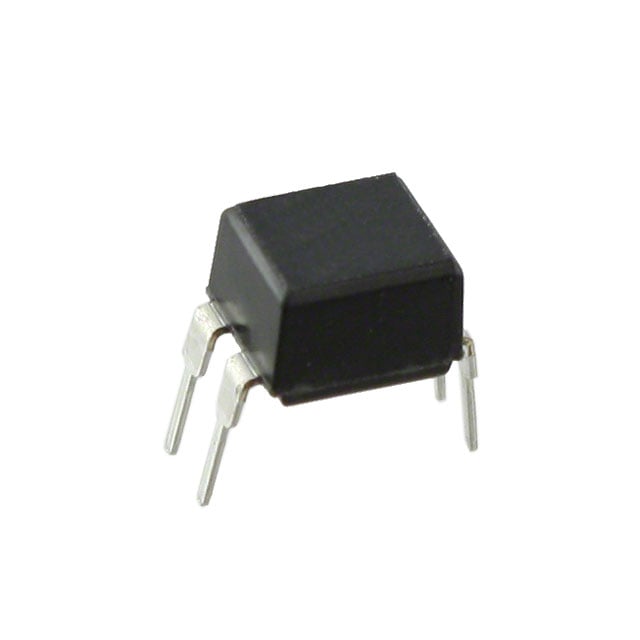
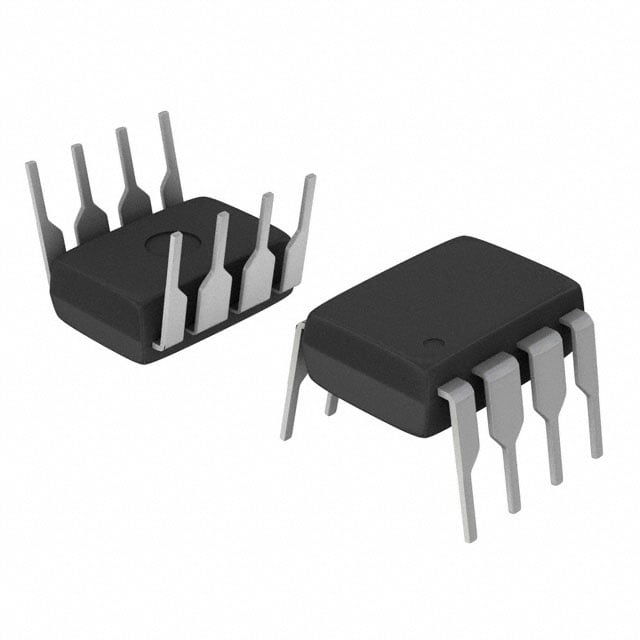
A: The onsemi FOD817C300 typically comes in a standard through-hole DIP package. This package provides strong mechanical stability, good pin spacing for high-voltage isolation, and easy handling for prototyping, industrial equipment, and systems where durability and isolation spacing are design priorities.
Q10: How many pins does the onsemi FOD817C300 package include?
A: The onsemi FOD817C300 generally features a 4-pin configuration. Two pins are assigned to the input LED, and two pins are used for the output phototransistor. This classic pinout simplifies PCB layout, supports wide creepage and clearance distances, and aligns with standard optocoupler footprints.
Q11: What is the typical forward current required to drive the LED in the onsemi FOD817C300?
A: The LED in the onsemi FOD817C300 typically operates with a forward current in the range of 5–20 mA, depending on the required CTR and output performance. Operating within the recommended input current ensures long LED life, stable light output, and reliable optocoupler function.
Q12: What is the output transistor’s maximum collector-emitter voltage in the onsemi FOD817C300?
A: The phototransistor output of the onsemi FOD817C300 can withstand a maximum collector-emitter voltage rated in tens of volts, allowing it to interface safely with various analog and digital circuits. This rating ensures that the optocoupler can function reliably in moderate-voltage signal paths.
Q13: Does the onsemi FOD817C300 support AC signal transmission?
A: Yes, the onsemi FOD817C300 can pass AC or pulsed signals, provided they fall within its response time capability. Designers often use this optocoupler for AC detection, feedback regulation, and pulse isolation where low-frequency AC or modulated signals need to cross an isolation barrier.
Q14: What is the typical turn-on time for the onsemi FOD817C300?
A: The turn-on time of the onsemi FOD817C300 falls within the millisecond or sub-millisecond range, suitable for general control tasks and slow digital interfaces. Although it cannot support very fast communications, this response time is adequate for power control, feedback, and sensor applications.
Q15: What is the typical turn-off time for the onsemi FOD817C300?
A: Similar to the turn-on time, the turn-off time is also in the millisecond or sub-millisecond range. The discharge characteristics of the phototransistor determine its ability to return to the off state, making it well-suited for applications with moderate signal frequencies and timing requirements.
Q16: Is the onsemi FOD817C300 suitable for microcontroller isolation?
A: Yes, the onsemi FOD817C300 is frequently used for isolating microcontroller signals from high-voltage or noisy circuits. Its high CTR ensures that typical GPIO currents can generate sufficient output current, and its isolation barrier protects sensitive digital logic from transients and electrical disturbances.
Q17: Can the onsemi FOD817C300 be used in power supply feedback loops?
A: The onsemi FOD817C300 is commonly incorporated into switch-mode power supply feedback paths due to its isolation capability and stable transfer characteristics. It enables primary-side controllers to regulate secondary-side voltages while maintaining galvanic separation for safety and noise immunity.
Q18: How does the onsemi FOD817C300 handle electrical noise?
A: The onsemi FOD817C300 provides excellent immunity to electrical noise because its optical coupling mechanism is inherently resistant to EMI and ground-loop interference. This makes it valuable in industrial and power electronics environments where electrical noise can disrupt direct electrical connections.
Q19: Is the onsemi FOD817C300 compliant with safety insulation standards?
A: The onsemi FOD817C300 is designed to meet rigorous safety insulation and isolation standards applicable to optocouplers used in industrial, consumer, and power electronics. Its insulation thickness, creepage distance, and dielectric strength help ensure compliance with high-voltage safety requirements.
Q20: What benefits does the onsemi FOD817C300 provide compared to direct electrical coupling?
A: The onsemi FOD817C300 offers galvanic isolation, protection against voltage spikes, reduced ground-loop interference, improved noise immunity, and safer interfacing between disparate circuit domains. These advantages make optocouplers like the onsemi FOD817C300 essential in modern high-reliability and high-safety electronic system designs.