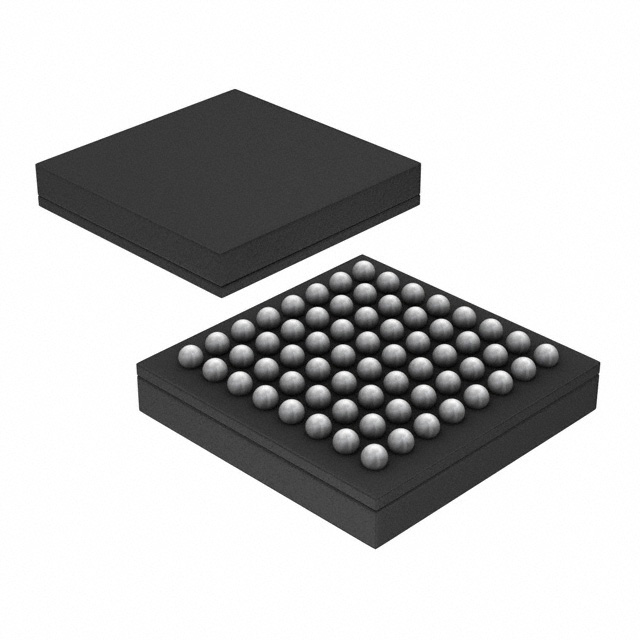
Q1: What is the Intel 5M40ZE64C5N?
A1: The Intel 5M40ZE64C5N is a member of the MAX 5 FPGA family, providing a flexible, low-power solution for a variety of applications, including industrial and automotive systems.
Q2: What is the logic element count of the 5M40ZE64C5N?
A2: The 5M40ZE64C5N features 40,000 logic elements, allowing for the implementation of complex digital logic functions in various designs.
Q3: What is the operating voltage of the 5M40ZE64C5N?
A3: The 5M40ZE64C5N operates with a core voltage of 1.2V and I/O voltage of 3.3V, suitable for modern digital circuits.
Q4: What is the maximum clock frequency of the 5M40ZE64C5N?
A4: The maximum clock frequency of the 5M40ZE64C5N can reach up to 200 MHz, depending on the design and application.
Q5: What is the package type of the 5M40ZE64C5N?
A5: The 5M40ZE64C5N is available in a 64-pin, lead-free, RoHS-compliant QFP (Quad Flat Package) form factor.
Q6: How many I/O pins does the 5M40ZE64C5N have?
A6: The 5M40ZE64C5N provides up to 48 I/O pins, allowing for flexible interfacing with external components.
Q7: What features are included in the 5M40ZE64C5N?
A7: The 5M40ZE64C5N includes features like embedded memory blocks, high-speed I/O, and low power consumption, making it versatile for a range of applications.
Q8: Is the 5M40ZE64C5N suitable for automotive applications?
A8: Yes, the 5M40ZE64C5N is well-suited for automotive applications that require high performance, low power consumption, and high reliability in harsh environments.
Q9: What is the on-chip memory of the 5M40ZE64C5N?
A9: The 5M40ZE64C5N includes embedded memory resources such as SRAM blocks, which allow for efficient data storage and retrieval in real-time applications.
Q10: Does the 5M40ZE64C5N support high-speed transceivers?
A10: Yes, the 5M40ZE64C5N supports high-speed transceivers, enabling efficient communication with other high-performance systems.
Q11: What is the temperature range of the 5M40ZE64C5N?
A11: The 5M40ZE64C5N operates within a temperature range of -40°C to +100°C, making it suitable for industrial and automotive environments.
Q12: Can the 5M40ZE64C5N be used in communication systems?
A12: Yes, the 5M40ZE64C5N is suitable for use in communication systems, offering high-speed data processing and efficient signal transmission.
Q13: What is the process technology used in the 5M40ZE64C5N?
A13: The 5M40ZE64C5N is built using 55nm process technology, balancing performance, power efficiency, and density for various applications.
Q14: How is the 5M40ZE64C5N configured?
A14: The 5M40ZE64C5N is configured via an external non-volatile memory, such as Flash, or by using a JTAG interface for programming.
Q15: Is the 5M40ZE64C5N suitable for consumer electronics?
A15: Yes, the 5M40ZE64C5N can be used in consumer electronics requiring programmable logic, such as embedded systems, displays, and other smart devices.
Q16: Does the 5M40ZE64C5N support different I/O standards?
A16: Yes, the 5M40ZE64C5N supports various I/O standards including LVDS, LVCMOS, and SSTL, offering flexibility for external interfacing.
Q17: What kind of power consumption does the 5M40ZE64C5N have?
A17: The 5M40ZE64C5N is designed to be power-efficient, with low dynamic and static power consumption, making it ideal for energy-sensitive applications.
Q18: Can the 5M40ZE64C5N be used in industrial automation?
A18: Yes, the 5M40ZE64C5N is well-suited for industrial automation systems, where its high performance and reliability are essential for controlling machinery and processes.
Q19: How does the 5M40ZE64C5N handle data storage?
A19: The 5M40ZE64C5N includes embedded memory blocks, such as SRAM, which are used for local data storage and fast access during operation.
Q20: What is the typical use case for the 5M40ZE64C5N?
A20: The 5M40ZE64C5N is typically used in applications such as industrial control systems, automotive electronics, telecommunications, and high-performance embedded systems where programmable logic is required.