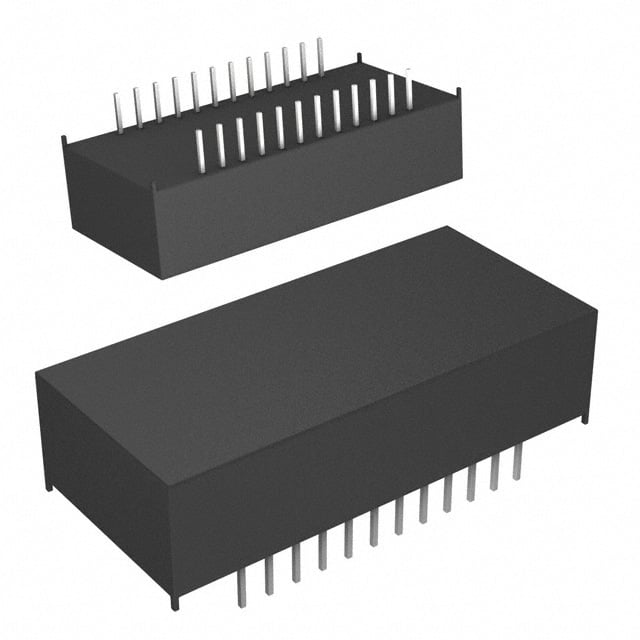
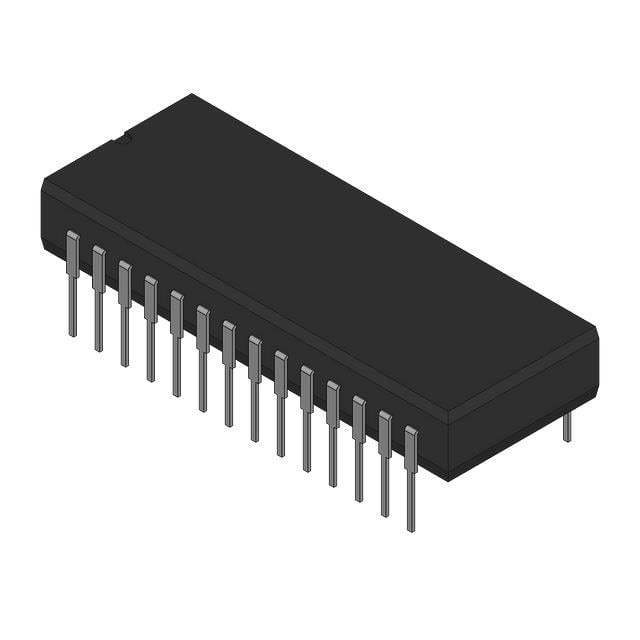
Maxim Integrated DS17887-3 Overview
The Maxim Integrated DS17887-3 is a real-time clock (RTC) and calendar with battery-backed memory, designed to provide accurate timekeeping for various applications such as consumer electronics, automotive systems, industrial equipment, and embedded systems. It is built to offer high-precision timekeeping along with low-power consumption and the ability to maintain time even during power outages. The DS17887-3 features a time-of-day clock, alarm functions, and built-in non-volatile memory for storing important data.
## Key Features
* Real-Time Clock (RTC): The DS17887-3 provides accurate timekeeping and date tracking with year, month, day, hour, minute, and second. It supports both 24-hour and 12-hour formats, providing versatility for different time formats.
* Battery-Backed Timekeeping: The chip includes battery backup capabilities, ensuring that the timekeeping function is maintained even when the primary power source is interrupted. It uses an external coin-cell battery, which ensures that the RTC continues running even during power-down periods.
* Integrated Non-Volatile Memory: The DS17887-3 includes 256 bytes of non-volatile memory (NVM) for storing user data. This allows for the storage of important configuration or calibration data that needs to persist even after power loss.
* Automatic Leap Year Correction: The chip has built-in functionality for leap year correction, ensuring that February 29th is properly handled without requiring manual intervention. This is crucial for accurate long-term timekeeping in applications requiring precise date tracking.
* Multiple Alarm Functions: The DS17887-3 provides multiple alarm settings, allowing users to set up to four programmable alarms for events such as time-based notifications, wake-up calls, or periodic events.
* Temperature-Compensated Crystal Oscillator (TCXO): The RTC incorporates a high-stability oscillator, ensuring accurate timekeeping even in varying environmental conditions. This feature improves the precision of timekeeping and reduces drift over time.
* I2C Communication Interface: The DS17887-3 communicates with other system components using the I2C (Inter-Integrated Circuit) protocol. This makes it easy to integrate with microcontrollers, embedded systems, and other devices that support I2C communication.
* Low Power Consumption: The DS17887-3 is designed to consume very low power in all operational modes, which is essential for battery-powered applications. The chip enters a low-power standby mode when not actively communicating with the host system, extending battery life.
## Electrical Specifications
* Supply Voltage: The DS17887-3 operates within a supply voltage range of 2.0V to 5.5V, making it suitable for a wide range of systems powered by different voltage sources.
* Battery Backup: It requires a 3V coin-cell battery (such as CR2032) for maintaining time during power outages. The battery ensures that the timekeeping functionality continues without interruption, even when the main power supply is lost.
* Low Power Operation: The chip is designed to operate with minimal power consumption:
* Standby Mode: The current consumption in standby mode is typically less than 1 µA, allowing for long battery life in low-power applications.
* Active Mode: When the chip is actively running the clock and processing data, the typical current consumption is in the range of 150 µA to 200 µA.
* I2C Communication: During I2C communication, the power consumption may increase slightly, but it still remains low compared to other components.
## Performance Specifications
* Accuracy: The DS17887-3 provides excellent timekeeping accuracy with a typical time error of ±20 ppm (parts per million). This ensures that the clock maintains accurate time over long periods without significant drift.
* Timekeeping: The RTC tracks seconds, minutes, hours, day of the week, day of the month, month, and year. The date format is supported in both MM/DD/YYYY and DD/MM/YYYY formats.
* Oscillator Type: The RTC uses a crystal oscillator with an accuracy of ±20 ppm. It is capable of maintaining long-term stability and precise timekeeping over long periods, even under fluctuating temperatures.
* Temperature Sensitivity: The DS17887-3 has a temperature-compensated crystal oscillator (TCXO) that minimizes the effects of temperature variation on timekeeping accuracy. This ensures more stable time operation across different temperature ranges.
## I2C Interface
* Communication Protocol: The DS17887-3 uses I2C (Inter-Integrated Circuit) for communication with the host system. This enables easy integration with other components like microcontrollers, sensors, or other peripherals that support I2C.
* Data Transfer Rate: The I2C interface supports a standard data rate of 100 kHz or 400 kHz in fast mode, allowing efficient communication for reading and writing time and date information, as well as accessing the non-volatile memory.
* I2C Address: The DS17887-3 has a fixed I2C address, allowing it to be easily identified and addressed by the system when interfacing with other I2C devices.
## Security and Alarms
* Programmable Alarms: The DS17887-3 can generate four programmable alarms, each with its own unique time configuration. Alarms can be set for different time intervals, and the chip will generate an interrupt or signal when the alarm is triggered. This feature is useful for applications that require regular time-based events or reminders.
* Interrupt Output: The DS17887-3 features an interrupt output pin, which can be used to signal the host system when an alarm or event has occurred. This allows for real-time notifications in embedded systems.
## Environmental Specifications
* Operating Temperature Range: The DS17887-3 is designed to operate in a broad temperature range of -40°C to +85°C, making it suitable for use in both consumer and industrial environments where temperature variations are common.
* Storage Temperature: The device can be stored in temperatures ranging from -40°C to +125°C, ensuring reliable performance during transport and in harsh storage environments.
## Applications
* Consumer Electronics: The DS17887-3 is widely used in consumer electronic devices such as digital clocks, alarm clocks, set-top boxes, smart TVs, and home automation systems, where accurate timekeeping is crucial.
* Automotive: In automotive applications, the DS17887-3 can be used for in-vehicle time tracking in infotainment systems, navigation systems, and on-board diagnostics systems.
* Industrial Systems: The DS17887-3 is ideal for industrial control systems, PLC controllers, and data logging systems where accurate time-stamping is required for logging events or coordinating processes.
* Embedded Systems: The DS17887-3 is widely used in embedded systems, providing real-time clock and calendar functionality for microcontroller-based applications in a variety of industries, from medical devices to automated systems.
## Conclusion
The Maxim Integrated DS17887-3 is a versatile and reliable real-time clock (RTC) solution designed for applications requiring precise timekeeping and low power consumption. With its integrated non-volatile memory, multiple alarm functions, battery backup, and I2C interface, the DS17887-3 is suitable for a broad range of consumer, industrial, automotive, and embedded applications. Its high accuracy, wide temperature range, and robust functionality make it an ideal choice for designs that require accurate and persistent time data, especially in battery-powered or low-power systems.