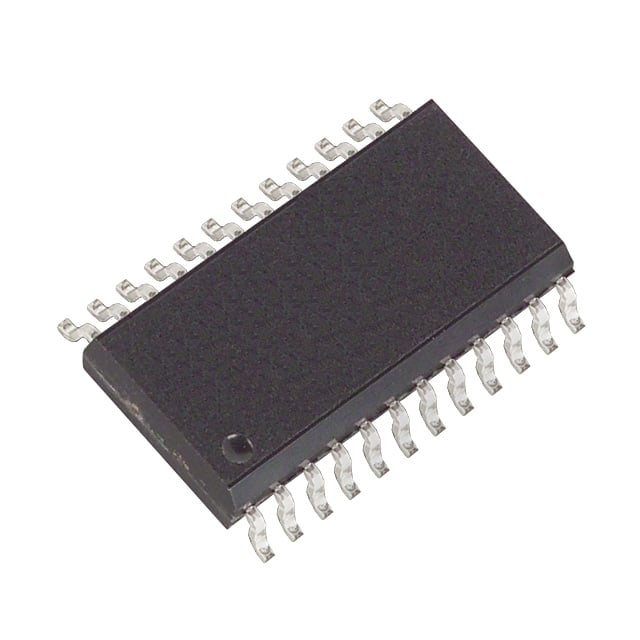
## Overview of Maxim Integrated DS2106S
The Maxim Integrated DS2106S is a highly integrated digital signal processor (DSP) designed for high-speed signal processing applications. It is commonly used in systems requiring real-time processing of digital signals, such as telecommunications, audio processing, radar systems, and other embedded applications. The DS2106S offers efficient performance, low power consumption, and versatile signal processing capabilities.
## Key Specifications
* Device Type: Digital Signal Processor (DSP)
* Clock Speed: 100 MHz
The DS2106S operates at a maximum clock speed of 100 MHz, providing fast data processing capabilities suitable for high-performance applications in communications, audio, and other digital systems.
* Data Bus Width: 16-bit
The DSP features a 16-bit data bus, allowing for efficient parallel processing of data while maintaining the performance required for high-speed operations in embedded systems.
* Program Memory: 128 KB of On-Chip ROM
The DS2106S includes 128 KB of ROM for program storage, which is essential for executing embedded algorithms and managing system control functions. This ROM is used to store the firmware that runs on the DSP, enabling the device to perform complex signal processing tasks.
* RAM: 8 KB of On-Chip RAM
The 8 KB of RAM provides temporary data storage for intermediate results during signal processing, enabling fast access to data and enhancing overall system performance.
* Instruction Set: Harvard Architecture
The DS2106S uses Harvard architecture, which separates data and program memory. This architecture provides faster instruction fetch times and improved throughput by allowing simultaneous access to both data and instructions.
* Power Supply Voltage: 3.3 V ±10%
The DSP operates on a 3.3 V supply voltage, making it suitable for modern low-voltage systems while ensuring low power consumption.
* Power Consumption: 200 mW (typical)
With a typical power consumption of 200 mW, the DS2106S is highly efficient, making it suitable for power-sensitive applications, such as portable electronics and battery-powered systems.
## Electrical Characteristics
* Operating Voltage Range: 3.0 V to 3.6 V
The DS2106S operates within a voltage range of 3.0 V to 3.6 V, ensuring compatibility with most modern low-voltage systems and offering flexibility in power supply designs.
* Input Voltage Range: 0 V to 3.6 V
The input voltage range is from 0 V to 3.6 V, which allows the DSP to interface with a wide variety of logic levels commonly used in digital systems.
* Output Voltage Range: 0 V to 3.6 V
The output voltage range is also from 0 V to 3.6 V, ensuring the device is compatible with other components and systems that operate at the same voltage levels.
* Maximum I/O Pin Drive Current: 10 mA (sourcing), 10 mA (sinking)
The DS2106S can source or sink up to 10 mA on its I/O pins, providing sufficient drive for interfacing with other logic devices and components in digital systems.
* Clock Input Characteristics:
* Clock Frequency: 100 MHz
* Input Type: Differential (LVDS)
The clock input uses LVDS (Low Voltage Differential Signaling) for low-noise, high-speed communication, ensuring that the DSP can operate reliably in high-speed systems.
## Functional Characteristics
* Signal Processing:
The DS2106S is optimized for digital signal processing (DSP) tasks, such as filtering, modulation/demodulation, and fast Fourier transforms (FFT). Its architecture allows it to efficiently process complex mathematical operations required in communications, audio, and other signal-processing systems.
* Timer and Interrupt System:
The device includes an integrated timer and interrupt system for managing time-sensitive tasks and responding to external events. This is crucial for applications where real-time processing is required, such as embedded systems with strict timing constraints.
* DMA (Direct Memory Access):
The DS2106S supports DMA, allowing for fast data transfers between memory and peripherals without involving the CPU, thereby reducing processing overhead and improving system performance in data-heavy applications.
* Multimedia Processing:
The DSP is well-suited for multimedia applications, including audio and video signal processing, due to its high-speed processing and efficient algorithm handling.
## Physical Characteristics
* Package Type: 48-pin QFN (Quad Flat No-lead)
The DS2106S comes in a 48-pin QFN package, providing a compact form factor that is ideal for space-constrained designs. The QFN package offers excellent thermal performance, which is crucial for high-speed processors.
* Package Dimensions: 7 mm x 7 mm
The device’s compact dimensions of 7 mm x 7 mm make it suitable for integration into dense, small-form-factor designs, such as portable devices, embedded systems, and telecommunications hardware.
* Weight: Approximately 0.2 g
The lightweight nature of the package ensures that the DSP can be easily integrated into a wide range of applications without adding significant bulk or weight.
## Applications
The Maxim Integrated DS2106S is ideal for various signal processing applications, including:
* Telecommunications: In base station equipment, routers, and other communication systems, the DS2106S can be used to process signals for encoding/decoding, modulation/demodulation, and filtering.
* Audio Processing: In consumer electronics, the DSP can handle audio effects, noise reduction, and other audio signal manipulation tasks.
* Radar and Imaging Systems: The DS2106S is suitable for radar signal processing, allowing for the real-time analysis of radar data for applications in defense, aerospace, and automotive industries.
* Medical Devices: Used in diagnostic imaging systems and portable medical equipment where high-speed signal processing is essential.
* Embedded Systems: In embedded designs requiring efficient real-time data processing, such as in industrial automation, robotics, and automotive electronics.
## Thermal and Reliability Considerations
* Operating Temperature Range: -40°C to +85°C
The DS2106S is designed to operate in a wide range of temperatures, making it suitable for both consumer and industrial environments where the device may be exposed to varying temperature conditions.
* Storage Temperature Range: -65°C to +150°C
The device’s storage temperature range ensures that it can be safely stored in environments with extreme temperatures, enhancing its durability and reliability.
* Thermal Resistance (junction to case): 45°C/W
The thermal resistance between the junction and case is 45°C/W, indicating efficient thermal dissipation, which is important for maintaining performance under high processing loads.
## Conclusion
The Maxim Integrated DS2106S is a powerful, efficient DSP designed for high-speed, real-time signal processing applications. With its low power consumption, high-speed processing capabilities, and compact package, it is well-suited for applications in telecommunications, audio processing, radar systems, and embedded devices. Its robust features, including DMA, timer/interrupt systems, and multimedia processing, make it a versatile choice for a wide range of industries requiring reliable and efficient signal processing.