# Detailed Overview of Atmel ATmega88-15MT
## Introduction
The Atmel ATmega88-15MT is a versatile and powerful 8-bit microcontroller from the AVR family, designed for a wide range of applications in embedded systems. This microcontroller is particularly popular among hobbyists and professionals alike due to its ease of use, robust performance, and extensive feature set. It is commonly used in applications such as robotics, automation, IoT devices, and various consumer electronics.
## Key Features
1. Architecture: The ATmega88 features an 8-bit AVR RISC architecture that allows for efficient instruction execution, enabling high-performance processing with low power consumption.
2. Memory:
- Flash Memory: 8 KB of in-system programmable Flash memory, which can be reprogrammed in-circuit and is ideal for storing program code.
- SRAM: 1 KB of static RAM provides temporary storage for data during program execution.
- EEPROM: 512 Bytes of Electrically Erasable Programmable Read-Only Memory (EEPROM) for non-volatile data storage, allowing data retention even when powered off.
3. Clock Speed: The ATmega88 operates at a maximum clock speed of 15 MHz, providing sufficient speed for most applications while maintaining energy efficiency.
4. I/O Ports: It has 23 programmable I/O lines, which can be configured as input or output. This flexibility allows for interfacing with various sensors, actuators, and communication protocols.
5. Timers/Counters:
- Three timers/counters are available: one 16-bit Timer/Counter and two 8-bit Timer/Counters. These can be used for timing applications, pulse width modulation (PWM), and generating precise time delays.
6. ADC: The ATmega88 includes a 10-bit Analog-to-Digital Converter (ADC) with up to 8 channels, allowing for the conversion of analog signals into digital values.
7. Communication Interfaces:
- USART: Universal Synchronous and Asynchronous serial receiver and transmitter for serial communication.
- SPI: Serial Peripheral Interface for high-speed communication with peripheral devices.
- I²C: Inter-Integrated Circuit interface for connecting multiple low-speed devices.
8. Power Management: The ATmega88 offers various power-saving modes, including idle and power-down modes, which help extend battery life in portable applications.
9. Operating Voltage: The microcontroller operates within a voltage range of 2.7V to 5.5V, making it suitable for battery-powered devices.
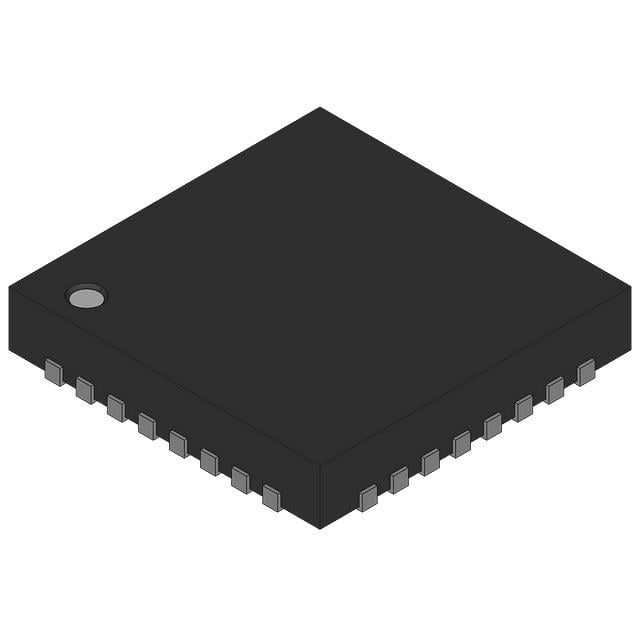
10. Package Type: The ATmega88-15MT is available in a 28-pin TQFP (Thin Quad Flat Package) or a 32-pin QFN (Quad Flat No-lead) package, providing design flexibility based on space and thermal requirements.
## Specifications
| Feature | Specification |
|---------------------------------|-----------------------------------|
| Microcontroller Architecture| AVR 8-bit RISC |
| Flash Memory | 8 KB |
| SRAM | 1 KB |
| EEPROM | 512 Bytes |
| Clock Speed | 15 MHz |
| I/O Pins | 23 |
| ADC Resolution | 10-bit |
| ADC Channels | Up to 8 |
| Timers | 3 (1 x 16-bit, 2 x 8-bit) |
| Communication Interfaces | USART, SPI, I²C |
| Operating Voltage | 2.7V to 5.5V |
| Power Consumption | Low Power, multiple sleep modes |
| Package Types | TQFP-28, QFN-32 |
## Applications
The ATmega88-15MT is suitable for a variety of applications, including but not limited to:
- Consumer Electronics: Used in devices such as remote controls, toys, and appliances.
- Robotics: Ideal for controlling motors, sensors, and communication modules in robotic systems.
- Home Automation: Widely utilized in smart home devices for monitoring and control.
- Industrial Automation: Can be employed in process control, data acquisition, and monitoring systems.
- IoT Projects: Serves as a microcontroller in Internet of Things devices due to its communication capabilities.
## Development Tools
Atmel provides a range of development tools for the ATmega88 series, including:
- AVR Studio / Atmel Studio: Integrated Development Environment (IDE) for writing and debugging code.
- AVRISP mkII: Programmer for in-system programming of the ATmega88.
- Arduino Platform: Many Arduino boards utilize the ATmega88 or similar microcontrollers, making it accessible for prototyping and hobby projects.
## Conclusion
The Atmel ATmega88-15MT microcontroller stands out due to its balance of performance, flexibility, and ease of use. Its combination of features makes it an excellent choice for both simple and complex embedded applications. Whether you%27re a beginner or an experienced developer, the ATmega88 provides a solid foundation for building innovative electronic solutions.