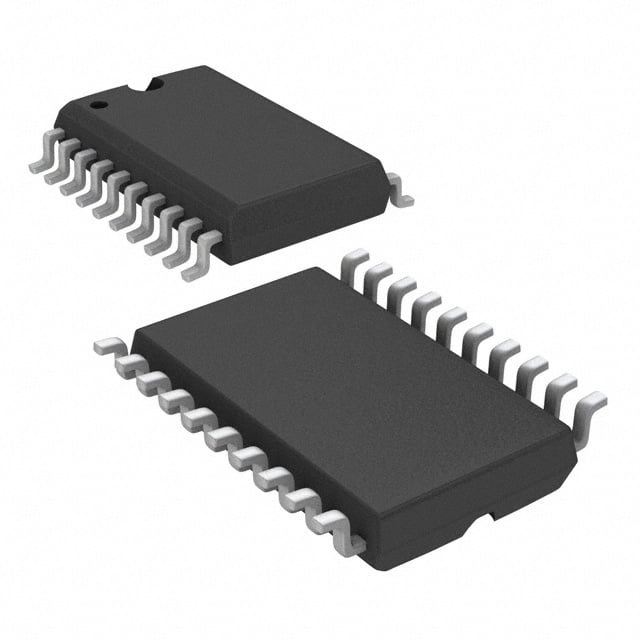
The Texas Instruments UC3638DW is a versatile and highly integrated PWM controller designed for use in a variety of power management applications. It excels in controlling DC-DC converters, motor drives, and battery charging systems. Its features cater to the demands of high-performance power supply designs, particularly in industrial and automotive applications.
## Key Features
1. PWM Control:
- The UC3638DW utilizes a voltage-mode PWM control architecture, which allows for efficient regulation of the output voltage with minimal distortion. This is particularly beneficial for applications that require precise voltage control.
2. Wide Supply Voltage Range:
- It operates over a wide supply voltage range from 8 V to 40 V, making it suitable for various applications including automotive and industrial environments.
3. High Output Drive Capability:
- The device can source and sink up to 1 A of output current, allowing for direct driving of power MOSFETs or bipolar junction transistors (BJTs) without additional driver circuits.
4. Integrated Soft Start:
- The soft start feature helps prevent inrush current and voltage overshoot during startup, ensuring a smooth power-up sequence for sensitive loads.
5. Adjustable Dead Time:
- The dead time between the turn-off of one switch and the turn-on of another is adjustable, which is crucial for reducing shoot-through current in half-bridge or full-bridge configurations.
6. Voltage Feedback and Reference:
- The UC3638DW includes an internal voltage reference, which provides a stable reference voltage for feedback control. This enhances the precision and stability of the output voltage regulation.
7. Temperature Compensation:
- The device incorporates temperature compensation features, ensuring that its performance remains consistent across a wide temperature range.
8. Protection Features:
- Built-in protection mechanisms, including overvoltage protection (OVP), undervoltage lockout (UVLO), and thermal shutdown, enhance the reliability of the application.
9. Package Type:
- The UC3638DW is offered in a 16-pin TSSOP package, which allows for a compact design and ease of integration into various PCB layouts.
## Electrical Characteristics
Here are the critical electrical specifications for the UC3638DW:
- Supply Voltage (VCC): 8 V to 40 V
- Output Voltage Range: Adjustable, typically from 0.5 V to 5 V
- Maximum Output Current: 1 A (source/sink)
- PWM Frequency: Adjustable up to 100 kHz
- Voltage Reference: 2.5 V ±2%
- Input Voltage Range for Feedback: 0 V to 5 V
- Temperature Range: -40°C to 125°C
## Application Examples
The UC3638DW is ideal for a variety of applications, including:
- DC-DC Converters: Can be used in buck, boost, or buck-boost configurations to regulate voltage efficiently in power supply designs.
- Battery Chargers: Its PWM control capabilities make it suitable for designing battery charging systems that require precise voltage and current regulation.
- Motor Drives: Excellent for driving DC motors or as part of inverter circuits in brushless DC (BLDC) motors, where efficient control is essential.
- Power Management Systems: Integrating the UC3638DW in power management systems can enhance overall efficiency and reliability.
## Typical Application Circuit
A typical application circuit using the UC3638DW includes the following components:
- Power MOSFETs: Used as switching elements in the power conversion stage.
- Inductor and Capacitor: To filter the output and maintain the desired voltage level.
- Feedback Network: Comprising resistors and capacitors to provide voltage feedback to the controller.
- Protection Diodes: For safeguarding the circuit against reverse polarity and inductive kickback.
## Conclusion
The Texas Instruments UC3638DW PWM controller is a robust and flexible solution for a wide range of power management applications. Its comprehensive feature set, including adjustable PWM frequency, soft start, and built-in protection, makes it ideal for both new designs and upgrades to existing systems. For detailed application information, including typical circuits and further specifications, refer to the official datasheet provided by Texas Instruments. If you need further assistance or specific design guidance, feel free to ask!