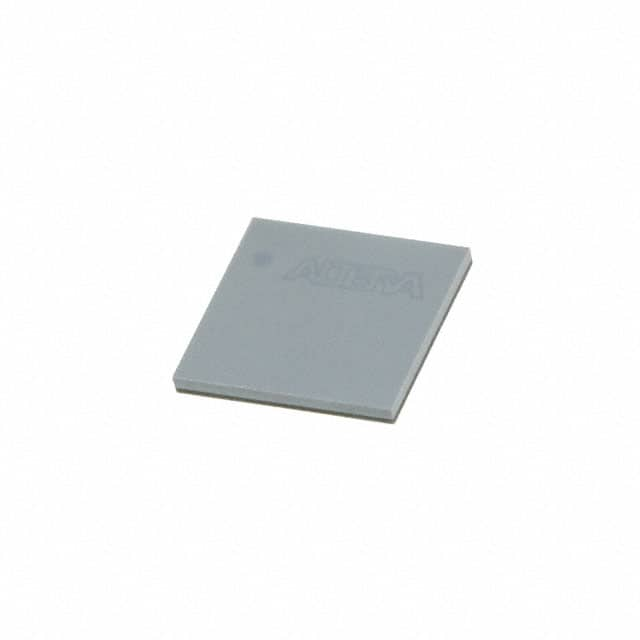
10M02SCE144I7G
10M02SCE144I7G
Active
Description:  IC FPGA 101 I/O 144EQFP
Manufacturer:  Intel
History Price: $14.28000
In Stock: 1200
10M02SCE144I7G Specification
Specification
Part No
10M02SCE144I7G
Category
Embedded - FPGAs (Field Programmable Gate Array)
Manufacturer
Intel
Series
MAX 10
Packaging
Tray
Status
Active
Environmental Compliance
Lead Free
Radiation Hardening
No
REACH SVHC
No SVHC
RoHS
Compliant
HS Code
-
Technical Parameter
Programmable
Not Verified
Number of LABs/CLBs
125
Number of Logic Elements/Cells
2000
Total RAM Bits
110592
Number of I/O
101
Number of Gates
-
Voltage - Supply
2.85V ~ 3.465V
Mounting Type
Surface Mount
Operating Temperature
-40 ℃ ~ 100 ℃ (TJ)
Package / Case
144-LQFP Exposed Pad
Supplier Device Package
144-EQFP (20x20)
10M02SCE144I7G PDF Datasheet
10M02SCE144I7G Related Parts
10M02DCU324A7G
10M02DCU324A7G
Intel
IC FPGA 160 I/O 324UBGA
10M02DCU324C8G
10M02DCU324C8G
Intel
IC FPGA 160 I/O 324UBGA
10M02DCU324I7G
10M02DCU324I7G
Intel
IC FPGA 160 I/O 324UBGA
10M02DCV36C7G
10M02DCV36C7G
Intel
IC FPGA 27 I/O 36WLCSP
10M02DCV36C8G
10M02DCV36C8G
Intel
IC FPGA 27 I/O 36WLCSP
10M02DCV36I7G
10M02DCV36I7G
Intel
IC FPGA 27 I/O 36WLCSP
10M02SCE144A7G
10M02SCE144A7G
Intel
IC FPGA 101 I/O 144EQFP
10M02SCE144C7G
10M02SCE144C7G
Intel
IC FPGA 101 I/O 144EQFP
10M02SCE144C8G
10M02SCE144C8G
Intel
IC FPGA 101 I/O 144EQFP
10M02SCM153C8G
10M02SCM153C8G
Intel
IC FPGA 112 I/O 153MBGA
10M02SCM153I7G
10M02SCM153I7G
Intel
IC FPGA 112 I/O 153MBGA
10M02SCU169A7G
10M02SCU169A7G
Intel
IC FPGA 130 I/O 169UBGA
10M02SCE144I7G Description
The 10M02SCE144I7G is a member of the MAX® 10 series from Intel (formerly Altera), which are field-programmable gate arrays (FPGAs). The MAX 10 series is known for its versatility, cost-effectiveness, and non-volatile memory capabilities. Below is a comprehensive overview of the 10M02SCE144I7G FPGA, including its features, specifications, and typical applications.

## Overview

The 10M02SCE144I7G is a compact and efficient FPGA designed to cater to a wide range of digital logic applications. As part of the MAX 10 family, this FPGA integrates programmable logic with built-in non-volatile memory, enabling high-speed and reliable operation in various applications. It is housed in a 144-ball Fine-Pitch Ball Grid Array (FBGA) package, making it suitable for applications where space and power efficiency are critical.

## Key Features

1. Non-Volatile Configuration:
- The 10M02SCE144I7G features an embedded non-volatile configuration memory. This means the FPGA can retain its configuration even when power is off, reducing the need for an external configuration memory device.

2. Logic Elements:
- It contains a set of logic elements that can be configured to implement various digital logic functions. These logic elements include lookup tables (LUTs) and flip-flops that can be combined to create complex logic functions and state machines.

3. I/O Flexibility:
- The FPGA offers a range of programmable input/output (I/O) pins that support different voltage levels and standards, providing flexibility in interfacing with external devices and systems.

4. Embedded Multipliers:
- The 10M02SCE144I7G includes embedded multipliers, which are useful for arithmetic operations and signal processing tasks. These multipliers can enhance performance in applications requiring high-speed data manipulation.

5. Clock Management:
- It features clock management resources, including phase-locked loops (PLLs) and clock dividers, which enable precise control over the timing and synchronization of signals within the FPGA.

6. Built-In Memory:
- The FPGA includes on-chip memory blocks that can be used for data storage and buffering, reducing the need for external memory components and improving overall system performance.

7. Low Power Consumption:
- Designed with power efficiency in mind, the MAX 10 FPGAs, including the 10M02SCE144I7G, offer low power consumption profiles, which is advantageous for battery-powered and portable applications.

8. Development Tools:
- Intel provides a comprehensive suite of development tools, including the Quartus® Prime software, which supports design entry, simulation, synthesis, and implementation of FPGA designs. This makes it easier for engineers to develop, test, and deploy their FPGA-based solutions.

## Specifications

1. Device Family:
- MAX 10 FPGA

2. Package Type:
- 144-ball Fine-Pitch Ball Grid Array (FBGA)

3. Logic Elements:
- The 10M02SCE144I7G includes a certain number of logic elements (LEs), which are used to implement the programmable logic functions. The exact number of LEs depends on the specific FPGA model within the MAX 10 series.

4. On-Chip Memory:
- The FPGA includes on-chip memory blocks that are used for storing data and implementing various memory functions.

5. Operating Temperature Range:
- The "I" in 10M02SCE144I7G indicates an industrial temperature grade, which typically covers an operating temperature range of -40°C to +100°C.

6. Speed Grade:
- The "7" in the part number denotes the speed grade of the FPGA, which indicates its performance characteristics. In this case, "7" corresponds to a standard speed grade for the MAX 10 series.

7. I/O Standards:
- The FPGA supports multiple I/O standards, allowing for compatibility with various external components and interfaces.

8. Non-Volatile Configuration Memory:
- Integrated non-volatile configuration memory allows the FPGA to retain its programmed configuration without requiring external memory.

## Typical Applications

1. Consumer Electronics:
- The 10M02SCE144I7G is used in consumer electronics such as portable devices, where space and power efficiency are crucial.

2. Industrial Automation:
- In industrial automation, this FPGA can be employed for controlling machinery, processing sensor data, and implementing custom logic for automation systems.

3. Automotive:
- The FPGA is suitable for automotive applications, including in-vehicle infotainment systems, advanced driver-assistance systems (ADAS), and other automotive electronics.

4. Communications:
- The 10M02SCE144I7G can be used in communication systems for signal processing, protocol handling, and network interfacing.

5. Medical Devices:
- In medical devices, the FPGA provides a platform for implementing custom digital signal processing, data acquisition, and control functions.

6. Prototyping and Development:
- Engineers and designers use this FPGA for prototyping and developing custom digital circuits and systems, leveraging its programmable nature and integrated resources.

## Development and Support

1. Quartus Prime Software:
- Intel’s Quartus Prime software provides a comprehensive environment for designing, simulating, and programming MAX 10 FPGAs. It includes tools for RTL (Register Transfer Level) design entry, synthesis, place-and-route, and timing analysis.

2. Reference Designs:
- Intel offers reference designs and example projects that can be used as starting points for development, helping engineers to accelerate their design process.

3. Technical Support:
- Intel provides technical support and resources through their online community, documentation, and support channels to assist users in resolving issues and optimizing their FPGA designs.

## Conclusion

The 10M02SCE144I7G is a versatile and cost-effective FPGA from Intel%27s MAX 10 series, designed to offer non-volatile configuration, low power consumption, and flexible I/O options. Its integration of logic elements, embedded multipliers, and on-chip memory makes it suitable for a broad range of applications, from consumer electronics to industrial automation. The FPGA’s compact FBGA package and industrial temperature range further enhance its appeal for space-constrained and demanding environments. With the support of Intel’s development tools and resources, engineers can leverage the 10M02SCE144I7G to create innovative and reliable digital solutions.
10M02SCE144I7G Compare Parts
  • 10M02SCE144I7G vs 10M50SCE144C8G
  • 10M02SCE144I7G vs 10M50SCE144C7G
  • 10M02SCE144I7G vs 10M50SCE144A7G
  • 10M02SCE144I7G vs 10M50SAE144I7G
  • 10M02SCE144I7G vs 10M50SAE144C8G
  • 10M02SCE144I7G vs 10M50DDF672I7G
  • 10M02SCE144I7G vs 10M50DDF672C8G
  • 10M02SCE144I7G vs 10M50DDF484I7G
  • 10M02SCE144I7G vs 10M50DDF484C8G
  • 10M02SCE144I7G vs 10M50DDF256I7G
  • 10M02SCE144I7G vs 10M50DDF256C8G
  • 10M02SCE144I7G vs 10M50DCF672I7G
  • 10M02SCE144I7G vs 10M50DCF672I6G
  • 10M02SCE144I7G vs 10M50DCF672C8G
  • 10M02SCE144I7G vs 10M50DCF672C7G
  • 10M02SCE144I7G vs 10M50DCF484I7G
  • 10M02SCE144I7G vs 10M50DCF484I6G
  • 10M02SCE144I7G vs 10M50DCF484C8G
  • 10M02SCE144I7G vs 10M50DCF484C7G
  • 10M02SCE144I7G vs 10M50DCF256I7G
  • 10M02SCE144I7G vs 10M50DCF256I6G
  • 10M02SCE144I7G vs 10M50DCF256C8G
  • 10M02SCE144I7G vs 10M50DCF256C7G
  • 10M02SCE144I7G vs 10M50DCF256A7G
  • 10M02SCE144I7G vs 10M50DAF672I7G
  • 10M02SCE144I7G vs 10M50DAF672I6G
  • 10M02SCE144I7G vs 10M50DAF672C8G
  • 10M02SCE144I7G vs 10M50DAF672C7G
  • 10M02SCE144I7G vs 10M50DAF672C6GES
  • 10M02SCE144I7G vs 10M50DAF672C6G
  • 10M02SCE144I7G vs 10M50DAF484I7P
  • 10M02SCE144I7G vs 10M50DAF484I7G
  • 10M02SCE144I7G vs 10M50DAF484I6G
  • 10M02SCE144I7G vs 10M50DAF484C8G
  • 10M02SCE144I7G vs 10M50DAF484C7G
  • 10M02SCE144I7G vs 10M50DAF484C6GES
  • 10M02SCE144I7G vs 10M50DAF256I7G
  • 10M02SCE144I7G vs 10M50DAF256I6G
  • 10M02SCE144I7G vs 10M50DAF256C8G
  • 10M02SCE144I7G vs 10M50DAF256C7G
  • 10M02SCE144I7G FAQ
    Q1: What is the Intel 10M02SCE144I7G?
    A1: The Intel 10M02SCE144I7G is a Field-Programmable Gate Array (FPGA) from the MAX 10 series, designed for low-power, high-performance applications.

    Q2: How many logic elements are available in the Intel 10M02SCE144I7G?
    A2: The Intel 10M02SCE144I7G provides approximately 2,000 logic elements, making it suitable for medium-complexity designs.

    Q3: What is the package type of the Intel 10M02SCE144I7G?
    A3: The Intel 10M02SCE144I7G comes in a 144-pin LQFP (Low-Profile Quad Flat Package) package, providing a compact form factor.

    Q4: What is the operating voltage of the Intel 10M02SCE144I7G?
    A4: The Intel 10M02SCE144I7G operates at a core voltage of 1.2V, which is typical for FPGAs in this series.

    Q5: What is the maximum clock frequency supported by the Intel 10M02SCE144I7G?
    A5: The Intel 10M02SCE144I7G can support clock frequencies up to 100 MHz, depending on the application and configuration.

    Q6: What are the key features of the Intel 10M02SCE144I7G?
    A6: Key features of the Intel 10M02SCE144I7G include low power consumption, internal memory blocks, a range of I/O options, and support for fast signal processing.

    Q7: How does the Intel 10M02SCE144I7G support high-speed interfaces?
    A7: The Intel 10M02SCE144I7G supports high-speed interfaces through its configurable I/O blocks and embedded peripherals such as SPI and I2C.

    Q8: What types of applications can the Intel 10M02SCE144I7G be used in?
    A8: The Intel 10M02SCE144I7G is ideal for applications such as signal processing, industrial control, automotive systems, and embedded systems requiring custom logic.

    Q9: Does the Intel 10M02SCE144I7G include embedded memory?
    A9: Yes, the Intel 10M02SCE144I7G includes embedded memory blocks, including SRAM, for efficient data storage and retrieval.

    Q10: What is the power consumption of the Intel 10M02SCE144I7G?
    A10: The Intel 10M02SCE144I7G is designed for low power consumption, typically drawing less than 200 mW in most applications, making it suitable for energy-sensitive devices.

    Q11: How is the Intel 10M02SCE144I7G programmed?
    A11: The Intel 10M02SCE144I7G is programmed using Intel’s Quartus Prime software, which allows for easy design and configuration of the FPGA logic.

    Q12: What is the temperature range for the Intel 10M02SCE144I7G?
    A12: The Intel 10M02SCE144I7G operates in a temperature range of -40°C to +100°C, making it suitable for industrial and automotive applications.

    Q13: Can the Intel 10M02SCE144I7G be used in communications systems?
    A13: Yes, the Intel 10M02SCE144I7G can be used in communications systems such as data routers, modems, and network interface devices.

    Q14: How many I/O pins does the Intel 10M02SCE144I7G have?
    A14: The Intel 10M02SCE144I7G provides up to 122 user-configurable I/O pins, offering flexibility for various peripheral connections.

    Q15: What is the internal clock source for the Intel 10M02SCE144I7G?
    A15: The Intel 10M02SCE144I7G has an internal clock source that can be used for timing and synchronization of the FPGA logic, ensuring reliable operation.

    Q16: Can the Intel 10M02SCE144I7G be used for signal processing tasks?
    A16: Yes, the Intel 10M02SCE144I7G is well-suited for signal processing applications, including filtering, modulation, and digital signal processing (DSP).

    Q17: Does the Intel 10M02SCE144I7G support analog signals?
    A17: The Intel 10M02SCE144I7G is primarily designed for digital signal processing, but it can interface with analog signals through appropriate ADCs and DACs connected to its I/O pins.

    Q18: What development tools are compatible with the Intel 10M02SCE144I7G?
    A18: The Intel 10M02SCE144I7G is compatible with Intel's Quartus Prime software for design entry, simulation, and programming, as well as the Intel FPGA SDK for OpenCL.

    Q19: Is the Intel 10M02SCE144I7G suitable for embedded applications?
    A19: Yes, the Intel 10M02SCE144I7G is ideal for embedded applications due to its low power consumption, compact size, and the ability to customize logic for specific tasks.

    Q20: What makes the Intel 10M02SCE144I7G a good choice for low-power designs?
    A20: The Intel 10M02SCE144I7G is optimized for low-power consumption while still providing ample logic resources, making it a suitable choice for battery-operated and energy-efficient designs.
    Customer Reviews
    4.95 out of 5.00 stars from 68 customer reviews from all over the world
    Eliane
    Brazil
    5 stars
    2026-04-04 09:47
    Still not used, hope it is good.
    Gonzalo Ramírez
    Spain
    5 stars
    2026-04-04 08:57
    Articles are what they say they are. They're unproven since I 've ordered them to have in stock. The preparation and shipping was within a correct time frame. Transport in Spain by company CTT, NEFASTO. I had to leave because of an urgency w
    Daniel Costa Santos
    Brazil
    5 stars
    2026-04-04 02:50
    Accurate information, CI purchased and replaced with success.
    Alice
    Brazil
    5 stars
    2026-04-03 15:54
    Like the product
    Karla Jiménez
    Spain
    5 stars
    2026-04-03 09:23
    Sent combined, 2 things together in a bag, by registered mail with signature. The fairly fast delivery time 2-3 weeks to Barcelona, identical described, without testing seem of good quality, OK
    Sara Vitale
    Italy
    5 stars
    2026-04-03 07:48
    Excellent Transaction - Object as Described - Fast Shipment - Thank you