## Microchip Technology 11AA020-I/P Overview
The Microchip Technology 11AA020-I/P is a highly reliable and efficient 2-Kilobit (Kb) Electrically Erasable Programmable Read-Only Memory (EEPROM) device, designed for general-purpose memory applications. It is a part of the 11AA series of EEPROM products from Microchip Technology. This device is typically used for storing small amounts of data that need to be retained even when the power is turned off, such as configuration settings, calibration data, or device parameters.
## Key Features
* Memory Size: 2 Kbits (256 bytes) of user memory
* Access Time: 400 ns (typical)
* Voltage Supply: 1.8V to 5.5V, making it suitable for a wide range of voltage systems
* Low Power Consumption: Typically consumes low current (1 µA in the standby mode and 1.5 mA in read mode)
* Write Endurance: 1,000,000 write cycles per byte, ensuring long-term reliability for frequent data updates
* Data Retention: 40 years (typical), ensuring that stored data remains intact for a long period even with minimal power
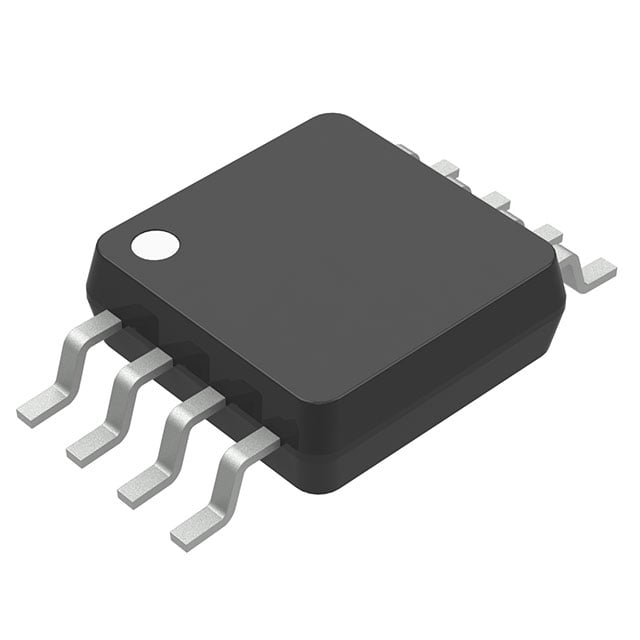
* Package: Available in a wide range of package types including PDIP (Plastic Dual In-Line Package), which is commonly used for ease of mounting on PCBs
* Industrial Temperature Range: -40°C to +85°C, suitable for a wide variety of environmental conditions
## Memory Organization
* Memory Structure: The 11AA020-I/P provides a memory organization that allows 256 bytes of user-accessible EEPROM memory. This memory is divided into 32 pages of 8 bytes each.
* Page Write: The device supports page writes with a maximum page size of 8 bytes. This allows for efficient data storage and retrieval, as multiple bytes can be written in a single operation.
## Interface and Communication
* I2C Interface: The 11AA020-I/P uses the popular I2C (Inter-Integrated Circuit) interface, which is a two-wire serial communication protocol. The I2C interface provides a simple and efficient way for microcontrollers and other devices to communicate with the EEPROM.
* Addressing: The EEPROM supports a 7-bit I2C address, enabling it to work with multiple devices on the same I2C bus.
* Speed: The device supports clock speeds of up to 400 kHz (Fast Mode), ensuring fast communication for memory read and write operations.
## Electrical Characteristics
* Operating Voltage: The device can operate across a wide voltage range of 1.8V to 5.5V, which makes it adaptable for various systems, from low-power devices to more robust electronics.
* Low Power Consumption: The low current draw is one of the standout features of this EEPROM. It operates in several power modes, including an ultra-low power standby mode and an active mode during data reads or writes.
## Write/Read Operation
* Write Operation: The write cycle time for the 11AA020-I/P is typically around 5 ms. After a write operation, the EEPROM requires a brief time to ensure the data has been securely written and retained.
* Read Operation: Read access times are fast, typically in the range of 400 ns, ensuring quick retrieval of stored data.
## Reliability and Durability
* Write Endurance: The EEPROM can endure up to 1 million write cycles per byte, ensuring high reliability even in applications that require frequent data updates.
* Data Retention: The device features long-term data retention capabilities of up to 40 years, making it suitable for applications where data persistence is critical.
## Applications
The 11AA020-I/P is ideal for use in a variety of applications, such as:
* Microcontroller Calibration: Storing configuration data for embedded systems and microcontrollers.
* Sensor Data Storage: Retaining data from sensors in systems that require non-volatile storage.
* Consumer Electronics: Used in portable or low-power devices to store system parameters or preferences.
* Industrial Systems: In factory automation or control systems for storing configuration settings or machine parameters.
* Medical Devices: In medical equipment for data logging and calibration settings.
## Conclusion
The Microchip Technology 11AA020-I/P EEPROM is an efficient, reliable, and versatile solution for low-power, non-volatile memory storage. Its ease of integration via the I2C interface, long data retention, and low power consumption make it an excellent choice for embedded systems, consumer electronics, and industrial applications where small amounts of data need to be stored and accessed quickly.



,TO-226_straightlead.jpg)