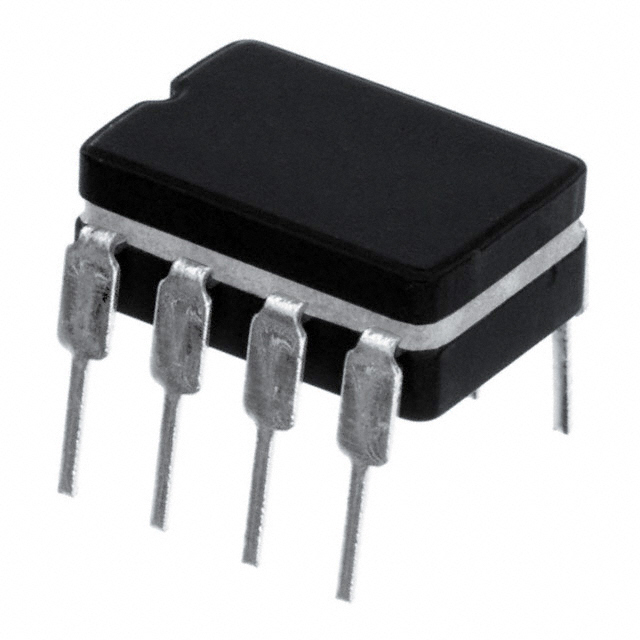
Overview of Texas Instruments LM139DR
The Texas Instruments LM139DR is a quad comparator designed for a wide range of applications, including signal conditioning, data acquisition, and level detection. This device is known for its high-speed performance, low power consumption, and versatility, making it suitable for both industrial and consumer electronics. The LM139DR is particularly valued for its ability to operate over a wide voltage range and its compatibility with various logic levels.
Key Specifications
- Device Type: Quad Comparator
- Supply Voltage (V_CC): 2 V to 36 V
- Input Voltage Range: -0.3 V to V_CC + 0.3 V
- Output Voltage Swing: 0 V to V_CC - 1.5 V (at 5 mA load)
- Input Offset Voltage: 2 mV (typical)
- Input Bias Current: 50 nA (typical)
- Propagation Delay: 300 ns (typical)
- Power Supply Current: 0.5 mA per comparator (typical)
- Temperature Range: -40 °C to +125 °C
- Package Type: SOIC-14 (Surface Mount)
Architecture and Features
The LM139DR features a unique architecture that allows for high-speed operation while maintaining low power consumption.
- Quad Configuration: The device contains four independent comparators, which can be used in various configurations to compare multiple signals simultaneously. This feature enhances design flexibility and reduces the need for multiple components.
- Open-Collector Output: The comparators have an open-collector output configuration, allowing for wired-AND logic and enabling the use of higher supply voltages than the comparator itself.
- Low Power Consumption: With a typical supply current of only 0.5 mA per comparator, the LM139DR is suitable for battery-powered applications where energy efficiency is critical.
- Wide Supply Voltage Range: The ability to operate from 2 V to 36 V makes the LM139DR versatile for different applications, from low-voltage systems to high-voltage environments.
Applications
The LM139DR is suitable for a variety of applications, including:
- Signal Conditioning: Used in analog signal processing to compare input signals and generate output signals based on predefined thresholds.
- Data Acquisition Systems: Ideal for interfacing with sensors and transducers, where precise voltage comparisons are necessary for accurate data collection.
- Level Detection: Employed in applications that require monitoring of voltage levels, such as battery management systems and over-voltage protection circuits.
- Window Comparators: Can be configured to create window comparators for detecting when a signal falls within or outside a specified range.
Development Tools and Support
Texas Instruments provides a range of resources to support the design and implementation of the LM139DR, including:
- Evaluation Modules: TI offers evaluation boards that allow engineers to test the LM139DR in various configurations and applications, facilitating rapid prototyping.
- Technical Documentation: Comprehensive datasheets, application notes, and design guides are available to assist engineers in understanding the device's specifications and capabilities.
- Simulation Models: SPICE models are provided for circuit simulation, enabling designers to model the behavior of the LM139DR in their applications before physical implementation.
Conclusion
The Texas Instruments LM139DR is a highly versatile quad comparator that offers excellent performance in a compact package. With its wide supply voltage range, low power consumption, and open-collector output configuration, it is well-suited for a variety of applications in both industrial and consumer electronics. The strong support from Texas Instruments, including evaluation tools and comprehensive documentation, further enhances its appeal for engineers looking to implement reliable and efficient comparator solutions.