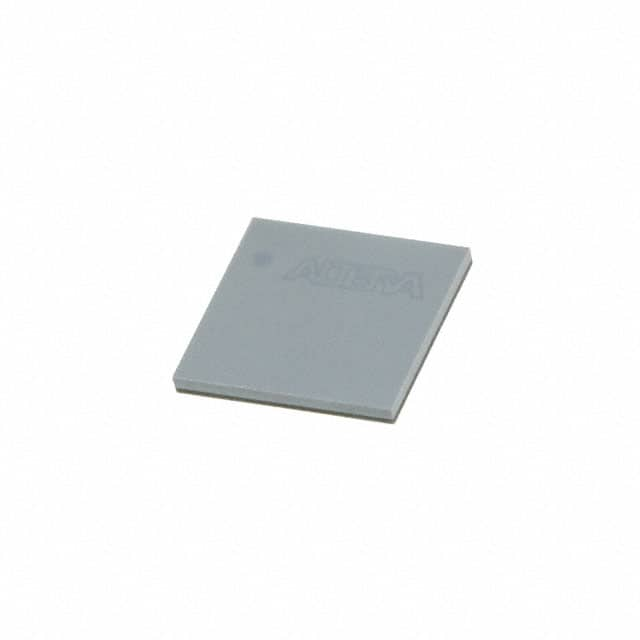
Introduction to Intel 10M16SAE144C8G
The Intel 10M16SAE144C8G is a versatile FPGA (Field Programmable Gate Array) device from Intel's 10M family, designed for a wide range of applications including digital signal processing, telecommunications, automotive systems, and industrial automation. FPGAs are reconfigurable integrated circuits that allow developers to customize hardware functionality according to specific application requirements. The 10M16SAE144C8G offers a balance of performance, flexibility, and power efficiency.
Key Specifications
Understanding the specifications of the 10M16SAE144C8G provides insight into its capabilities:
- Logic Elements (LEs): This FPGA features 16,000 logic elements, which can be configured to implement various digital functions and algorithms.
- Memory: It includes 576 Kbits of embedded memory blocks that can be used for data storage or buffering in applications requiring fast access to information.
- I/O Pins: The device is equipped with 144 user-configurable I/O pins, allowing it to interface with various external components and systems.
- Maximum Operating Frequency: The maximum operating frequency can reach up to 200 MHz, enabling high-speed processing for demanding applications.
Power and Performance Characteristics
The power efficiency and performance characteristics are essential for evaluating the FPGA's suitability in different environments:
- Supply Voltage: The device operates at a core voltage of 1.2 V and an I/O voltage range of 1.2 V to 3.3 V, providing flexibility in power management.
- Power Consumption: Typical static power consumption is around 100 mW, while dynamic power consumption varies based on configuration and usage patterns.
- Configuration Time: The configuration time for loading the FPGA design is typically less than a second, allowing for rapid deployment in prototyping and production environments.
Package Information
The physical characteristics of the package play a crucial role in integration:
- Package Type: The Intel 10M16SAE144C8G is available in a standard TQFP (Thin Quad Flat Package) package format.
- Dimensions: The package dimensions are approximately 20 mm x 20 mm with a pitch of 0.8 mm, facilitating easy integration into PCB layouts while maintaining a compact form factor.
Applications
The versatility of the Intel 10M16SAE144C8G allows it to be utilized across various fields:
- Telecommunications: Commonly used in base stations and networking equipment where signal processing and data handling capabilities are crucial.
- Industrial Automation: Employed in control systems for machinery where real-time processing is required.
- Automotive Systems: Used in advanced driver-assistance systems (ADAS) for tasks such as image processing and sensor fusion.
Development Tools and Support
Intel provides comprehensive development tools and support resources that enhance the usability of the 10M16SAE144C8G:
- Intel Quartus Prime Software: This software suite offers an intuitive environment for designing, simulating, and programming FPGA designs. It includes features such as design optimization tools and hardware debugging capabilities.
- IP Cores Availability: A wide range of pre-designed Intellectual Property (IP) cores are available for common functions such as DSP operations, communication protocols, and memory interfaces. This accelerates development time by allowing designers to focus on application-specific logic rather than low-level implementation details.
Advantages of Using Intel 10M16SAE144C8G
Several advantages make this FPGA an appealing choice for engineers:
- Reconfigurability: As an FPGA, it allows designers to modify hardware functionality post-manufacturing, which is invaluable for prototyping or evolving project requirements.
- Parallel Processing Capabilities: The architecture supports concurrent operations across multiple logic elements, enhancing throughput compared to traditional microcontrollers or processors.
- Scalability: With its extensive I/O options and memory capabilities, the device can be scaled easily to accommodate more complex designs as project needs grow.
Conclusion
The Intel 10M16SAE144C8G stands out as a powerful yet flexible FPGA solution suitable for a variety of applications across multiple industries. With its robust specifications—including substantial logic elements, embedded memory capacity, and efficient power consumption—it provides developers with the tools necessary to create advanced digital systems. By leveraging its features alongside Intel’s development ecosystem, engineers can achieve efficient designs tailored to meet specific application demands while maintaining adaptability throughout the product lifecycle.