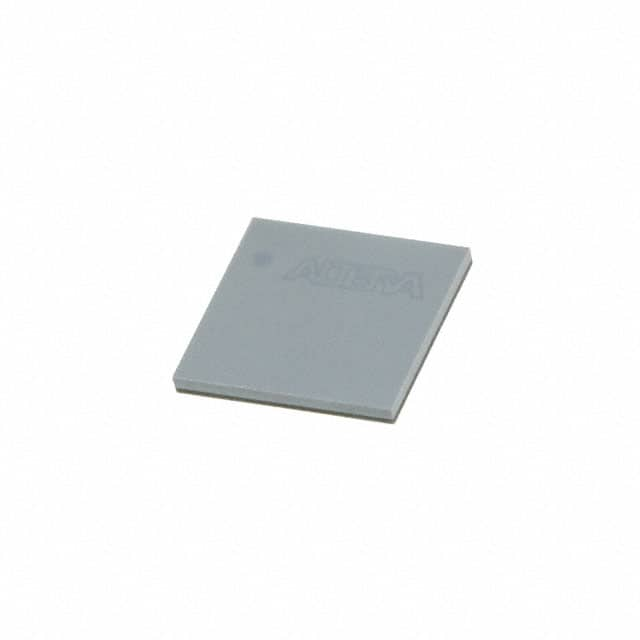
The Intel 10M25DCF256A7G is a member of the Intel MAX 10 FPGA family, designed for a wide range of applications, including industrial automation, automotive, communications, and consumer electronics. This FPGA (Field Programmable Gate Array) is known for its flexibility, low power consumption, and ease of use, making it an ideal choice for designers looking to implement custom logic solutions. Below is a detailed overview of the specifications, features, and applications of the Intel 10M25DCF256A7G.
## Key Features:
1. Logic Elements: The 10M25DCF256A7G contains 25,000 logic elements (LEs), which provide ample resources for implementing complex digital designs. Each logic element consists of a lookup table (LUT) and a flip-flop, allowing for versatile logic configurations.
2. Embedded Memory: This FPGA includes embedded memory blocks, providing a total of 1.2 Mbits of on-chip memory. This feature is essential for applications requiring data storage and buffering.
3. Digital Signal Processing (DSP) Blocks: The device is equipped with dedicated DSP blocks, enabling efficient implementation of digital signal processing algorithms. This is particularly useful in applications such as audio and video processing.
4. I/O Capabilities: The 10M25DCF256A7G supports a wide range of I/O standards, including LVTTL, LVCMOS, and HSTL, making it compatible with various external devices and systems. It features up to 85 user I/O pins, providing flexibility in interfacing with other components.
5. Low Power Consumption: Designed for low power operation, the MAX 10 FPGAs, including the 10M25DCF256A7G, are suitable for battery-powered and energy-efficient applications. The device can operate at a typical power consumption of around 200 mW.
6. Single Supply Voltage: The FPGA operates on a single supply voltage of 3.3V, simplifying power management in designs.
7. Flash Memory: The 10M25DCF256A7G includes integrated flash memory, allowing for non-volatile storage of configuration data. This feature enables the FPGA to retain its configuration even when powered off.
8. Development Tools: Intel provides a comprehensive suite of development tools, including the Intel Quartus Prime software, which facilitates design entry, simulation, and programming of the FPGA.
## Electrical Specifications:
- Logic Elements: 25,000
- Embedded Memory: 1.2 Mbits
- DSP Blocks: 8 (with 18x18 multipliers)
- User I/O Pins: Up to 85
- Supply Voltage: 3.3V
- Typical Power Consumption: 200 mW
- Maximum Operating Temperature: 0°C to 85°C (commercial grade)
- Package Type: 256-pin BGA (Ball Grid Array)
## Applications:
The Intel 10M25DCF256A7G is suitable for a variety of applications, including:
- Industrial Automation: Used in control systems, robotics, and process automation where custom logic solutions are required.
- Automotive: Ideal for automotive applications such as advanced driver-assistance systems (ADAS) and infotainment systems.
- Communications: Employed in networking equipment, wireless communication systems, and signal processing applications.
- Consumer Electronics: Suitable for devices such as smart home products, gaming consoles, and multimedia systems.
## Conclusion:
The Intel 10M25DCF256A7G FPGA is a versatile and powerful device that meets the needs of modern electronic design. With its rich feature set, including a significant number of logic elements, embedded memory, and low power consumption, it is an excellent choice for engineers looking to implement custom logic solutions across various industries. Whether in industrial automation, automotive, communications, or consumer electronics, the 10M25DCF256A7G provides the performance and flexibility required for today's demanding applications.