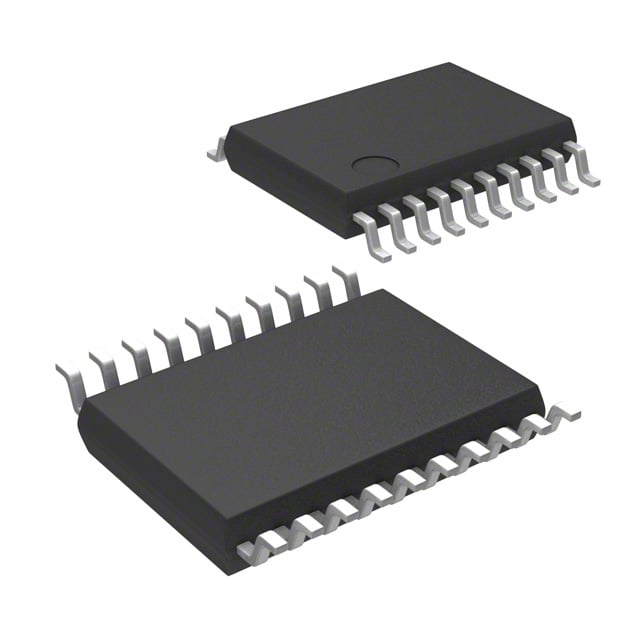
The STM32F030F4P6 is a microcontroller from STMicroelectronics, part of their STM32F0 series. This series is based on the ARM Cortex-M0 core, providing an entry-level option for various embedded applications that require low power, performance, and flexibility. The STM32F030F4P6 is specifically designed for cost-sensitive applications but still provides a wide array of features.
## Key Specifications:
1. Core Architecture:
* Core: ARM Cortex-M0
* Core Speed: 48 MHz
* Flash Memory: 16 KB
* RAM: 4 KB SRAM
* Number of Bits: 32-bit microcontroller
2. Performance:
* The STM32F030F4P6 features a 32-bit ARM Cortex-M0 processor with a clock speed of up to 48 MHz, offering efficient performance for a wide range of low-power applications.
* The microcontroller includes a 2-stage pipeline for improved execution performance.
3. Power Supply:
* Operating Voltage Range: 2.4V to 3.6V (low-voltage operation)
* Low Power Modes: The device offers multiple power management modes, including Sleep mode, Stop mode, and Standby mode, to reduce power consumption when not actively processing.
* Power Consumption: Designed for ultra-low power consumption, ideal for battery-operated devices.
4. Memory:
* Flash Memory: 16 KB internal Flash for program storage.
* SRAM: 4 KB of SRAM for data storage.
* EEPROM Emulation: The STM32F030F4P6 supports EEPROM emulation in Flash memory, allowing for non-volatile storage.
5. Timers and Communication:
* General-purpose timers: It has 3 general-purpose timers, each with 16-bit resolution.
* Basic Timer: A basic 16-bit timer for simpler timing applications.
* PWM Generation: Supports PWM output for motor control, signal generation, and other applications.
* Advanced Control Timers: Provides advanced timers suitable for more complex applications like motor control.
* Watchdog Timer: The microcontroller integrates a window watchdog timer to monitor the health of the system and reset it if necessary.
6. Interfaces:
* USART (Universal Synchronous/Asynchronous Receiver/Transmitter): Two USART interfaces for serial communication.
* I2C: Two I2C interfaces for communication with peripherals such as sensors or other microcontrollers.
* SPI: Supports two SPI interfaces for high-speed communication with external devices.
* GPIO (General-purpose Input/Output): Up to 32 I/O pins, which are capable of digital input, output, and even analog functionalities like ADC and DAC.
* ADC (Analog-to-Digital Converter): 12-bit ADC with up to 16 channels for analog input conversion.
* DAC (Digital-to-Analog Converter): 8-bit DAC for outputting analog signals.
7. Analog Features:
* Analog-to-Digital Converter (ADC): A 12-bit ADC with up to 16 channels for precise analog-to-digital conversion, suitable for a wide range of analog sensors.
* Digital-to-Analog Converter (DAC): The device has an 8-bit DAC, which allows for analog output signals.
* Comparator: Integrated comparators for analog signal comparison.
8. I/O and Control Features:
* GPIO Pins: Up to 32 GPIO pins, with several configurable as input, output, analog, or even alternate functions such as timers and serial communication interfaces.
* Interrupts: The STM32F030F4P6 supports a flexible interrupt system with priority levels, making it suitable for responsive applications.
9. Package:
* Package Type: LQFP-32 (Low-profile Quad Flat Package with 32 pins).
* Dimensions: The small size of the package makes it ideal for space-constrained applications.
10. Temperature Range:
* The operating temperature range of the STM32F030F4P6 is typically -40°C to +85°C, making it suitable for industrial and automotive applications that require a wide temperature tolerance.
11. Development and Debugging:
* The microcontroller is fully supported by various development tools such as STMicroelectronics' STM32CubeMX, STM32CubeIDE, and other third-party development environments.
* The device features SWD (Serial Wire Debug) for debugging and program loading, which is more efficient than JTAG in some applications.
* The STM32F030F4P6 can be programmed using an in-circuit serial programming (ICSP) interface.
12. Software Support:
* The STM32F030F4P6 is compatible with a wide range of software libraries, including the STM32Cube HAL (Hardware Abstraction Layer) and middleware solutions like USB, TCP/IP, and file systems.
* It supports real-time operating systems (RTOS) such as FreeRTOS for advanced multitasking and scheduling.
13. Clock and Reset:
* The STM32F030F4P6 supports an external 32.768 kHz crystal oscillator for precise real-time clock operation, as well as a 8 MHz internal oscillator.
* It also features an independent watchdog timer and a system clock source, which ensures system stability and reliability.
14. Security Features:
* While the STM32F030F4P6 doesn’t include some of the advanced cryptographic features found in higher-end STM32 models, it still offers some basic security and protection features, such as read-out protection, which helps prevent unauthorized access to the flash memory.
## Applications:
The STM32F030F4P6 is typically used in a variety of cost-sensitive, low-power embedded applications, including:
* Consumer Electronics: Smart home devices, wearables, and low-power IoT devices.
* Industrial Automation: Motor controllers, sensors, and actuator systems.
* Automotive: Basic control systems and low-cost automotive electronics.
* Medical Devices: Simple medical monitors and sensors.
* Home Appliances: Devices requiring efficient control and monitoring functions.
## Conclusion:
The STM32F030F4P6 is an affordable, entry-level microcontroller that balances performance with low power consumption, making it an excellent choice for many applications that require reliable and efficient processing without significant cost. With its various communication interfaces, analog features, and flexible I/O options, it is well-suited for use in small embedded systems across various industries.