☰
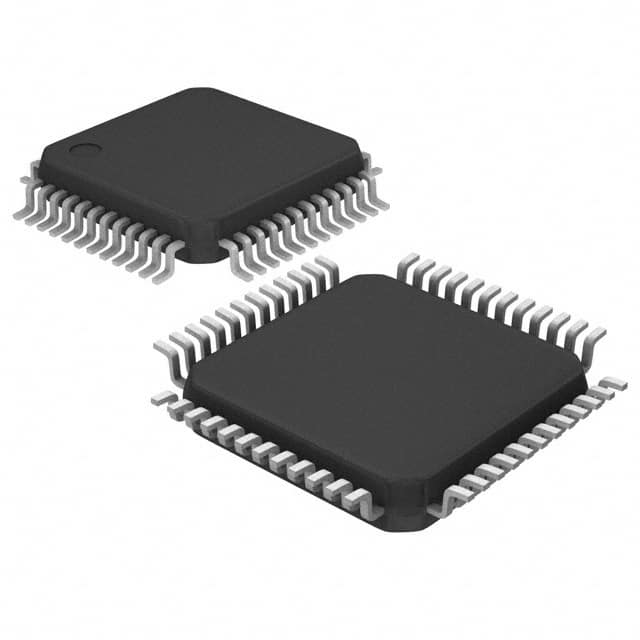
STM32F100C8T6B
STM32F100C8T6B
Active
Description:  IC MCU 32BIT 64KB FLASH 48LQFP
Manufacturer:  STMicroelectronics
History Price: $5.29000
In Stock: 21160
STM32F100C8T6B Specification
Specification
Part No
STM32F100C8T6B
Category
Embedded - Microcontrollers
Manufacturer
STMicroelectronics
Series
STM32F1
Packaging
Tray
Status
Active
Environmental Compliance
Lead Free
Radiation Hardening
No
REACH SVHC
No SVHC
RoHS
Compliant
HS Code
-
Technical Parameter
Core Processor
ARM? Cortex?-M3
Core Size
32-Bit Single-Core
Speed
24MHz
Connectivity
I2C, IrDA, LINbus, SPI, UART/USART
Peripherals
DMA, PDR, POR, PVD, PWM, Temp Sensor, WDT
Number of I/O
37
Program Memory Size
64KB (64K x 8)
Program Memory Type
FLASH
EEPROM Size
-
RAM Size
8K x 8
Voltage - Supply (Vcc/Vdd)
2V ~ 3.6V
Data Converters
A/D 10x12b; D/A 2x12b
Oscillator Type
Internal
Operating Temperature
-40 ℃ ~ 85 ℃ (TA)
Mounting Type
Surface Mount
Package / Case
48-LQFP
Supplier Device Package
-
STM32F100C8T6B PDF Datasheet
STM32F100C8T6B Related Parts
STM32C011F4P6
STM32C011F4P6
STMicroelectronics
IC MCU 32BIT 16KB FLASH 20TSSOP
STM32C011F4U6TR
STM32C011F4U6TR
STMicroelectronics
IC MCU 32BIT 16KB FLASH 20UFQFPN
STM32C011F6P6
STM32C011F6P6
STMicroelectronics
IC MCU 32BIT 32KB FLASH 20TSSOP
STM32C011F6U6TR
STM32C011F6U6TR
STMicroelectronics
IC MCU 32BIT 32KB FLASH 20UFQFPN
STM32C011J4M6
STM32C011J4M6
STMicroelectronics
IC MCU 32BIT 16KB FLASH 8SO
STM32C011J6M6
STM32C011J6M6
STMicroelectronics
IC MCU 32BIT 32KB FLASH 8SO
STM32C031C4T6
STM32C031C4T6
STMicroelectronics
IC MCU 32BIT 16KB FLASH 48LQFP
STM32C031C4U6
STM32C031C4U6
STMicroelectronics
IC MCU 32BIT 16KB FLASH 48UFQFPN
STM32C031C6T6
STM32C031C6T6
STMicroelectronics
IC MCU 32BIT 32KB FLASH 48LQFP
STM32C031C6U6
STM32C031C6U6
STMicroelectronics
IC MCU 32BIT 32KB FLASH 48UFQFPN
STM32C031F4P6
STM32C031F4P6
STMicroelectronics
IC MCU 32BIT 16KB FLASH 20TSSOP
STM32C031F6P6
STM32C031F6P6
STMicroelectronics
IC MCU 32BIT 32KB FLASH 20TSSOP
STM32F100C8T6B Description
The STM32F100C8T6B is a microcontroller from STMicroelectronics%27 STM32 family, specifically from the STM32F1 series. This series is known for its cost-effective, high-performance 32-bit microcontrollers based on the ARM Cortex-M3 core. The STM32F100C8T6B is designed to offer a balanced combination of performance, power efficiency, and a range of peripherals suited for a variety of embedded applications. Here’s a detailed overview of the STM32F100C8T6B:

## Overview

The STM32F100C8T6B is a 32-bit microcontroller that integrates a Cortex-M3 processor core, designed to deliver a high performance at a low cost. It is suitable for applications in automotive, industrial, and consumer electronics where a balance of power and efficiency is crucial.

## Key Features

1. Processor Core:
- ARM Cortex-M3: The microcontroller is built around the ARM Cortex-M3 core, which offers a 32-bit RISC architecture. The Cortex-M3 provides efficient processing capabilities with a 72 MHz maximum clock frequency. This core supports various features including Nested Vectored Interrupt Controller (NVIC), which facilitates efficient interrupt handling, and Thumb-2 instruction set for enhanced code density.

2. Memory:
- Flash Memory: The STM32F100C8T6B includes 64 KB of Flash memory for program storage. Flash memory is non-volatile, meaning it retains data even when power is off, which is essential for storing firmware and application code.
- SRAM: The microcontroller has 8 KB of SRAM (Static RAM) for data storage during operation. SRAM is faster than Flash and is used for variables and stack management.

3. I/O Ports:
- GPIO: The device features up to 37 general-purpose input/output (GPIO) pins, which can be configured for various digital I/O tasks. These pins are versatile and can be used for reading inputs or driving outputs, with features like pull-up/pull-down resistors and interrupt capabilities.

4. Timers and PWM:
- Timers: The STM32F100C8T6B includes multiple timers, such as basic timers, general-purpose timers, and advanced-control timers. These timers are used for generating precise time delays, event counting, and PWM (Pulse Width Modulation) signals.
- PWM: The advanced-control timers support PWM generation, which is crucial for motor control and signal modulation applications.

5. Analog Functions:
- ADC: The microcontroller includes a 12-bit Analog-to-Digital Converter (ADC) with up to 10 channels. The ADC converts analog signals to digital values, enabling the microcontroller to process sensor data and other analog inputs.
- DAC: It features a 12-bit Digital-to-Analog Converter (DAC) for generating analog signals from digital values, useful in audio applications and analog signal generation.

6. Communication Interfaces:
- USART/UART: The STM32F100C8T6B supports Universal Synchronous/Asynchronous Receiver/Transmitter (USART) and Universal Asynchronous Receiver/Transmitter (UART) interfaces for serial communication. These are commonly used for communication with peripherals, debugging, and data exchange.
- SPI: The Serial Peripheral Interface (SPI) is available for high-speed data exchange with external devices like sensors and memory chips.
- I2C: The Inter-Integrated Circuit (I2C) interface supports communication with multiple peripherals using only two wires (SDA for data and SCL for clock).

7. Clock and Power Management:
- Clock System: The microcontroller has a flexible clock system with an internal RC oscillator and the capability to use an external crystal or oscillator for high-precision timing.
- Power Management: It includes several power-saving modes to extend battery life in portable applications. These modes include sleep, stop, and standby modes.

8. Interrupts:
- NVIC: The Nested Vectored Interrupt Controller (NVIC) is integrated into the Cortex-M3 core and manages up to 24 external interrupts. NVIC enables efficient and prioritized handling of interrupts, improving real-time performance.

9. Development and Debugging:
- Debug Interfaces: The microcontroller supports debugging via the Serial Wire Debug (SWD) interface and JTAG (Joint Test Action Group), facilitating development and troubleshooting.
- Development Tools: STM32F100C8T6B is supported by various development tools and environments, including STM32CubeIDE, KEIL MDK, and IAR Embedded Workbench.

## Applications

The STM32F100C8T6B is suitable for a wide range of applications, including:
- Consumer Electronics: Used in devices such as home appliances, remote controls, and personal gadgets.
- Industrial Automation: Applicable in control systems, sensor interfaces, and process monitoring.
- Automotive: Ideal for automotive control systems, including body electronics and infotainment systems.
- Medical Devices: Suitable for medical instrumentation and health monitoring devices.

## Summary

The STM32F100C8T6B is a versatile and cost-effective microcontroller that combines the ARM Cortex-M3 core with a rich set of peripherals, memory, and power management features. It provides high performance and flexibility, making it an excellent choice for a wide variety of embedded systems and applications. Its integration of essential features, ease of development, and support from STMicroelectronics’ ecosystem make it a valuable component for both novice and experienced developers.
STM32F100C8T6B Compare Parts
  • STM32F100C8T6B vs STM8TL53C4U6
  • STM32F100C8T6B vs STM8TL52G4U6
  • STM32F100C8T6B vs STM8TL52F4P6TR
  • STM32F100C8T6B vs STM8S903K3U6TR
  • STM32F100C8T6B vs STM8S903K3U6
  • STM32F100C8T6B vs STM8S903K3U3TR
  • STM32F100C8T6B vs STM8S903K3U3
  • STM32F100C8T6B vs STM8S903K3T6CTR
  • STM32F100C8T6B vs STM8S903K3T6C
  • STM32F100C8T6B vs STM8S903K3T3CTR
  • STM32F100C8T6B vs STM8S903K3T3C
  • STM32F100C8T6B vs STM8S903K3B6
  • STM32F100C8T6B vs STM8S903F3U6TR
  • STM32F100C8T6B vs STM8S903F3U3TR
  • STM32F100C8T6B vs STM8S903F3P6TR
  • STM32F100C8T6B vs STM8S903F3P6
  • STM32F100C8T6B vs STM8S903F3P3
  • STM32F100C8T6B vs STM8S903F3M6TR
  • STM32F100C8T6B vs STM8S903F3M6
  • STM32F100C8T6B vs STM8S903F3M3TR
  • STM32F100C8T6B vs STM8S903F3M3
  • STM32F100C8T6B vs STM8S208S6T6C
  • STM32F100C8T6B vs STM8S208S6T3C
  • STM32F100C8T6B vs STM8S208RBT6
  • STM32F100C8T6B vs STM8S208RBT3
  • STM32F100C8T6B vs STM8S208R8T6
  • STM32F100C8T6B vs STM8S208MBT6B
  • STM32F100C8T6B vs STM8S208CBT6TR
  • STM32F100C8T6B vs STM8S208CBT6
  • STM32F100C8T6B vs STM8S208C8T6TR
  • STM32F100C8T6B vs STM8S208C8T6
  • STM32F100C8T6B vs STM8S208C6T6TR
  • STM32F100C8T6B vs STM8S208C6T6
  • STM32F100C8T6B vs STM8S208C6T3
  • STM32F100C8T6B vs STM8S207SBT6C
  • STM32F100C8T6B vs STM8S207SBT3C
  • STM32F100C8T6B vs STM8S207S8T6CTR
  • STM32F100C8T6B vs STM8S207S8T6C
  • STM32F100C8T6B vs STM8S207S8T3CTR
  • STM32F100C8T6B vs STM8S207S8T3C
  • STM32F100C8T6B FAQ
    Q1: What is the STMicroelectronics STM32F100C8T6B?
    A1: The STMicroelectronics STM32F100C8T6B is a 32-bit microcontroller from the STM32F1 series, based on the ARM Cortex-M3 core. It offers a combination of high performance, low power consumption, and a wide range of peripherals, making it suitable for embedded systems.

    Q2: What is the clock speed of the STM32F100C8T6B?
    A2: The STM32F100C8T6B operates at a maximum clock speed of 24 MHz, providing efficient processing for a variety of low- to mid-range embedded applications.

    Q3: How much flash memory is available on the STM32F100C8T6B?
    A3: The STM32F100C8T6B features 64 KB of flash memory for storing code and data in embedded applications.

    Q4: What is the SRAM size in the STM32F100C8T6B?
    A4: The STM32F100C8T6B is equipped with 20 KB of SRAM, which is used for storing temporary data and variables during execution.

    Q5: How many GPIO pins does the STM32F100C8T6B have?
    A5: The STM32F100C8T6B provides up to 37 general-purpose I/O pins, which can be configured for various digital and analog functions, offering flexibility for different embedded applications.

    Q6: Does the STM32F100C8T6B have any built-in communication interfaces?
    A6: Yes, the STM32F100C8T6B supports several communication interfaces, including UART, SPI, and I2C, enabling it to interface with other microcontrollers, sensors, and peripherals.

    Q7: What is the supply voltage range for the STM32F100C8T6B?
    A7: The STM32F100C8T6B operates within a supply voltage range of 2.0V to 3.6V, making it suitable for various embedded systems with different power requirements.

    Q8: Does the STM32F100C8T6B have an integrated ADC?
    A8: Yes, the STM32F100C8T6B includes a 12-bit ADC with up to 10 channels, allowing for high-precision analog-to-digital conversion in applications such as sensor interfacing.

    Q9: What is the maximum operating temperature of the STM32F100C8T6B?
    A9: The STM32F100C8T6B operates within a temperature range of -40°C to +85°C, making it suitable for industrial and automotive applications where temperature extremes may be encountered.

    Q10: Does the STM32F100C8T6B support external memory?
    A10: Yes, the STM32F100C8T6B supports external memory interfaces, such as an FSMC (Flexible Static Memory Controller), allowing you to connect external SRAM, NOR flash, or other memory types.

    Q11: Does the STM32F100C8T6B have timers?
    A11: Yes, the STM32F100C8T6B includes several timers, such as general-purpose and advanced-control timers, which can be used for PWM generation, event timing, and motor control.

    Q12: How many external interrupts are available on the STM32F100C8T6B?
    A12: The STM32F100C8T6B offers up to 16 external interrupt lines, allowing external events to trigger specific actions in your embedded system.

    Q13: Does the STM32F100C8T6B support low-power operation?
    A13: Yes, the STM32F100C8T6B includes several low-power modes, such as Sleep and Stop modes, which help reduce power consumption during periods of inactivity, making it suitable for battery-powered applications.

    Q14: What kind of debugging and programming interfaces does the STM32F100C8T6B support?
    A14: The STM32F100C8T6B supports programming and debugging through the SWD (Serial Wire Debug) interface and JTAG, enabling easy development and debugging using standard tools like STM32CubeIDE and ST-Link.

    Q15: How can I expand the functionality of the STM32F100C8T6B?
    A15: The STM32F100C8T6B provides a variety of interfaces, such as SPI, I2C, and UART, for communication with external sensors, modules, and peripherals, allowing you to expand its functionality to suit specific application needs.

    Q16: Does the STM32F100C8T6B support USB connectivity?
    A16: No, the STM32F100C8T6B does not have integrated USB support. For USB connectivity, you would need to choose a different microcontroller model within the STM32 family that includes USB peripherals.

    Q17: What kind of clock source does the STM32F100C8T6B use?
    A17: The STM32F100C8T6B uses an internal 8 MHz RC oscillator as its primary clock source, which can be multiplied by a PLL (Phase-Locked Loop) to achieve higher frequencies up to 24 MHz.

    Q18: Can the STM32F100C8T6B be used in real-time applications?
    A18: Yes, the STM32F100C8T6B is suitable for real-time applications, thanks to its ARM Cortex-M3 core, which provides deterministic processing and low-latency response, especially for low- to mid-complexity tasks.

    Q19: Is there a bootloader in the STM32F100C8T6B?
    A19: Yes, the STM32F100C8T6B includes an integrated bootloader, which allows you to easily load code onto the microcontroller through a variety of interfaces, such as UART or SPI.

    Q20: Does the STM32F100C8T6B support I2S communication?
    A20: Yes, the STM32F100C8T6B supports the I2S (Inter-IC Sound) interface, allowing it to connect with audio devices for applications involving digital audio data transfer.
    Customer Reviews
    4.95 out of 5.00 stars from 175 customer reviews from all over the world
    Sofía Valentina Castro
    Spain
    5 stars
    2026-09-20 03:15
    Seller's service is very good. But these 5 V regulators are not of quality. Output current is low and stability is small.
    Ugo Fontana
    Italy
    5 stars
    2026-09-20 03:10
    All ok. Perfect
    Fernando Javier
    Spain
    5 stars
    2026-09-20 02:52
    All well I recommend seller
    Léo Dufour
    France
    5 stars
    2026-09-20 02:17
    Received on time
    Simón
    Spain
    5 stars
    2026-09-20 01:55
    Everything is correct. Very fast!!!!! Excellent!!!! To *****
    Lorenzo Caputo
    Italy
    5 stars
    2026-09-19 09:31
    They look a little light in weight, I hope they hold the current of the original datasheet


