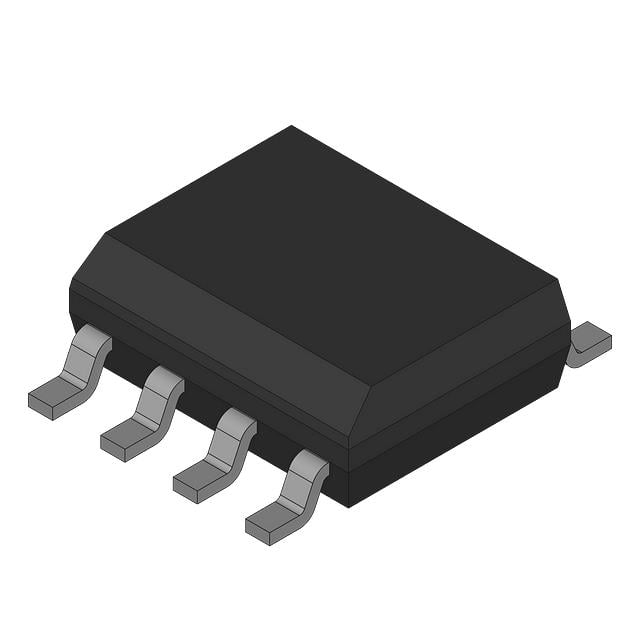
The OPA349UA is a high-performance, low-power operational amplifier from Texas Instruments. It is designed for a wide range of applications, including sensor signal conditioning, data acquisition systems, and portable battery-powered devices. The OPA349 offers a combination of excellent precision, low noise, and low power consumption, making it suitable for demanding applications.
## Key Features
1. Low Power Consumption: The OPA349 operates on a supply current of just 100 µA per channel, making it ideal for battery-operated devices where energy efficiency is critical.
2. Wide Supply Voltage Range: It can operate with dual or single power supplies, ranging from ±2.5V to ±15V (or 5V to 30V in single-supply mode), providing flexibility for various applications.
3. Rail-to-Rail Output: The output stage of the OPA349 allows rail-to-rail output swing, enabling it to drive loads close to the supply rails, which is beneficial in low-voltage applications.
4. High Precision: With a low input offset voltage (typically 150 µV) and low drift (0.5 µV/°C), the OPA349 ensures accurate signal amplification, making it suitable for precision applications.
5. Low Noise: The device exhibits a low voltage noise density of 18 nV/√Hz, ensuring minimal interference in sensitive applications.
6. Fast Slew Rate: The OPA349 has a slew rate of 0.6 V/µs, allowing it to respond quickly to rapid changes in input signal levels.
7. Wide Bandwidth: With a gain-bandwidth product of 1.7 MHz, the OPA349 is capable of handling a variety of signal frequencies without degradation.
8. Thermal Shutdown Protection: Integrated thermal protection prevents overheating, ensuring reliable operation even under high load conditions.
9. Single-Supply Operation: The OPA349 can be powered by a single supply, enhancing design simplicity in applications where dual supplies are not feasible.
## Specifications
Here are the detailed specifications for the OPA349UA:
- Part Number: OPA349UA
- Type: Precision Low-Power Operational Amplifier
- Supply Voltage Range:
- Dual Supply: ±2.5V to ±15V
- Single Supply: 5V to 30V
- Input Offset Voltage:
- Typically 150 µV
- Maximum 500 µV
- Input Bias Current:
- 20 pA (typical)
- Input Impedance:
- 10 MΩ (typical)
- Common-Mode Voltage Range:
- (V-) to (V+) - 1.5V (typical)
- Output Voltage Swing:
- Rail-to-Rail (within 10 mV of the rails at a 10 kΩ load)
- Slew Rate:
- 0.6 V/µs
- Gain-Bandwidth Product:
- 1.7 MHz (typical)
- Total Harmonic Distortion + Noise (THD+N):
- 0.02% at 1 kHz
- Power Supply Rejection Ratio (PSRR):
- 90 dB (typical)
- Voltage Noise Density:
- 18 nV/√Hz
- Current Noise Density:
- 0.5 pA/√Hz
- Operating Temperature Range:
- -40°C to +85°C
- Package Type:
- SOIC-8
## Applications
The OPA349UA is suitable for a variety of applications, including:
1. Signal Conditioning: Used in amplifying low-level signals from sensors and transducers in industrial and scientific applications.
2. Data Acquisition Systems: Ideal for high-precision data acquisition systems that require accurate and low-noise signal processing.
3. Portable Devices: Perfect for battery-operated devices such as portable medical equipment, handheld instruments, and wireless sensors due to its low power consumption.
4. Audio Applications: Can be used in audio signal processing, where low distortion and high fidelity are required.
5. Network Systems: Suitable for use in communication systems requiring signal amplification with high precision.
6. Active Filters: Often employed in filter designs, including active low-pass, high-pass, and band-pass filters.
## Conclusion
The OPA349UA from Texas Instruments is an excellent choice for designers looking for a low-power, high-precision operational amplifier. Its combination of low noise, rail-to-rail output, and flexibility in supply voltage makes it versatile for a wide range of applications, particularly in the fields of sensor signal conditioning and portable devices. With its robust performance characteristics, the OPA349UA is well-equipped to handle the demands of modern electronic designs, ensuring reliability and accuracy in a compact package.