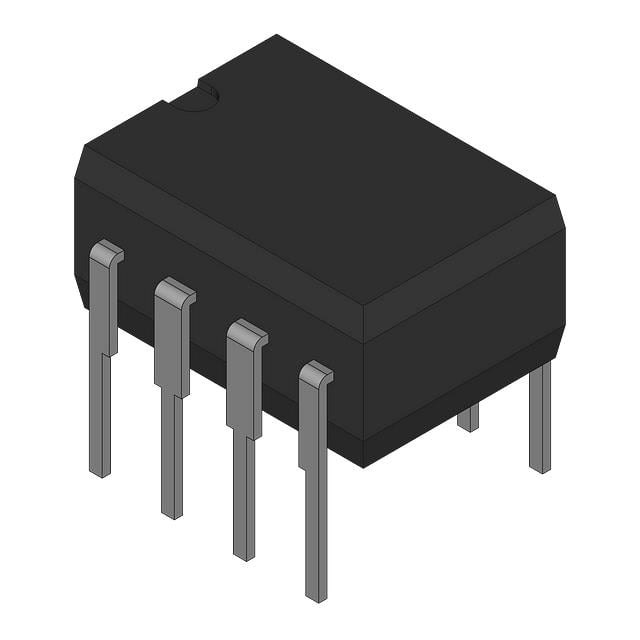
## Maxim Integrated DS1000H-40 Overview
The Maxim Integrated DS1000H-40 is a high-performance, low-jitter, programmable clock generator and jitter cleaner. It is designed for applications requiring precise timing, minimal signal degradation, and low latency. The device is commonly used in telecommunications, data communication systems, and other high-speed signal processing applications.
## Key Features
* Clock Generation and Jitter Cleaning: The DS1000H-40 excels in both clock generation and jitter cleaning, making it ideal for use in systems where signal integrity and timing precision are critical.
* Programmability: The device features an internal phase-locked loop (PLL) that can be programmed to generate a wide range of output frequencies.
* Low Jitter: The DS1000H-40 offers ultra-low jitter performance, typically less than 0.5 ps (picoseconds), which is essential for high-speed digital systems.
* Frequency Range: The output frequency of the device is highly flexible, supporting a range from 1 MHz to 1 GHz, ensuring that it can be used in various high-frequency applications.
* Output Formats: The device provides multiple output formats, including LVDS (Low-Voltage Differential Signaling), CMOS, and LVCMOS, which increases its compatibility with different system designs.
* Power Supply: The device operates with a single 3.3 V power supply, simplifying integration into standard 3.3 V-based systems.
* Package Type: The DS1000H-40 is available in a 32-pin TQFP (Thin Quad Flat Package), providing a compact and space-efficient form factor.
## Performance Specifications
* Output Clock Jitter: The DS1000H-40 offers outstanding jitter performance, with a typical output jitter of less than 0.5 ps RMS, making it suitable for high-precision timing applications in communication and signal processing.
* Phase Noise: The device offers very low phase noise, typically -100 dBc/Hz at 10 kHz offset, ensuring stable and accurate clock signals in demanding environments.
* Frequency Accuracy: The DS1000H-40 provides high frequency accuracy with a typical ±20 ppm (parts per million) tolerance, ensuring precise frequency output for a wide range of applications.
## Input/Output Specifications
* Input Clock Frequency: The DS1000H-40 can accept an input clock frequency ranging from 10 MHz to 200 MHz, offering flexibility in terms of clock sources.
* Output Frequency Range: The output frequency is programmable within a range of 1 MHz to 1 GHz, enabling customization of the clock signal to meet specific application requirements.
* Output Drive Capability: The output drive capability is designed to drive both LVDS and CMOS lines, ensuring compatibility with various digital systems.
## Environmental and Operational Characteristics
* Operating Temperature Range: The DS1000H-40 operates within a temperature range of -40°C to +85°C, which is suitable for industrial, automotive, and telecommunications applications where temperature stability is critical.
* Storage Temperature Range: The device is rated for a storage temperature range of -65°C to +150°C, ensuring it remains reliable even under extreme environmental conditions.
## Applications
* Telecommunications: The device is well-suited for high-speed data communications in telecom systems, where precise clock generation and minimal jitter are critical for maintaining signal integrity.
* Data Communication Systems: In data communication applications, such as Ethernet and fiber-optic communication, the DS1000H-40 ensures accurate synchronization of data streams.
* High-Speed Digital Systems: The DS1000H-40 is ideal for high-speed digital systems, such as processors, FPGA-based designs, and high-performance computing platforms, where clock accuracy and signal integrity are paramount.
* Networking Equipment: It can be used in networking equipment such as routers, switches, and base stations to provide reliable timing signals for various communication standards.
## Conclusion
The Maxim Integrated DS1000H-40 is a versatile and high-performance clock generator and jitter cleaner, offering exceptional jitter and phase noise performance, high programmability, and compatibility with various output formats. Its broad frequency range and low power consumption make it an ideal choice for a wide range of applications requiring precise and reliable timing, such as telecommunications, data communication, and high-speed digital systems.