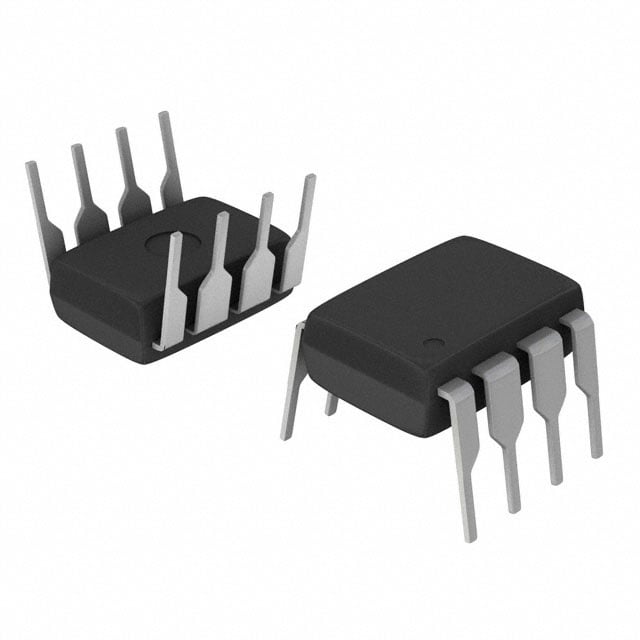
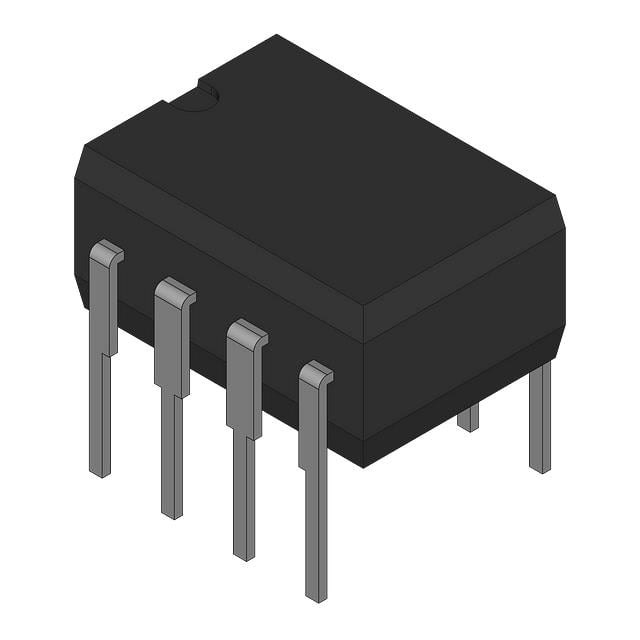
The Texas Instruments LM358P is a dual operational amplifier (op-amp) that is widely used in various electronic applications due to its versatility, low cost, and ease of use. This op-amp is designed for general-purpose applications, making it suitable for a range of tasks, including signal amplification, filtering, and signal conditioning. Below is a detailed overview of the specifications, features, and applications of the LM358P.
## Overview
The LM358P is a dual op-amp that consists of two independent, high-gain, frequency-compensated operational amplifiers. It is designed to operate from a single power supply, which simplifies circuit design and reduces the number of components required. The LM358P is particularly popular in battery-powered devices due to its low power consumption.
## Key Features
1. Dual Operational Amplifier: The LM358P contains two op-amps in a single package, allowing for compact designs and reducing the need for multiple components.
2. Single Supply Operation: It can operate from a single power supply voltage, typically ranging from 3V to 32V, which simplifies the design of circuits that require a dual supply.
3. Low Power Consumption: The device is designed for low power operation, making it suitable for battery-powered applications. The typical supply current is around 500 µA per amplifier.
4. Wide Input Voltage Range: The input common-mode voltage range extends from the negative supply voltage to approximately 1.5V below the positive supply voltage, allowing for a wide range of input signals.
5. High Gain: The LM358P features a high open-loop voltage gain of approximately 100 dB, which is beneficial for amplifying weak signals.
6. Frequency Compensation: The op-amps are internally compensated for stability, which simplifies the design process and reduces the need for external components.
7. Low Output Impedance: The output stage of the LM358P provides low output impedance, allowing it to drive loads effectively.
8. Temperature Range: The LM358P is rated for operation over a temperature range of -40°C to +85°C, making it suitable for industrial and automotive applications.
## Specifications
- Type: Dual Operational Amplifier
- Supply Voltage (V+ to V-): 3V to 32V (single supply) or ±1.5V to ±16V (dual supply)
- Input Common-Mode Voltage Range: V- to (V+ - 1.5V)
- Output Voltage Swing: Typically within 1.5V of the supply rails
- Open-Loop Voltage Gain: 100 dB (typical)
- Gain-Bandwidth Product: 1 MHz (typical)
- Slew Rate: 0.3 V/µs (typical)
- Input Offset Voltage: 2 mV (typical)
- Input Bias Current: 45 nA (typical)
- Supply Current: 500 µA per amplifier (typical)
- Package Options: Available in various packages, including DIP-8, SOIC-8, and TSSOP-8.
## Applications
The LM358P is widely used in various applications, including:
1. Signal Amplification: It is commonly used to amplify weak signals in audio, sensor, and instrumentation applications.
2. Active Filters: The LM358P can be configured to create active low-pass, high-pass, and band-pass filters for signal processing.
3. Voltage Followers: It can be used as a voltage follower (buffer) to provide high input impedance and low output impedance, isolating different stages of a circuit.
4. Comparators: The op-amp can be configured as a comparator for applications that require voltage level detection.
5. Oscillators: The LM358P can be used in oscillator circuits to generate waveforms for various applications.
6. Data Acquisition Systems: It is often used in data acquisition systems to condition signals before they are digitized.
## Conclusion
The Texas Instruments LM358P is a versatile and widely used dual operational amplifier that offers a range of features suitable for various applications. Its ability to operate from a single power supply, combined with low power consumption and high performance, makes it an ideal choice for engineers and designers in many fields, including consumer electronics, industrial automation, and automotive systems. With its robust specifications and ease of use, the LM358P continues to be a popular component in electronic design.